


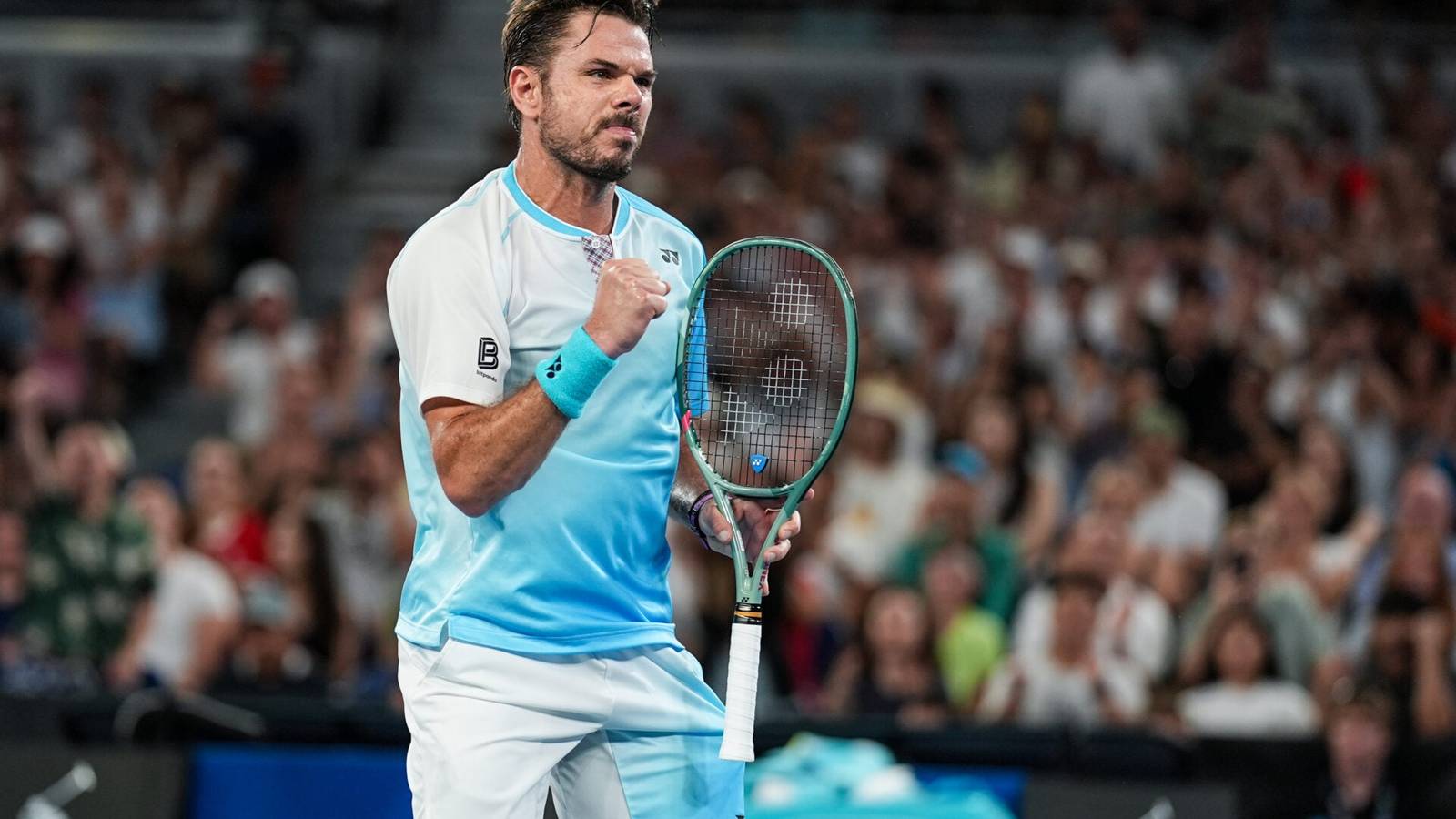
The Conclusion of a Swiss Chapter
At 41 years old, Stan Wawrinka’s professional journey has entered its final, reflective phase. The Swiss veteran, a three-time Grand Slam champion, recently played his final match at the Geneva Open, marking an emotional end to his association with the home tournament. His second-round defeat to Alex Michelsen, decided by two tightly contested tie-breaks, served as a poignant reminder of the fine margins that have characterized a career marked by immense power and consistency.
Despite the straight-sets loss (7-6, 7-6), Wawrinka’s performance underscored the elements that made him a force on the ATP circuit for nearly two decades. His statistical output in Geneva—including 23 winners and an impressive 80% win rate on first-serve points—demonstrated that even in his twilight, the technical proficiency of his game remains intact. However, the result in Geneva is merely a waypoint in a larger, systemic farewell tour that now pivots toward the clay courts of Paris.
The Stakes at Roland-Garros
As Wawrinka transitions to the upcoming Roland-Garros, the stakes extend beyond mere participation. For a player whose legacy is inextricably linked to his 2015 triumph in Paris, this final appearance represents the closing of a significant historical loop. The French Open has historically served as the stage for some of Wawrinka’s most defining victories, and his return this season is viewed as a symbolic homage to his status as one of the few players to dismantle the dominance of the ‘Big Three’ era during their absolute prime.
The transition from the fast-paced indoor-style conditions of Geneva to the heavy, tactical clay of the French capital will require a shift in physical management. At this stage of his career, Wawrinka’s focus has moved from chasing rankings to optimizing performance for high-stakes environments. His team is prioritizing recovery and tactical efficiency, ensuring that his final Grand Slam appearance serves as a fitting culmination to a career defined by the ‘Stanimal’ persona—a player capable of blistering offensive play under extreme pressure.
Legacy and Institutional Impact
Wawrinka’s impact on tennis extends beyond his trophy cabinet. His backhand is widely cited by analysts as one of the most aesthetically and technically complete shots in the history of the sport. His longevity in the game, particularly his ability to maintain competitiveness into his early 40s, provides a case study for modern sports science and athlete endurance. As he prepares for the final curtain, the narrative is not focused on the loss in Geneva, but rather on the institutional legacy he leaves behind for younger players like Michelsen, who now carry the torch forward.
The end of Wawrinka’s journey in Geneva is a microcosm of his professional life: a display of grit, technical excellence, and the grace to accept the shifting tides of the sport. As he heads to Roland-Garros, he does so not as a contender for the title, but as a living testament to the evolution of the game. His departure marks the end of an era of power-tennis that bridged generations, leaving a void in the locker room that will be defined by his unique blend of stoicism and on-court ferocity.