


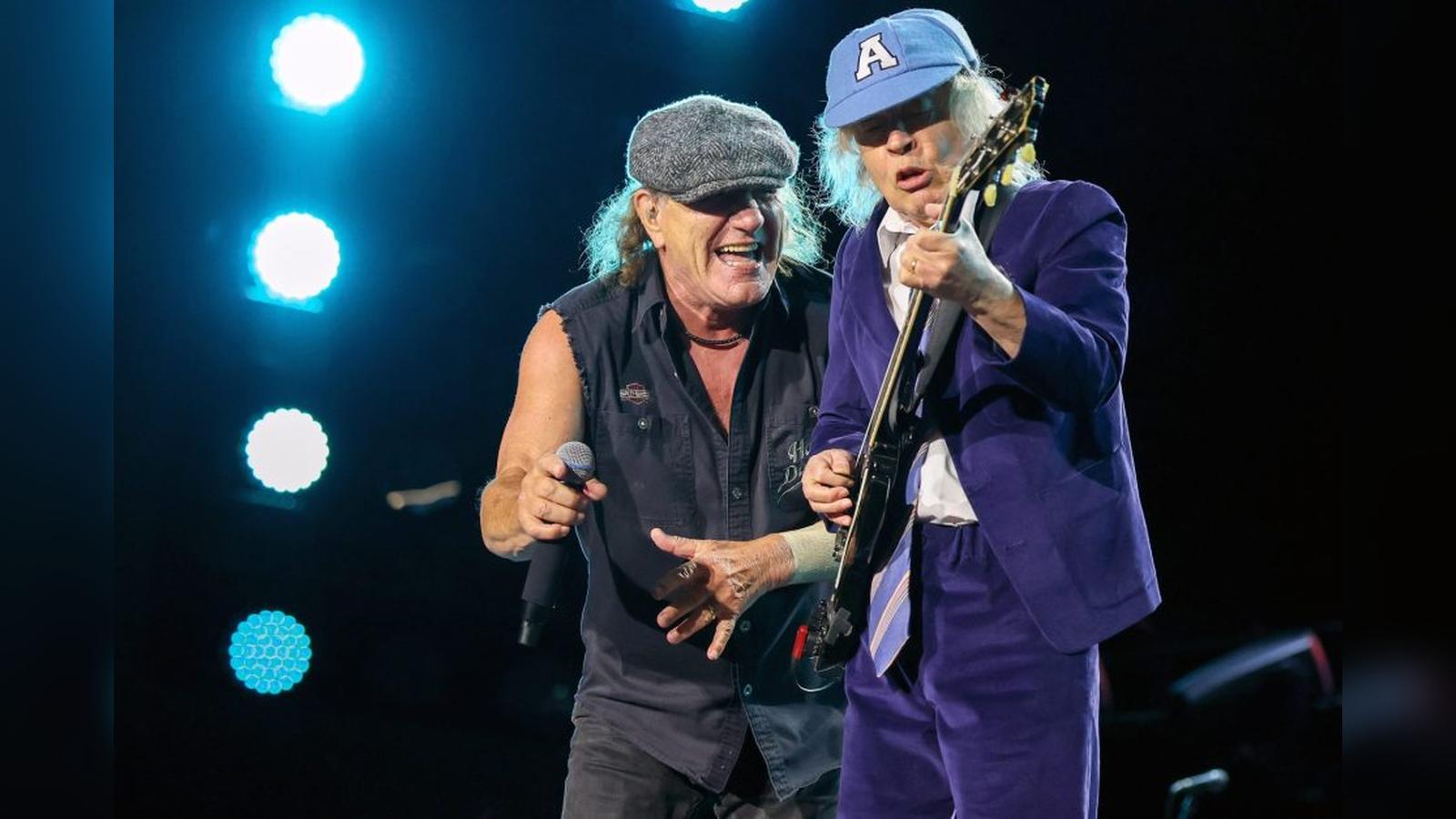
An upcoming AC/DC concert in Toronto has been officially cancelled after a severe storm caused severe structural damage to the venue. The veteran Australian hard rock band was scheduled to perform at Rogers Stadium on September 16, 2026, marking one of the final stops of their massive two-year, 90-date Power Up tour. However, a major meteorological event has rendered the newly built open-air stadium unsafe for public assembly, forcing organizers to prioritize safety over the high-profile performance.
According to a report by ConstructConnect, Live Nation, the operator of the 50,000-capacity Rogers Stadium, announced that engineering teams determined the sections affected by the storm must be completely removed and rebuilt. The severe weather event, which occurred last Wednesday, brought localized flooding, power outages, and destructive winds to the northern end of Toronto. The physical aftermath was stark: photos of the venue revealed blue bleachers scattered across partially collapsed grandstands, torn signage, and structural debris.
The Meteorological Trigger: A Suspected Microburst
Kevin Mahoney, the on-site meteorologist for Rogers Stadium, described the storm as an extraordinary weather event for the region. Mahoney noted that a suspected microburst—a localized column of sinking air that generates damaging, divergent winds—produced extreme wind speeds and heavy rainfall. “It’s clear by the extreme intensity of the storm that this was exceptional for the region, and forensic meteorological analysis is ongoing,” Mahoney stated in an official update, classifying the event as a 100-year storm for Toronto.
Following the storm, the City of Toronto issued an unsafe building order. This directive legally required Live Nation to submit a comprehensive engineering report identifying the exact scope of the structural damage, outlining remedial measures, and establishing a strict schedule for the reconstruction work. While the city administration has not publicly disclosed the report’s specific findings, municipal officials confirmed they are working closely with the stadium owner throughout the rehabilitation process.
Engineering Complications and Structural Integrity Concerns
Doug Perovic, an engineering professor at the University of Toronto who is not involved in the official report, provided critical context regarding the physical challenges of the repair. Perovic noted that the collapsed seating was a purpose-built modular structure, which significantly complicates the recovery timeline. “They’re going to need to find exact components to replace, so there may be a supply chain timing issue with that,” Perovic explained. He added that once the reconstruction is complete, the venue must undergo rigorous municipal inspections to ensure it meets safety standards and codes.
The incident has also reignited a broader conversation about structural safety regulations for temporary and modular entertainment venues in Ontario. Perovic recalled a tragic stage collapse during a Radiohead concert at Toronto’s Downsview Park more than 14 years ago, which resulted in one death and multiple injuries. Although that disaster prompted amendments to the Ontario Building Code to enhance the safety of temporary structures, Perovic warned that a regulatory gap still exists regarding modular grandstand seating. “So that needs to be looked into in more detail,” he emphasized.
Tour Disruption and Ticket Refunds
The sudden cancellation represents a significant operational setback for both the venue and the band. As reported by Billboard, the Toronto concert was slated to be the final show of the season for Rogers Stadium. Wayne Zronik, president of business operations with Live Nation Canada, expressed disappointment but reiterated that public safety remains the absolute priority. “The right decision is to take the time to remove and rebuild the affected parts of the stadium to ensure it is ready to welcome fans next summer,” Zronik said.
While the Toronto show cannot go on, the remaining three dates of AC/DC’s Power Up tour are expected to proceed. These include a performance at Parc Jean-Drapeau in Montreal, followed by stops at MetLife Stadium in East Rutherford, New Jersey, and a finale at Lincoln Financial Field in Philadelphia. Live Nation confirmed that all original ticket purchases for the canceled September 16 concert will be automatically refunded to fans through Ticketmaster, mitigating the immediate financial administrative burden on consumers.