


A Shift in Stance
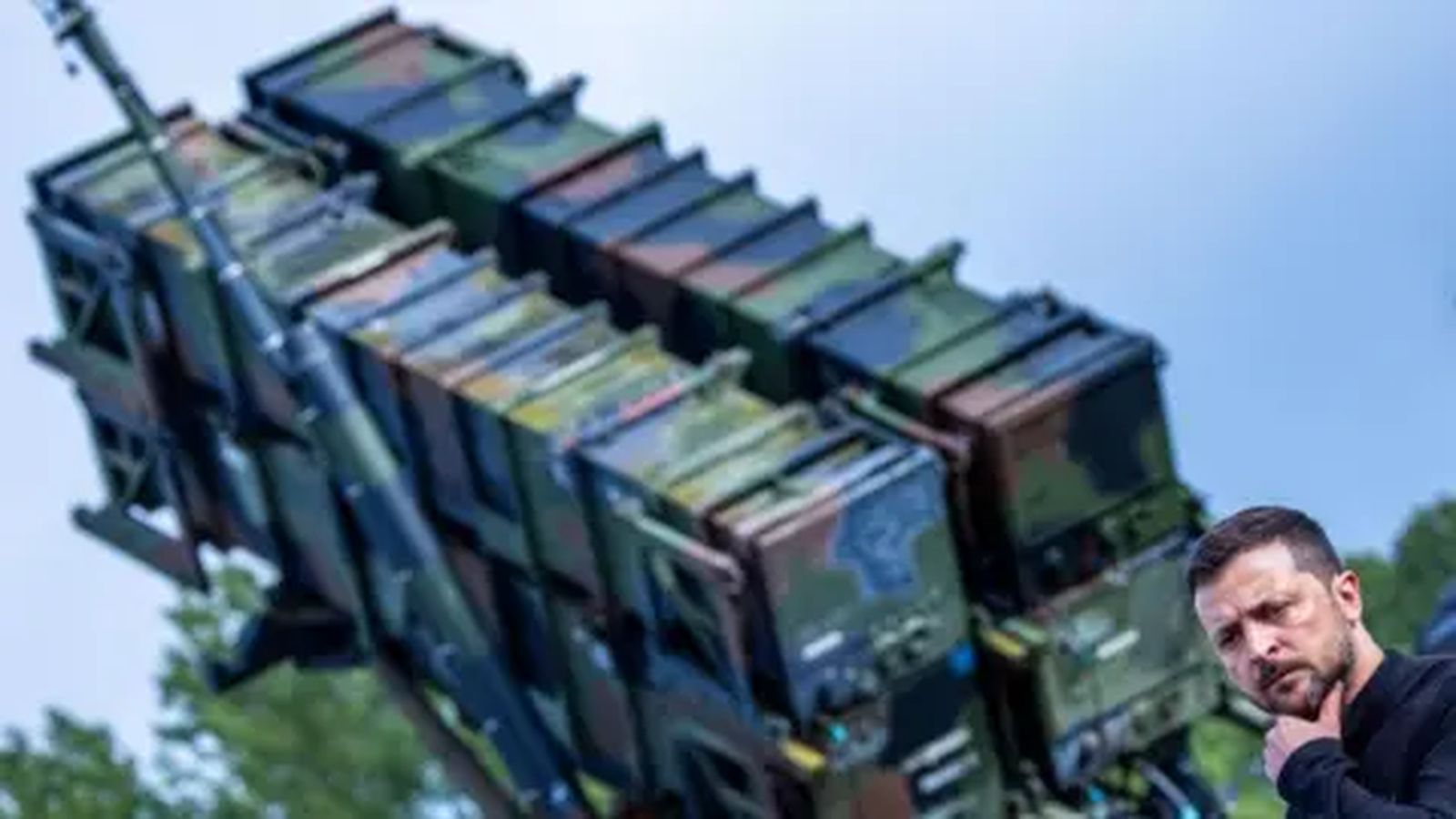
US President Donald Trump has moved away from his earlier commitment to allow Ukraine to manufacture Patriot missile interceptors under license, creating fresh uncertainty regarding the future of US military support for Kyiv. During a recent Cabinet meeting at Camp David, Trump clarified that no formal agreement had been reached, stating, “We have not agreed to that.” This follows an offer made weeks prior during a NATO summit in Ankara, where Trump had explicitly told Ukrainian President Volodymyr Zelenskyy that the US would grant a production license.
The reversal comes at a critical juncture for Ukraine. As Russia intensifies its ballistic missile and drone campaigns, Kyiv’s air-defense network faces severe strain. Patriot interceptors, which are essential for neutralizing high-velocity ballistic threats, are in critically short supply. Analysts estimate that the Pentagon has already utilized roughly two-thirds of its own Patriot inventory, further complicating the potential for technology transfers.
Security Concerns and Strategic Caution
President Trump justified the pivot by emphasizing the sensitivity of the technology. “These weapons are incredible. We have to be very careful about letting somebody build them,” he remarked during the Cabinet meeting. He further suggested that the US must be cautious about licensing advanced hardware, noting that recipients of such technology could theoretically “turn on you” in the future. This stance reflects a broader hesitation within the administration regarding the proliferation of high-end defense assets.
However, the administration’s position remains fluid. Senior US officials, speaking on condition of anonymity, indicated that the president’s comments were intended to reflect the ongoing status of complex negotiations rather than a definitive cancellation of the proposal. Diplomatic channels remain active, with President Zelenskyy confirming a “good” phone call with Vice President JD Vance on July 31 to follow up on recent White House discussions.
Internal Republican Friction
The inconsistency has triggered criticism within the Republican Party. Congressman Dan Bacon (R-NE), a senior member of the House Armed Services Committee, publicly criticized the White House for sending contradictory signals. “Enabling the Ukrainians to build the Patriot would have helped relieve the shortage of interceptors we face today,” Bacon stated. He contrasted the current policy with a more assertive stance, remarking, “I wish the president was more of a Reagan or Churchill when it comes to Russia.”
While the executive branch debates the production license, the US Senate is pursuing legislative alternatives to bolster Ukraine’s defense. A bipartisan group of eight senators, led by Tim Kaine (D-VA) and John Cornyn (R-TX), introduced the “Fast Tracking European Investment in Ukraine’s Defense Act” on July 31. The bill aims to streamline US approvals for the transfer of munitions, such as 155mm shells and HIMARS rockets, through 2030, seeking to strengthen the defense industrial base and reduce bureaucratic hurdles.
Diplomatic Outlook
As the debate over Patriot technology continues, the administration is preparing for further high-level engagement. Reports suggest that Steve Witkoff and Jared Kushner are scheduled to visit Kyiv in the second half of August to continue discussions on peace efforts and security cooperation. For now, the prospect of domestic Patriot production in Ukraine remains in a state of diplomatic flux, tied to the broader, ongoing dialogue between Washington and Kyiv regarding the limits of military technology transfers.