


A High-Stakes Vote Amid Legal Scrutiny
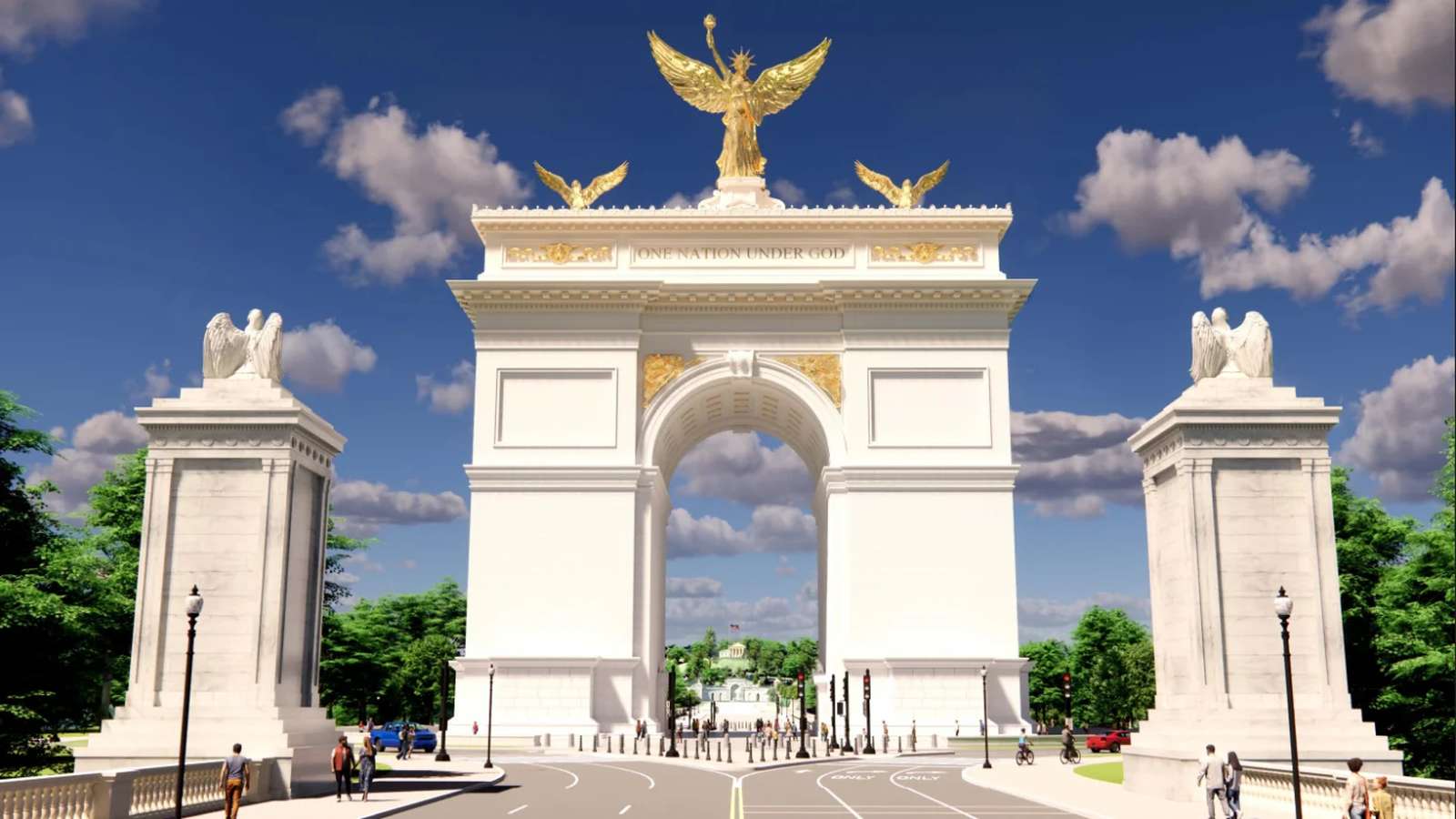
The National Capital Planning Commission (NCPC) is scheduled to meet on Thursday, November 5, 2026, to conduct a final vote on the design and approval of a controversial 250-foot triumphal arch proposed by the Trump administration for Memorial Circle in Washington, D.C. The project, which would stand at the bridge connecting the National Mall to Arlington National Cemetery, has become the center of a tense legal showdown between the executive branch and federal judiciary. As reported by NPR, the administration has signaled that construction could begin almost immediately following a favorable commission vote and subsequent sign-off from the Department of the Interior.
However, the path to construction is heavily constrained by District Judge Tanya Chutkan. In response to consolidated lawsuits brought by Vietnam War veterans, an architectural historian, and the governments of Washington, D.C. and Virginia, Judge Chutkan issued a strict order earlier this week. The court requires the government to notify it within one hour of any official decision regarding the arch by the NCPC or other federal agencies, and within 30 minutes of any activity related to site preparation or construction. This judicial oversight is intended to prevent the government from initiating irreversible site changes before the court can rule on the legality of the project, which critics argue lacks necessary congressional authorization.
The Conflict Over Congressional Authority
The core of the legal dispute rests on whether the administration can proceed with the project without explicit approval from Congress. The Trump administration argues that the project is authorized under a century-old legislative provision intended for a pair of columns that were never constructed at the site. Plaintiffs, including veterans like Michael Lemmon, contend that this interpretation is a legal overreach. They argue that a structure of this magnitude—more than twice the height of the nearby Lincoln Memorial—constitutes a significant, unauthorized alteration of the national landscape.
The project has faced widespread opposition, with over 100,000 public comments submitted in protest. Critics, including historic preservationists, argue that the arch would disrupt the visual integrity of the area surrounding Arlington National Cemetery. Furthermore, the proposal has raised concerns regarding aviation safety. While the Federal Aviation Administration (FAA) stated in September that the structure would not be a hazard if lit specifically, aviation safety experts noted that the required lighting and the arch’s height introduce new risks, including glare and potential fire hazards in proximity to flight paths.
Executive Push vs. Public Opposition
The NCPC, currently led by a Trump-appointed chair, Mark Paoletta, is widely expected to approve the design. The commission’s meeting on Thursday is expected to be lengthy, with approximately 120 citizens registered to provide public testimony. The White House has maintained that the structure will serve as an iconic landmark and enhance the visitor experience at the cemetery. However, recent developments have added layers of complexity to the administration’s narrative. Following an FAA report, President Trump suggested on social media that the arch could also serve as a military complex, a move legal experts suggest was an attempt to reframe the project as a national security necessity.
As the commission prepares to vote, the government has acknowledged in court filings that it is already coordinating with contractors, such as the Maryland-based Grunley Construction Company, regarding potential off-site preparations. Judge Chutkan’s intervention, however, remains the primary barrier to immediate mobilization. By requiring rapid notification of any site activity, the court has effectively placed a temporary stopgap on the administration’s timeline, ensuring that the legal arguments regarding congressional authority are fully vetted before any concrete is poured at Memorial Circle.