


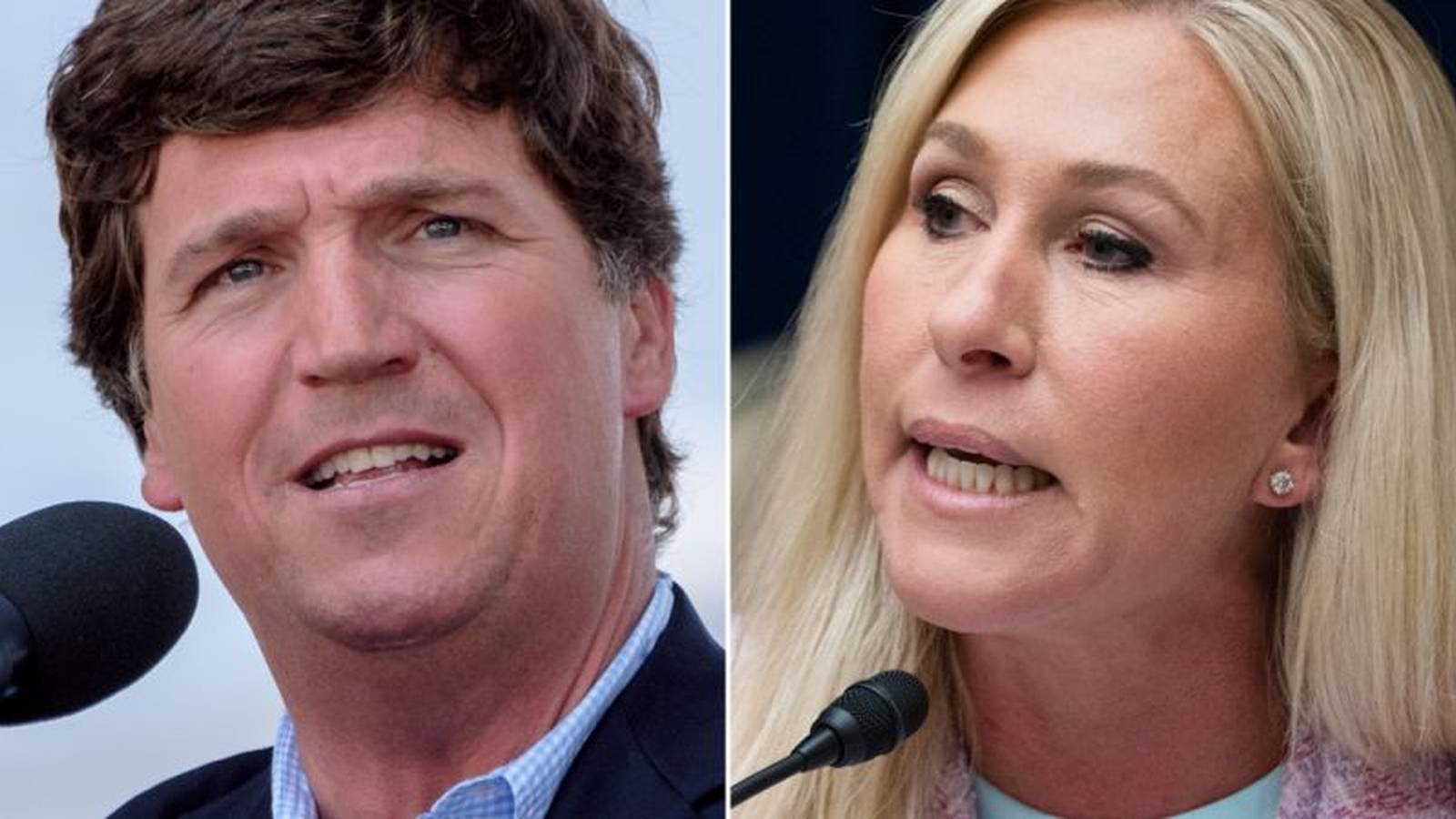
In a significant shift within the American political landscape, prominent media personality Tucker Carlson and former Georgia Congresswoman Marjorie Taylor Greene have formally declared their withdrawal of support from the Republican Party. The announcements, made in late June 2026, signal a deepening rift within the “America First” movement, largely driven by opposition to the current administration’s foreign policy.
The Break from the GOP
Tucker Carlson, a lifelong Republican, announced on June 18 during an appearance on the Can’t Be Censored podcast that he would no longer support the party. Citing 35 years of loyalty, Carlson described the current trajectory of the GOP as “immoral,” specifically criticizing the party’s alignment with foreign interests, particularly in relation to the ongoing conflict with Iran. Carlson alleged that the Trump administration’s policies are being driven by external financial influence rather than domestic priorities.
Following Carlson’s lead, Marjorie Taylor Greene—who resigned from Congress in November 2025—publicly declared on June 22 that she is “done” with what she termed the “America Last” Republican Party. Greene, once a staunch ally of Donald Trump, has been increasingly vocal about her dissatisfaction with the party’s direction, claiming it has betrayed its base by prioritizing foreign entanglements over domestic needs.
Political Stakes and Analysis
This development represents a critical juncture for the American right. By abandoning the party, these figures are effectively creating a political vacuum on the populist wing of the spectrum. The departure is not merely a personality clash; it reflects a fundamental ideological pivot regarding the role of the United States in the Middle East.
Analysts note that while neither Carlson nor Greene has pivoted toward the Democratic Party, their withdrawal could lead to a fragmentation of the conservative vote ahead of the 2026 midterms. The Trump administration has dismissed these defections, with the former president labeling Greene a “traitor” and threatening to support primary challengers against those who dissent from the party’s current foreign policy stance.
The central tension remains the definition of “America First.” For the exiting faction, the term necessitates a non-interventionist approach. For the current Republican leadership, however, the strategy involves maintaining traditional alliances, even as it draws the U.S. deeper into regional conflicts. As the 2026 election cycle approaches, the ability of the Republican Party to maintain unity will be tested by these internal fractures, which threaten to alienate a segment of the voter base that feels increasingly disillusioned with the established party hierarchy.