


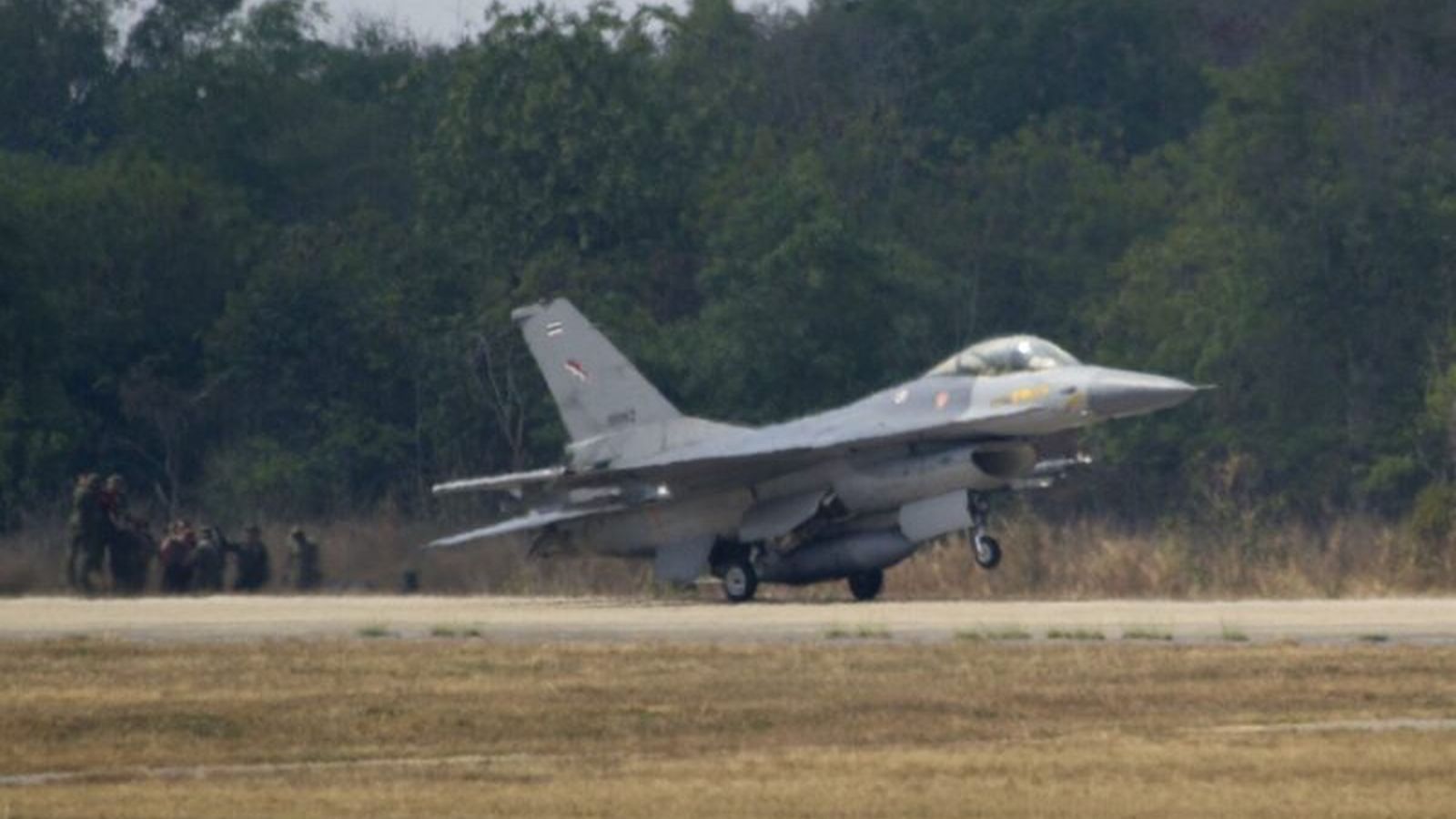
NICOSIA (Azat TV) – Turkey is set to deploy six F-16 fighter jets to the Turkish Republic of Northern Cyprus (TRNC) on March 9, as a significant security measure amidst escalating regional tensions. The announcement was made by Aşkın Meşeli, Acting Director of the Civil Aviation Authority of the TRNC, who stated that the deployment is intended to bolster security and will not disrupt civilian air traffic.
F-16 Deployment Amidst Middle East Conflict
The decision comes as the conflict between the United States-Israel and Iran enters its ninth day. Earlier in the week, on March 2, the British base Akrotiri, located within the Greek Cypriot Administration (GCA), was targeted by a drone. The UK Ministry of Defense confirmed that two drones were directed at the base, with one intercepted and the other falling on the runway, causing no casualties or significant damage. While the drone was initially suspected to be of Iranian origin, sources in Greek Cyprus later suggested it may have been fired by Hezbollah, a group backed by Iran.
Ankara’s Security Evaluation
Sources within Turkey’s Ministry of National Defense confirmed on March 7 that the deployment of F-16s to the island was under evaluation, citing the need to ensure the security of the TRNC in light of recent developments. This move underscores Turkey’s proactive stance in maintaining regional stability and its own security interests in the Eastern Mediterranean.
Regional Dynamics and Iran’s Stance
The ongoing war between the U.S.-Israel and Iran has led to significant geopolitical shifts. Iranian President Masoud Pezeshkian issued an apology to neighboring countries for any missiles that may have strayed into their territories, emphasizing Iran’s lack of enmity towards its regional partners and its intention not to fire missiles at nations that do not attack Iran. However, the attacks launched by Iran on February 28, in response to U.S.-Israel military actions, targeted locations in Qatar, the UAE, and Bahrain, where U.S. bases are situated. These retaliatory strikes reportedly resulted in the deaths of Iranian leader Ali Khamenei and other high-ranking officials, with Iran’s UN representative reporting over 1,300 civilian casualties.
Broader Geopolitical Context
The deployment also occurs within the context of ongoing discussions between Turkey and the United States regarding Turkey’s acquisition of Russian S-400 air defense systems. While Turkey seeks readmission to the U.S. F-35 fighter jet program, Washington has maintained its position requiring Turkey to divest the S-400 system. Turkey has argued for the S-400’s use as a self-contained system, separate from NATO infrastructure, to meet its defense needs.
The heightened military activity in the Eastern Mediterranean, prompted by the Iran-U.S. conflict and previous security incidents, signals a complex and volatile geopolitical landscape where regional powers are actively demonstrating their commitment to security and deterrence.