


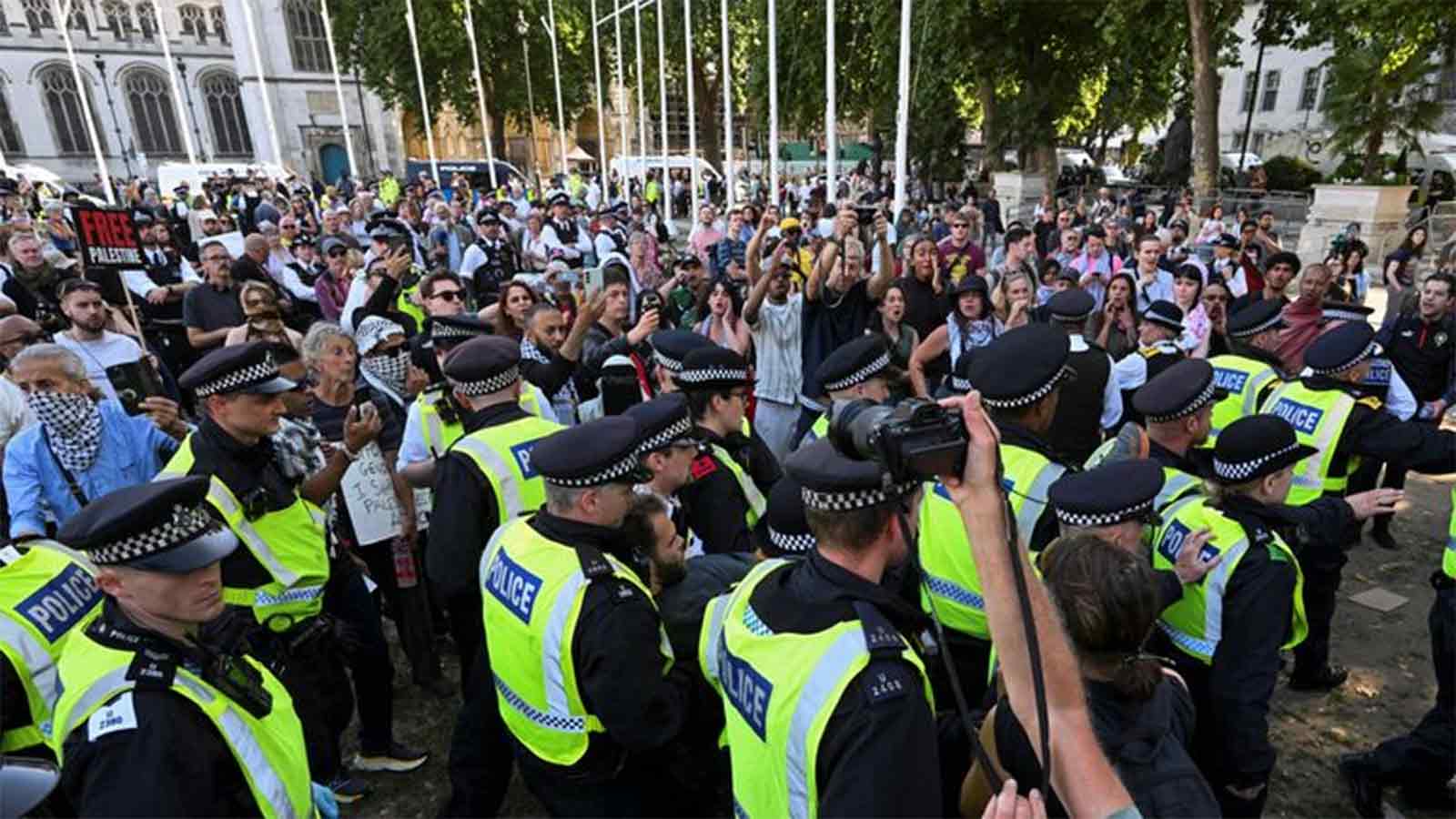
On Saturday, August 10, 2025, more than 500 people were arrested in central London during a protest supporting the banned group Palestine Action. The demonstration, which took place in Parliament Square, has sparked widespread debate about the balance between national security and freedom of expression in the United Kingdom.
Mass Arrests Under Anti-Terror Laws
The Metropolitan Police Service reported that a total of 532 individuals were detained during the protest. Of these, 522 were arrested under Section 13 of the Terrorism Act 2000 for supporting a proscribed organization, while others faced charges such as assaulting police officers and obstruction. The arrests primarily targeted individuals displaying placards with slogans like “I oppose genocide, I support Palestine Action,” which authorities considered a violation of anti-terror laws, according to The Courier.
Palestine Action was recently designated as a terrorist organization by the UK government, a move justified by Home Secretary Yvette Cooper on grounds of the group’s history of violent actions and property damage. However, supporters of the group argue that this classification infringes on their right to protest and freedom of expression. Notably, many of the arrested protesters were elderly, with nearly half over the age of 60, including an 89-year-old retired psychotherapist, La Pethick, who described the arrests as “an attack on peaceful protest.”
Potential Legal Consequences
Those arrested face potentially severe legal repercussions. Under Section 13 of the Terrorism Act, individuals could face up to six months in prison, a £5,000 fine, or both. More serious charges under Section 12 could result in sentences of up to 14 years. According to The Guardian, the Crown Prosecution Service is currently reviewing the cases, and decisions on charges could take weeks. Additionally, defendants may choose to be tried in magistrates’ courts or opt for jury trials in crown courts, depending on the charges.
For professionals like doctors and health workers who participated in the protest, the consequences could extend beyond the courtroom. A senior NHS obstetrician, Alice Clack, highlighted that a terrorism conviction could lead to suspension or even removal from professional medical registers, severely impacting their careers.
Background of Palestine Action
Palestine Action is known for its direct-action campaigns targeting entities they accuse of supporting Israel’s military operations. The group gained notoriety after breaking into a Royal Air Force base and damaging military equipment. Parliament’s decision to ban the organization followed these high-profile incidents, with lawmakers citing national security concerns. However, activists have challenged the ban in court, arguing it violates human rights laws.
The protest on August 10 was organized by Defend Our Juries, a group advocating against the criminalization of Palestine Action supporters. They aim to raise public awareness about what they perceive as government overreach and the erosion of civil liberties.
Public and Political Reactions
The arrests have elicited mixed reactions from the public and political circles. Critics of the government argue that the mass detentions reflect a broader crackdown on dissent. “This is not just about Palestine Action; it’s about the right to protest,” said one activist. Meanwhile, supporters of the ban maintain that it is necessary to prevent violence and ensure public safety.
Images of elderly protesters being escorted away by police have dominated headlines, drawing both sympathy and criticism. For many, the arrests symbolize the growing tension between upholding security laws and preserving democratic freedoms in the UK.
*The coming weeks will be crucial in determining the legal and political outcomes of this contentious event, as the arrested individuals await potential charges and the broader implications for civil liberties continue to unfold.*