


Quick Read
- Ukraine’s war effort increasingly relies on drones, with over half of frontline destruction caused by FPV drones.
- Volunteers and small workshops produce attack drones, while large manufacturers innovate with Ukrainian-made components.
- Russia outpaces Ukraine in drone production capacity, but Ukraine leads in technological advancements.
- Drone warfare has transformed battlefield strategies, complicating medical evacuations and intensifying combat challenges.
Ukraine’s Drone Program: A Key Component in Modern Warfare
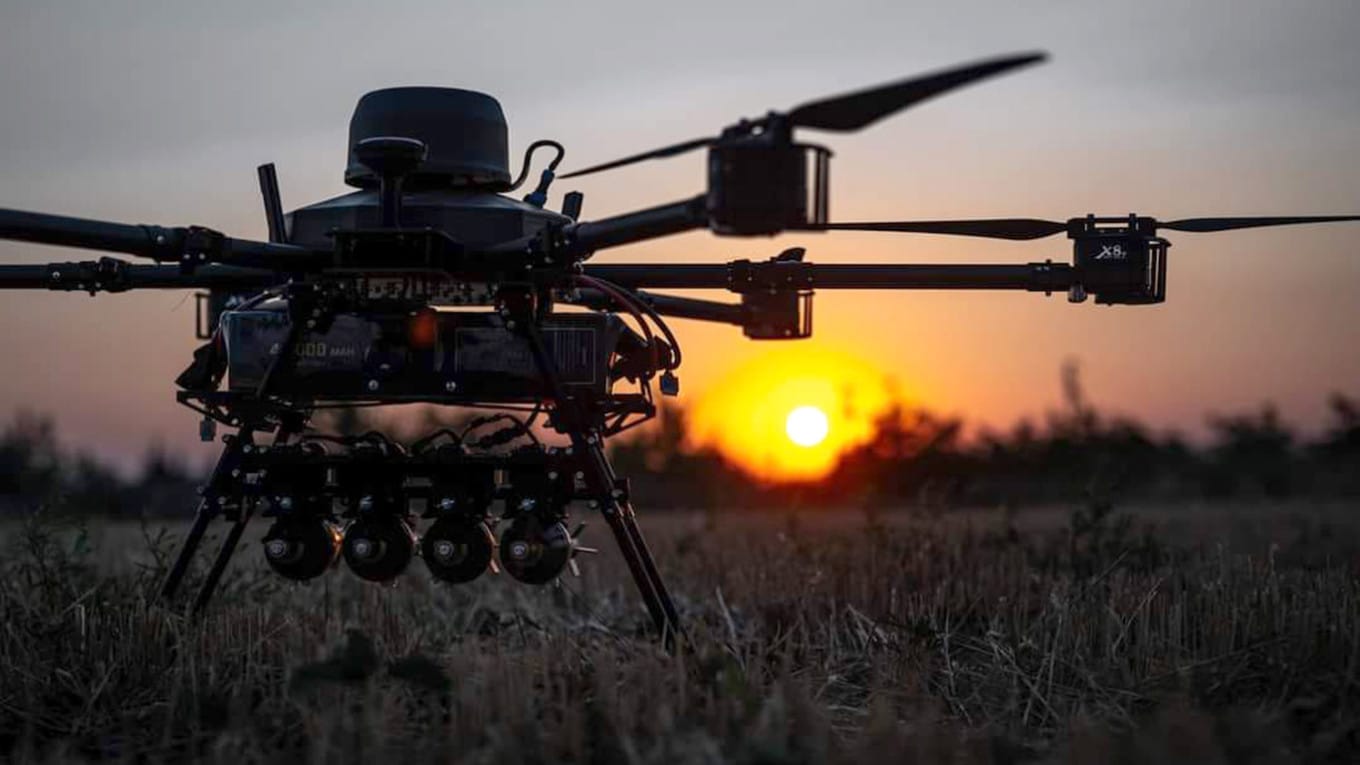
As the war between Ukraine and Russia continues, drones have become a central element in the conflict. From small workshops in Kyiv to large-scale manufacturers, Ukraine’s drone-making efforts are reshaping the battlefield. These unmanned aerial vehicles (UAVs) are not only tools of destruction but also symbols of innovation and resilience.
Volunteer-Driven Innovation
In a basement workshop in Kyiv, Andrii Yukhno leads a team of volunteers producing approximately 100 attack drones per month. Before the war, Yukhno was a barista, but the conflict transformed him into a full-time drone maker. His team crafts first-person view (FPV) drones equipped with high-explosive payloads, which are manually piloted into enemy targets. These drones, often referred to as “candy” by their makers, are critical tools on the frontlines.
Yukhno’s operation is just one of at least 15 similar setups in Kyiv. Volunteers like Khrystyna Pashchenko, a former manager, have joined the effort, leaving behind their previous careers to contribute to the war effort. “Now I feel super excited and a little bit proud of myself that I can do something useful,” Pashchenko shared.
Scaling Production: From Workshops to Factories
While small-scale operations like Yukhno’s play a vital role, larger manufacturers are also stepping up. Vyriy, one of Ukraine’s leading drone companies, recently achieved a milestone by producing drones entirely from Ukrainian-sourced components. This self-reliance is crucial as Ukraine faces challenges in securing international aid consistently.
Oleksii Babenko, CEO of Vyriy, emphasized the importance of domestic production: “The only way to stay strong is to make everything here. Ukrainian soldiers, Ukrainian manufacturers…” However, the locations of such factories remain secret to avoid Russian attacks.
A Technological Race with Russia
Despite Ukraine’s innovative edge, Russia’s larger production capacity poses a significant challenge. Oleksandr Kamyshin, an advisor to President Volodymyr Zelenskyy, described the conflict as a “technological race.” He noted that while Ukraine often leads in innovation, Russia quickly adapts and counters these advancements.
Ukraine’s ability to produce up to 5 million FPV drones annually, with over 150 manufacturers capable of producing 100,000 drones per month, showcases its determination. However, maintaining this pace and staying ahead of Russian capabilities remains a daunting task.
Drone Warfare’s Impact on Battlefield Strategies
The widespread use of drones has fundamentally altered combat dynamics. Both sides deploy drones for reconnaissance, targeting, and direct attacks. For Ukrainian soldiers, the sound of a drone often signals imminent danger. “When you hear a drone, you run as fast as you can,” shared a soldier from the Third Assault Brigade.
Medical evacuations have become increasingly perilous due to drone surveillance and attacks. Combat medics must navigate “grey zones”—times of low visibility at dawn and dusk—to rescue the wounded. Even then, casualties often remain stranded for hours, unable to receive timely care.
Volunteers Transitioning to Wartime Roles
The war has prompted many Ukrainians to pivot from their original professions to support the military effort. Oleh Halaidych, a biophysicist with a Ph.D. in stem cell research, now spends his days assembling drones. “Science is slow,” he explained. “And we need to do something to protect ourselves right now.” This sentiment is echoed by others who have left fields like arts, culture, and IT to contribute to the war effort.
Global Implications of Drone Warfare
The conflict in Ukraine highlights the growing significance of drones in modern warfare. From improvised commercial quadcopters to advanced military-grade UAVs, drones are shaping the future of combat. The lessons learned from this conflict will likely influence military strategies worldwide.
For Ukraine, the drone program represents both a tactical advantage and a testament to the nation’s resilience. As the war continues, the ability to innovate and adapt will be crucial in determining the outcome.