


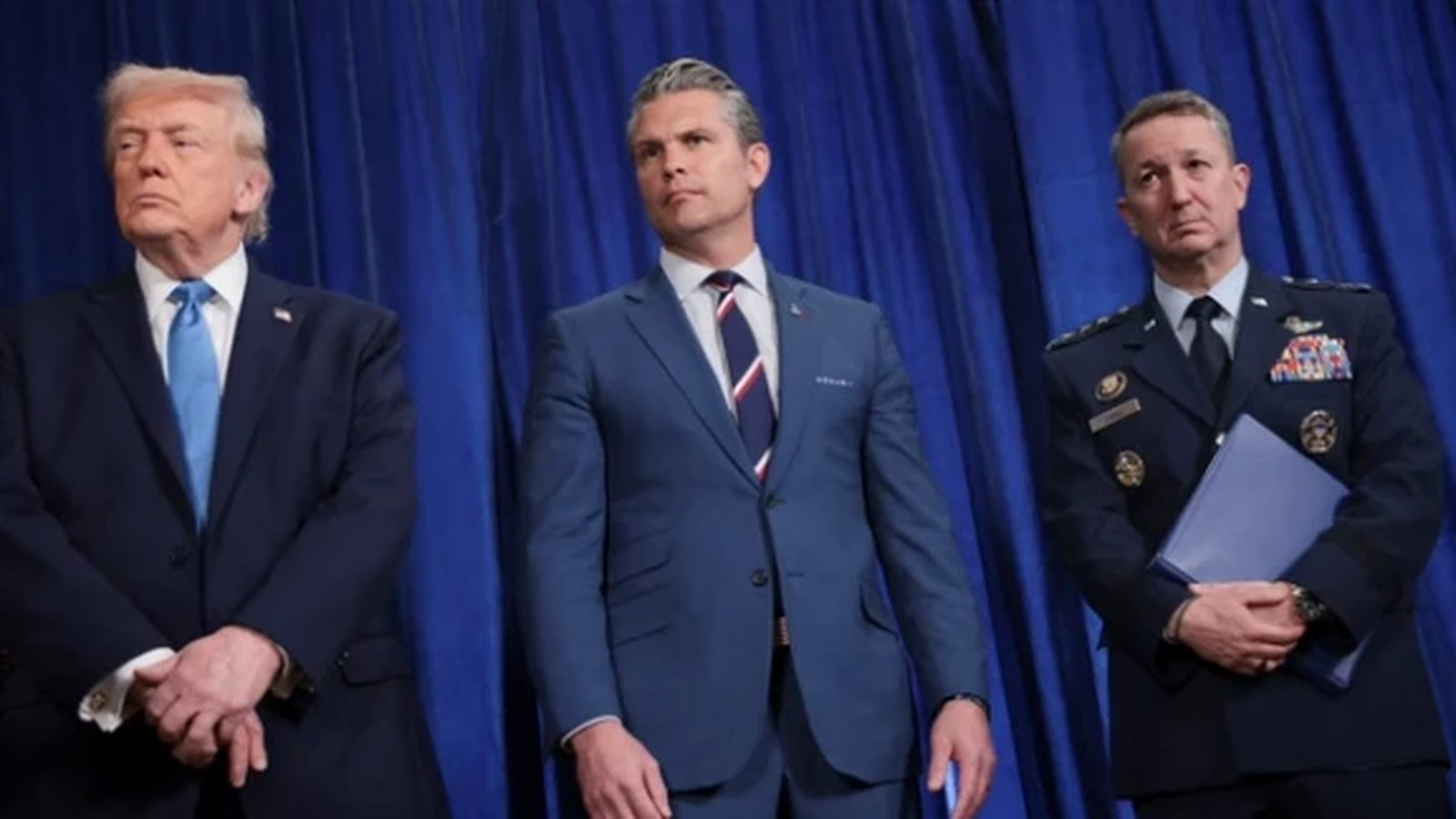
WASHINGTON (Iran International) — The top U.S. military commander in the Middle East briefed President Donald Trump at the White House on Thursday, October 29, 2026, on potential military options regarding Iran, as Washington weighs whether to resume major combat operations amid escalating maritime security incidents.
Admiral Brad Cooper, head of U.S. Central Command (CENTCOM), participated in the high-level meeting alongside Secretary of War Pete Hegseth and Chairman of the Joint Chiefs of Staff General Dan Caine. According to reporting published by Iran International citing U.S. officials, the rare in-person White House briefing also involved other Cabinet members and addressed a broader portfolio of regional security challenges.
Strait of Hormuz Security and Naval Mine Collisions
The high-stakes military briefing coincides with mounting security pressures in the Strait of Hormuz, where shipping lanes face persistent threats. Iran’s Islamic Revolutionary Guard Corps (IRGC) reported that three tankers struck naval mines in the strategic waterway over a 24-hour period. Meanwhile, Iranian Vice President Mohammadreza Aref asserted that Tehran is actively managing the waterway and claimed that its defensive readiness has improved significantly since prior regional conflicts.
Fresh investigative reporting underscores the logistical dimensions of the ongoing standoff. A Reuters investigation revealed that Iran has utilized a network of more than 5,000 military-linked agencies to import at least $2 billion worth of equipment, explosives, and heavy-duty trucks since January 2025, successfully circumventing Western sanctions and the enforced U.S. naval blockade to sustain its military industrial base.
Strategic Debates and Washington’s Policy Dilemmas
The prospect of renewed conflict has triggered intense debate in Washington and Tehran over whether the U.S. administration is preparing for a sustained campaign of economic and military pressure or whether diplomatic channels can still avert a wider war. Former diplomat Kourosh Ahmadi, writing in the reformist daily Shargh, argued that remaining diplomatic disagreements primarily concern the sequencing of concessions rather than fundamentally incompatible objectives, suggesting that President Trump’s rhetoric does not automatically signal an imminent attack.
Conversely, other analysts warn that a prolonged stalemate carries severe economic penalties. Moderate Iranian commentators have noted that the ongoing “neither war nor peace” paradigm imposes a heavy domestic burden, dampening business investment and undermining long-term economic growth. Political analyst Rahman Ghahramanpour told the economic daily Donya-ye Eghtesad that any future conflict would likely extend beyond a brief exchange, pointing to a potential eight-to-twelve-month strategy combining targeted strikes and financial sanctions designed to erode Tehran’s capacity to resist.
Regional Political Shifts and Israeli Election Deadlock
Political developments across the region are compounding the strategic calculus. Iranian state media and analysts have closely monitored Israel’s recent inconclusive elections, which left neither major political bloc with a governing majority. Outlets affiliated with the IRGC, including Tasnim and Fars, highlighted the political deadlock and potential gains by Arab parties as factors that could weaken Prime Minister Benjamin Netanyahu. However, Iranian Middle East experts, such as Masoud Asadollahi and political analyst Morteza Makki, cautioned that a change in Israeli leadership would not fundamentally alter Tel Aviv’s core security posture toward Iran’s nuclear and missile programs, though political instability could influence the timing and scope of potential military action.