


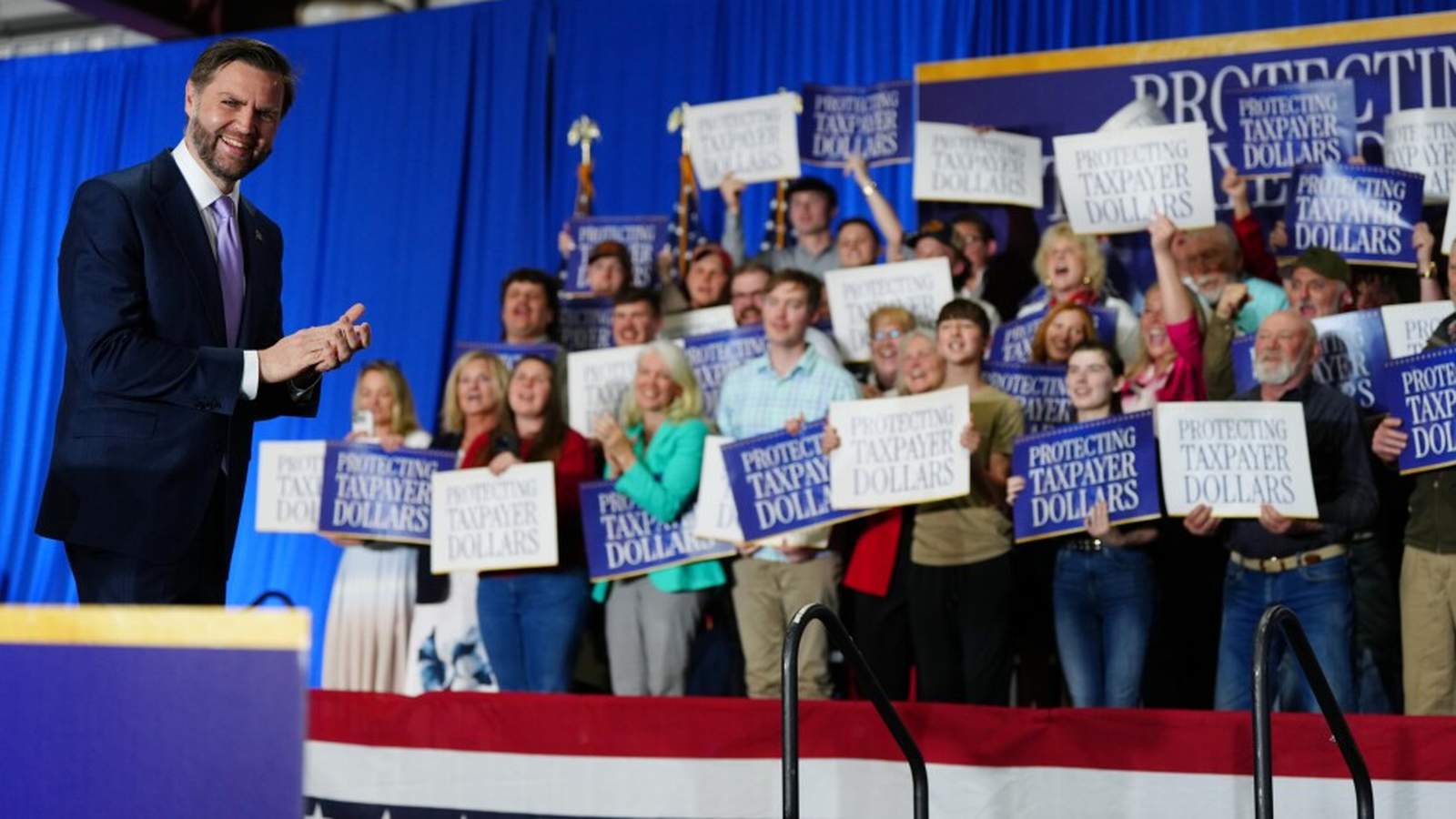
The Bangor Offensive: Framing the 2026 Narrative
In a high-stakes appearance at Bangor International Airport, Vice President JD Vance transitioned from administrative oversight to active campaign rhetoric, positioning the Trump administration’s anti-fraud initiatives as a central pillar of the Republican Party’s 2026 midterm strategy. Officially designated as the administration’s ‘fraud czar,’ Vance’s visit to Maine’s 2nd Congressional District was not merely a routine check on federal programs but a calculated effort to bolster Republican candidates like former Governor Paul LePage. By characterizing the current Democratic leadership as ‘enablers of scammers,’ Vance is attempting to redefine the electoral discourse from a defensive posture on the economy to an offensive one on fiscal integrity.
The strategic importance of Maine’s 2nd District cannot be overstated. As a region that has consistently supported Donald Trump despite the state’s overall Democratic lean, it serves as a microcosm for the broader national battle for the U.S. House of Representatives. Vance’s presence underscores the administration’s intent to capture seats vacated by moderate Democrats like Rep. Jared Golden. However, the rhetoric in Bangor suggests a deeper ambition: the institutionalization of ‘fraud fighting’ as a permanent political weapon, backed by a significant administrative apparatus and a $1.7 billion ‘weaponization’ fund that has drawn intense scrutiny from legal experts and political opponents alike.
The ‘Fraud Czar’ and the Politicization of the DOJ
Vance’s mandate as ‘fraud czar’ has increasingly intersected with the Department of Justice’s (DOJ) investigative priorities. During his Maine stop, Vance reinforced the administration’s willingness to use federal investigative powers against political adversaries. This was most recently evidenced by his comments regarding a DOJ probe into Representative Ilhan Omar. While Vance stated he did not wish to ‘prejudge’ the investigation, his public affirmation that the DOJ is ‘looking at’ unspecified financial and political crimes—following a direct social media directive from President Trump—has raised alarms regarding the independence of the judiciary (MS.now/Maddowblog, 2026).
The administration’s focus on Maine’s social safety programs, specifically Medicare and Medicaid, follows a pattern of targeted audits. Earlier this year, CMS Administrator Dr. Mehmet Oz called for corrective actions in Maine, a move Governor Janet Mills decried as a ‘political attack’ designed to undermine healthcare access. By aligning with Paul LePage, who has long campaigned on cracking down on social program ‘leakage,’ Vance is signaling that the federal government will provide the investigative muscle to support state-level Republican platforms. This synergy between federal oversight and local campaigning represents a novel integration of executive power into the midterm cycle.
Economic Variables and the Iran Conflict
The pivot toward a ‘fraud-centric’ message comes at a time when the Trump administration is grappling with significant economic headwinds. The ongoing conflict with Iran has led to surging energy costs, with heating oil and gas prices reaching record highs in Northern New England. Critics, including former Maine CDC Director Nirav Shah, argue that Vance’s focus on fraud is a tactical diversion from the administration’s inability to stabilize domestic markets amidst geopolitical instability. Governor Janet Mills echoed this sentiment, suggesting that the ‘fraud czar’ label is a veneer for an administration that has failed to address housing, childcare, and healthcare costs.
Despite these criticisms, Vance remains undeterred, using the Bangor rally to frame the American taxpayer as the ‘first victim of fraud.’ This populist framing allows the administration to bypass complex macroeconomic debates—such as the inflationary impact of the Iran war—and instead focus on a more digestible narrative of ‘government fleecing.’ For Vance, this narrative serves a dual purpose: it energizes the base for the 2026 midterms and solidifies his standing as the ideological heir to the Trump movement ahead of a potential 2028 presidential run.
Institutional Security and the Vice-Presidential Profile
The elevation of Vance’s profile is also reflected in the heightened security measures surrounding his private residence. City officials in Cincinnati recently announced extensive road closures in the East Walnut Hills neighborhood leading into Memorial Day weekend (Cincinnati Enquirer, 2026). While such measures are standard for a sitting Vice President, the scale of the closures and the accompanying public advisories underscore the intensifying security environment surrounding the administration’s most visible figures. As Vance continues to traverse the country, these logistical realities serve as a constant reminder of the high stakes—and high tensions—defining the current political era.
In Maine, Vance also took the opportunity to navigate the internal dynamics of the Republican Party, specifically his relationship with Senator Susan Collins. Despite her frequent divergence from the Trump administration’s line, Vance praised her ‘independence,’ a move likely intended to maintain a bridge to the party’s moderate wing while simultaneously stumping for the more firebrand LePage. This balancing act is critical for a Vice President who must satisfy a hardline base while maintaining the institutional alliances necessary for legislative progress in Washington.
The strategic deployment of JD Vance to Maine highlights a sophisticated attempt to merge executive oversight with electoral campaigning. By framing the 2026 midterms as a referendum on ‘fraud’ rather than ‘inflation,’ the administration is attempting to shift the burden of proof onto its opponents. However, the reliance on a $1.7 billion fund and the direct involvement of the DOJ in politically sensitive investigations suggest a deepening of institutional weaponization that may alienate moderate voters even as it galvanizes the core. As the Iran conflict continues to exert pressure on the American economy, the ‘fraud czar’ narrative will be tested by the reality of the pocketbook issues that typically decide midterm outcomes.