


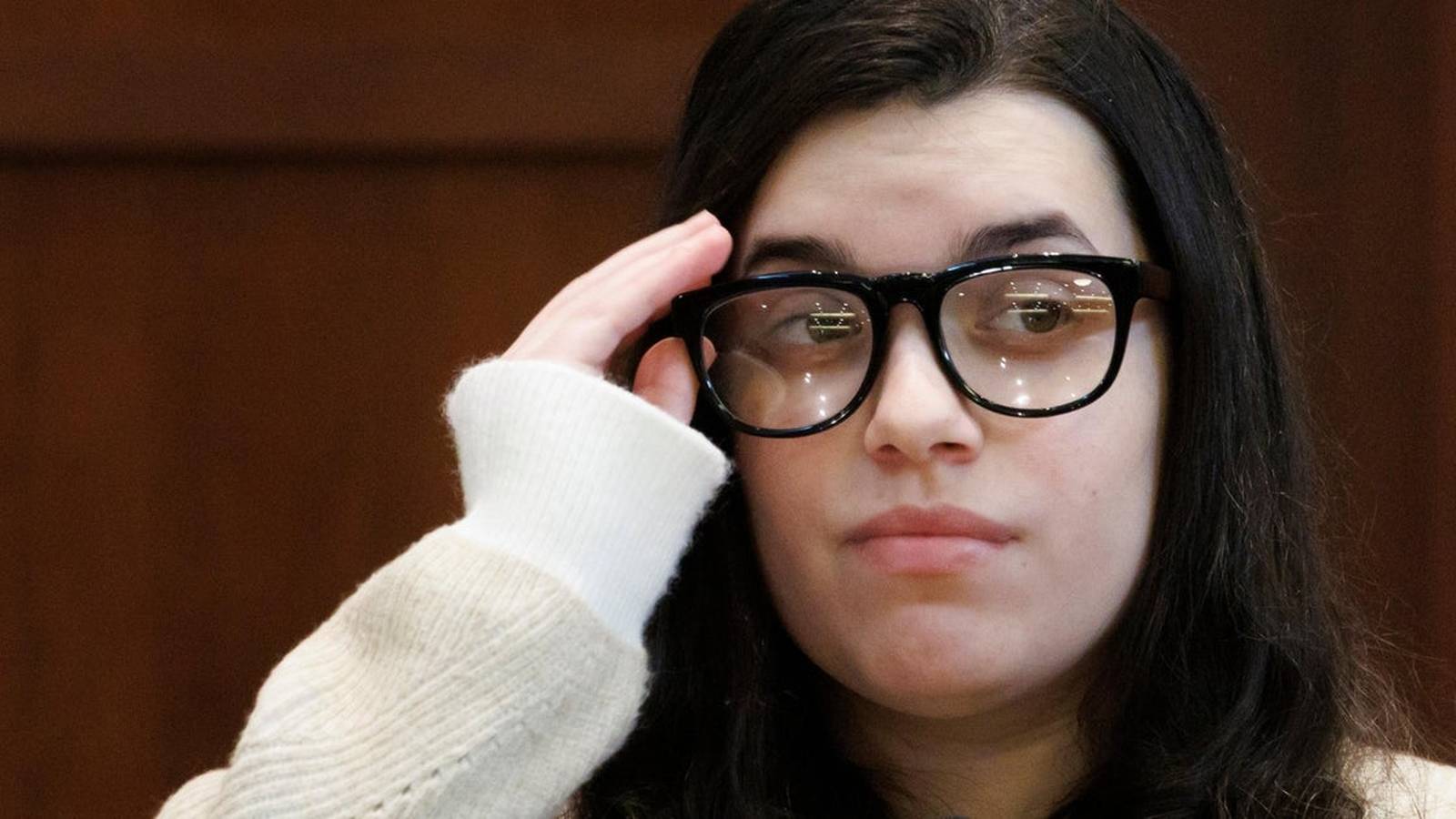
FAIRFAX, Va. — The tranquil facade of a Herndon, Virginia, home was shattered in February 2023, revealing a chilling narrative of alleged betrayal, lust, and murder. Brendan Banfield now stands accused of aggravated murder in the deaths of his wife, Christine Banfield, and Joseph Ryan. Prosecutors contend that these brutal killings were not random acts of violence but the culmination of an elaborate scheme orchestrated by Banfield and his au pair, Juliana Peres Magalhães, with whom he was entangled in a secret affair.
The trial, currently unfolding in Fairfax, paints a picture of premeditation and manipulation. According to prosecutors, Banfield and Magalhães allegedly conspired to eliminate Christine, devising a sinister plan to lure an unsuspecting man to their home under the guise of a violent sex fantasy. Joseph Ryan, believing he was meeting Christine for consensual role-play, accepted the invitation, bringing a knife and restraints as requested. This deadly rendezvous, prosecutors argue, was designed to frame Ryan for Christine’s murder, providing Banfield with a fabricated self-defense narrative.
The Unraveling of a Twisted Plot
On the fateful day of the killings, Magalhães made three 911 calls, twice hanging up before finally reporting an emergency. Brendan Banfield then took the phone, claiming he had shot a man who had stabbed his wife, as reported by the Associated Press. Authorities arrived to a chaotic scene: Ryan lay fatally shot, and Christine suffered multiple stab wounds. She was rushed to the hospital but succumbed to her injuries.
From the outset, Magalhães’s account to the police raised eyebrows. A subsequent, months-long investigation peeled back the layers of deception, exposing the illicit affair between Magalhães and Banfield. Prosecutors allege that the couple’s intent was clear: Banfield wanted to avoid a costly divorce, a sentiment Magalhães later echoed in a video obtained by NBC News, stating Banfield masterminded the plan to prevent dividing assets and sharing custody of their four-year-old daughter.
The alleged plot, detailed by Magalhães on the stand, began to take shape in October 2022, just months after her sexual affair with Banfield commenced in August 2022. They allegedly created a profile, ‘Anastasia 9,’ on FetLife, a fetish dating website, using Christine’s laptop. Posing as Christine, Banfield sought out individuals willing to engage in a ‘rape fantasy’ involving gagging, bondage, and spanking, specifically requesting that participants bring restraints and excluding those who desired public meetings. Joseph Ryan was the chosen target.
A Witness’s Shifting Loyalties and Credibility Under Fire
Juliana Peres Magalhães, initially arrested in October 2023 for Ryan’s death, pleaded guilty to manslaughter in October 2024. Her testimony has become a cornerstone of the prosecution’s case against Brendan Banfield, who was arrested nearly a year after her, in September 2024. Yet, her journey to the witness stand has been fraught with internal conflict and external pressure, as revealed by her own jailhouse letters.
Defense attorney John Carroll has spent significant time grilling Magalhães, questioning the veracity of her testimony and her motives. He suggested she cobbled together her account from discovery materials provided by the Commonwealth. During cross-examination, Carroll pressed Magalhães on letters she wrote from jail, which initially expressed unwavering love and loyalty to Banfield. ‘I’d give my life for his and I would never do anything to hurt him or against him,’ she wrote in one letter, adding, ‘I’ll take the blame for the both of us,’ as reported by Fox News.
However, as months passed, Magalhães’s tone shifted dramatically. Her letters revealed growing despair, frustration with her legal representation, and anxiety over trial delays and separation from her family in Brazil. ‘I feel drained,’ she wrote. ‘No strength, anymore. No courage. No hope. It feels like a personal hell in life. Painful, torture, disturbing.’ The defense posited that this vulnerability, coupled with a health crisis and the threat of deportation, pushed her to accept a plea deal and testify against Banfield. Carroll suggested prosecutors capitalized on her isolation and despair, pressuring her to lie.
Adding another layer of complexity, the defense hinted at a potential financial motive. Magalhães reportedly discussed with TV producers an exclusivity contract for a documentary about her story, with a payout of at least $10,000, and was holding out for a better deal, possibly with Netflix. This detail casts a shadow of doubt over her claim that she accepted the plea deal because it was ‘the right thing to do’ and she ‘wanted the truth to come out,’ as she stated on the stand, according to CBS News.
The Day of the Murders: Conflicting Accounts
Magalhães’s testimony about the day of the killings was harrowing. She described Banfield’s plan for her to pretend to take their daughter to the zoo while he waited at a McDonald’s. Upon Ryan’s arrival, she was to call Banfield. She recounted returning to find Ryan on top of Christine in the master bedroom, hearing Christine tell her husband, ‘He has a knife.’ Magalhães then claimed Banfield shot Ryan in the head and then used Ryan’s knife to stab Christine multiple times in the neck. She further testified that she noticed Ryan still moving and then shot him in the chest.
However, the defense highlighted inconsistencies. Magalhães’s court testimony varied from her initial bodycam statement to police, where she claimed Banfield told her to shoot Ryan. She also struggled to recall specific details about the creation of the FetLife account or who authored particular messages, stating she and Banfield both participated and used similar language. The judge even had to chastise her at one point, telling her to ‘just answer the question.’
Prosecutor Jenna Sands, in her opening statement, maintained that Banfield was the sole mastermind. She told jurors that Banfield ‘created the narrative that Christine desperately wanted to be raped,’ posing as Christine to instruct Ryan on how to enter the home and what to do, as reported by Fox News. Sands urged the jury to find Banfield guilty of both murders.
Further evidence presented included records showing Magalhães and Banfield visited a shooting range two months before the killings, and Banfield purchased the gun later used to shoot Ryan weeks after. Dr. Meghan Kessler, the medical examiner, testified that both victims suffered ‘rapid fatalities,’ dying within seconds to minutes. She also noted numerous bruises and abrasions on Christine’s legs and arms, most appearing less than 48 hours old.
The human toll of this tragedy extends beyond the victims. Joseph Ryan’s mother, Deirdre Fisher, shared her agony with WUSA-TV, recalling the moment she learned of her son’s death: ‘I could hear my own voice screaming… It was almost like it was outside of my body hearing that he had been killed.’ Banfield also faces charges of child abuse and felony child cruelty, as his then-four-year-old daughter was in the house during the killings.
The trial continues, with Banfield pleading not guilty to charges that could result in a life sentence if convicted.
The Virginia au pair murder trial presents a stark challenge to the jury: disentangling truth from testimony tainted by desperation, potential self-preservation, and shifting allegiances. While the prosecution meticulously builds its case around Magalhães’s detailed account of a calculated plot, the defense skillfully exploits every inconsistency and external pressure point, leaving the ultimate verdict hanging in the balance, a testament to the complexities of human motivation and memory under du extreme duress.