

Quick Read
- Bryce Young has struggled to match Carolina’s improving defense and young offensive talent.
- In 2025, Young ranks last among NFL quarterbacks in key advanced metrics.
- Carolina’s defense and skill players are showing promise, but offensive line issues persist.
- The Panthers are not financially tied to Young long-term and can draft a new quarterback.
- Deciding on Young’s fifth-year option will shape the team’s future direction.
Panthers’ Progress Highlights Bryce Young’s Struggles
It’s a paradox familiar to every sports fan: a team that’s getting better, but a key player who isn’t keeping pace. That’s the situation facing the Carolina Panthers as 2025 draws to a close. The franchise, once locked in a cycle of mediocrity, now shows real signs of life—except at the most critical position on the field.
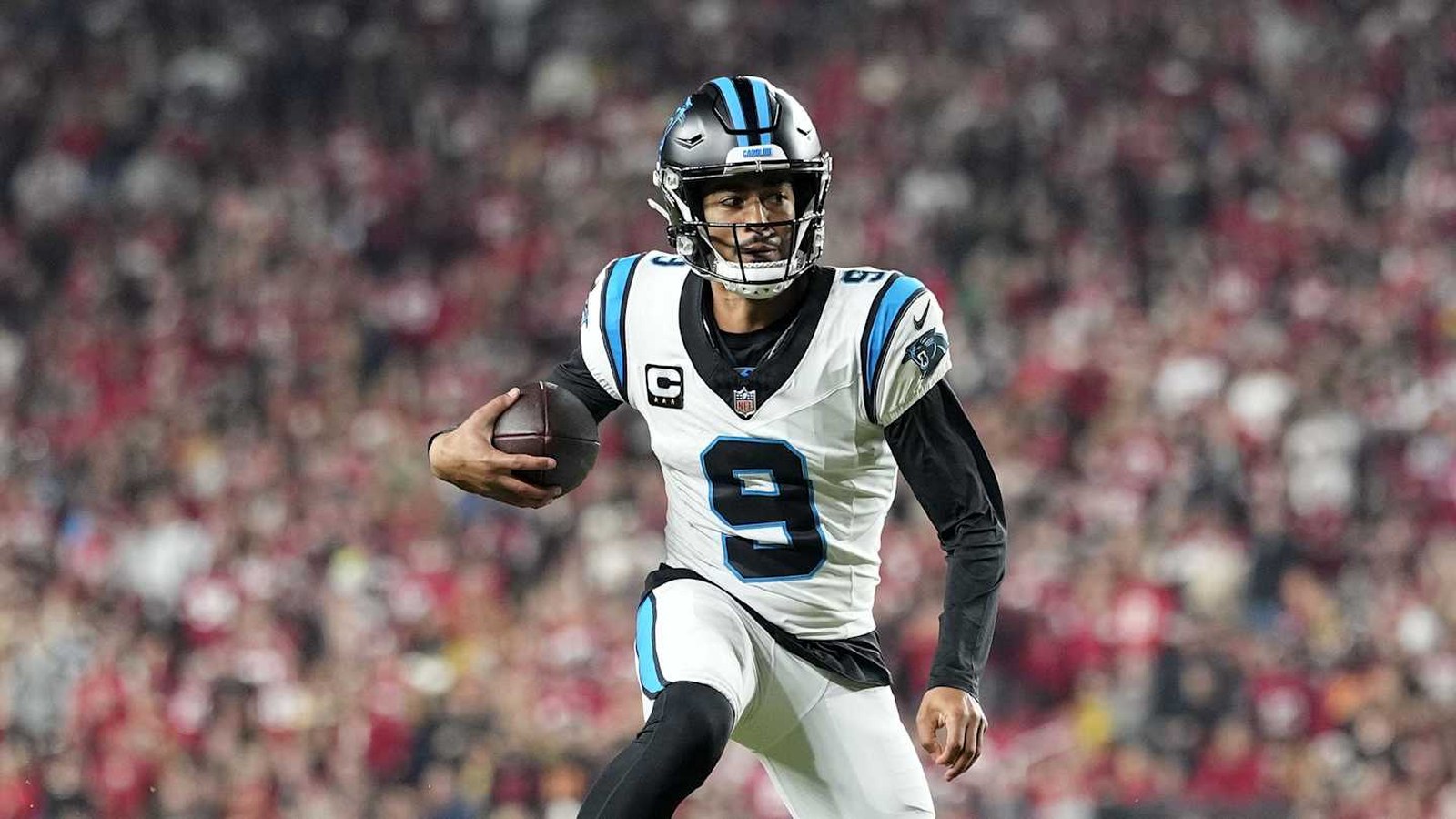
Monday night’s 20-9 loss to the San Francisco 49ers was a microcosm of the Bryce Young era in Carolina. The defense, led by coordinator Ejiro Evero, was opportunistic, snagging three first-half interceptions. But Young, the 2023 No. 1 overall pick, failed to capitalize, converting those turnovers into a paltry three points and throwing a costly interception himself from the Niners’ 1-yard line. The stat line tells a story: Young completed 18 of 29 passes for just 169 yards, a single touchdown, and two interceptions—averaging under six yards per attempt.
Flashes of Brilliance, But Not Enough Consistency
Young’s career has not been devoid of promise. Just last week, in a dramatic overtime win against Atlanta, he threw for 448 yards and three touchdowns—a performance that reminded many of his collegiate star power at Alabama. But that game was an outlier. In his other ten starts this season, Young has posted only 1,673 yards, 12 touchdowns, and nine interceptions, struggling to push the ball downfield and keep drives alive.
Statistically, the picture is stark. Since entering the league in 2023, Young ranks dead last among qualifying quarterbacks in advanced metrics like EPA + CPOE (0.029), success rate (41.9%), and EPA per play (-0.074), according to Sports Illustrated. His career EPA sits at -269.1, a figure that underscores just how much Carolina’s offense has sputtered with him at the helm. In contrast, quarterbacks like Tua Tagovailoa, who have started a similar number of games, have produced positive impacts for their teams.
Carolina’s Roster Is Ready for More
What makes Young’s struggles so glaring is the steady improvement around him. The Panthers defense, once among the worst in the league, now ranks 18th in yards allowed per game and 14th in scoring—a huge leap from last season’s basement-dwelling numbers. The offense has its own young stars: running back Rico Dowdle, a free-agent pickup, ranks sixth in the league with 871 rushing yards. Rookie receiver Tetairoa McMillan leads all first-year players with 783 receiving yards. Head coach Dave Canales has built a foundation that, with the right quarterback, could compete for playoff spots.
But the offensive line remains a problem. Carolina ranks 27th in pressure rate allowed (38.4%), meaning Young often faces defenders in his face. Still, the best teams find ways to elevate their quarterbacks—or draft new ones when the old plan isn’t working.
Decision Time: Move On or Double Down?
The Panthers now face a pivotal choice regarding Young’s fifth-year option. The decision is both easy and difficult. Declining it means admitting a mistake and moving on from a former top pick. But the financial implications are minimal compared to the burden of sticking with a quarterback who hasn’t delivered. Unlike other franchises locked into long-term deals with underperforming passers, Carolina has flexibility. With their draft capital restored after costly trades in 2023 and 2024, the team could target a new signal-caller in the next draft.
The list of potential first-round quarterbacks is long and intriguing: Indiana’s Fernando Mendoza, Oregon’s Dante Moore, Alabama’s Ty Simpson, among others. If one of these prospects slips to Carolina’s pick, the front office should act decisively. Allowing a rookie to compete with Young in 2026, and handing over the reins by 2027 if necessary, could reset the franchise’s trajectory.
It’s a blueprint that recalls the last era of Panthers success, when Cam Newton electrified fans and brought hope to Bank of America Stadium. The current roster, younger and more talented than in recent memory, deserves a quarterback who can match their potential.
What’s Next for Bryce Young—and the Panthers?
For Young, the numbers are unforgiving. His tenure in Carolina has been marked by missed opportunities and stalled drives. While flashes of his college excellence occasionally surface, they have not translated into consistent NFL success. The organization’s patience is understandably wearing thin.
As the team weighs its options, one thing is clear: the future of the Panthers depends on making the hard, necessary decision at quarterback. The roster is ready, the coaching staff is capable, and the salary cap is clean. The missing piece is at the center of the huddle. If Carolina truly wants to maximize its young talent and capitalize on years of rebuilding, moving on from Bryce Young is the logical step.
Based on the current trajectory, the Panthers’ best path forward is to invest in a new quarterback while maintaining an open competition. The statistics and on-field results point to a clear conclusion: Bryce Young’s time as Carolina’s starter should end if the franchise hopes to realize its potential and move beyond the struggles of the past two seasons.