


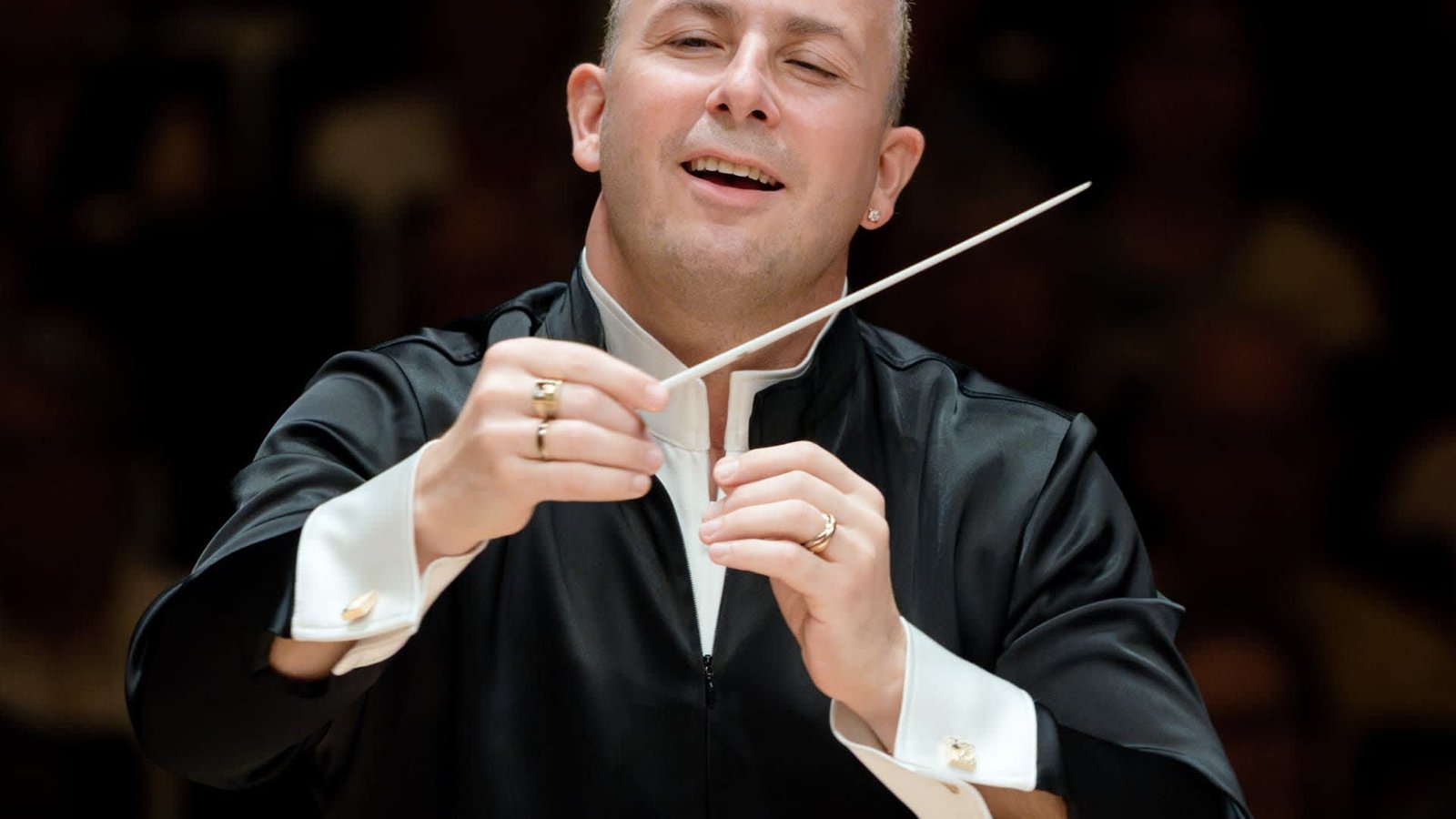
On January 1, 2026, the world turned its gaze to Vienna’s famed Musikverein for the annual Vienna Philharmonic New Year’s Concert—a tradition cherished by millions. But this year, the spotlight burned brighter than usual: Yannick Nézet-Séguin, the acclaimed Canadian maestro, made his debut at the helm, infusing the event with a distinct blend of energy, warmth, and musical mastery. Broadcast live on BBC Two, BBC Radio 3, and other international outlets, the concert’s reach stretched far beyond the gilded walls of the Golden Hall.
Nézet-Séguin’s approach was both rigorous and exuberant. Conducting from memory, he navigated the sprawling program with a dancer’s finesse—his smile and rhythmic sway as much a part of the spectacle as the music itself. The concertmaster, Rainer Honeck, and the orchestra responded in kind, delivering performances that ranged from delicately poised waltzes to bold, vocally charged marches. But it wasn’t just about technical excellence. There was a palpable sense of celebration, of tradition meeting fresh vision.
The program itself was a tapestry of Viennese classics and intriguing newcomers. The first half opened with Johann Strauss Jr.’s sparkling overture to «Indigo and the Forty Thieves», followed by Carl Michael Ziehrer’s «Danube Legends», Josef Lanner’s «Malapou Galop», and Eduard Strauss’s playful «Devil’s Brew». The bat-themed quadrille from Strauss Jr.’s «Fledermaus» and Strauss Sr.’s «Carnival in Paris» rounded out the set, each piece echoing the city’s rich musical lineage.
After the interval, Franz von Suppé’s overture to «The Beautiful Galatea» set a buoyant tone, with Josephine Weinlich’s «Siren Songs» and Josef Strauss’s «Woman’s Dignity» adding fresh colors. Notably, Florence Price’s «Rainbow Waltz»—arranged by W. Dörner—brought a contemporary note to the proceedings, reflecting the orchestra’s evolving repertoire. Hans Christian Lumbye’s «Copenhagen Steam Railway Galop» and Strauss Jr.’s «Roses from the South» followed, before the Egyptian March and the peace-themed «Olive Branches» waltz closed the main program.
For the encores, Nézet-Séguin and the orchestra offered Philipp Fahrbach’s «Circus» polka—making its first appearance at the New Year’s Concert—then the universally beloved «Blue Danube» waltz, and finally, Strauss Sr.’s rousing «Radetzky March». Each encore was met with familiar applause and, in the case of the Radetzky, a visually lively audience participation, although some found the spectacle distracting compared to the music itself.
Throughout, Nézet-Séguin’s leadership was marked by an infectious joy and meticulous attention to detail. His spoken address to the audience was concise, heartfelt, and well received—a reminder that, for all the grandeur, this event remains deeply personal for both performers and listeners. The orchestra’s sound, as noted by some critics, was robust and occasionally surprising, especially during the vocal segments of the Egyptian March.
This New Year’s Concert did more than mark a transition between years. It showcased the Vienna Philharmonic’s commitment to tradition while embracing subtle innovation. Nézet-Séguin’s choices—like spotlighting Josephine Weinlich and Florence Price—hinted at a broader, more inclusive musical future, without ever compromising the essence of the Viennese waltz. The fact that the concert will soon be released digitally and in various physical formats by Sony Classical ensures its reach will be both immediate and enduring.
As the final notes faded, it was clear that Yannick Nézet-Séguin had made his mark—not just as a guest conductor, but as a steward of Vienna’s musical heritage. With each gesture and phrase, he invited the world to waltz into 2026, united by music’s timeless power.
Yannick Nézet-Séguin’s debut at the Vienna Philharmonic’s New Year’s Concert was more than a performance—it was a celebration of continuity and change. By honoring tradition and introducing fresh perspectives, he underscored the evolving role of classical music in global culture. His ability to connect with both musicians and audiences alike promises an exciting future for this storied event.
Sources: Colin’s Column, Xinhua, WQXR