


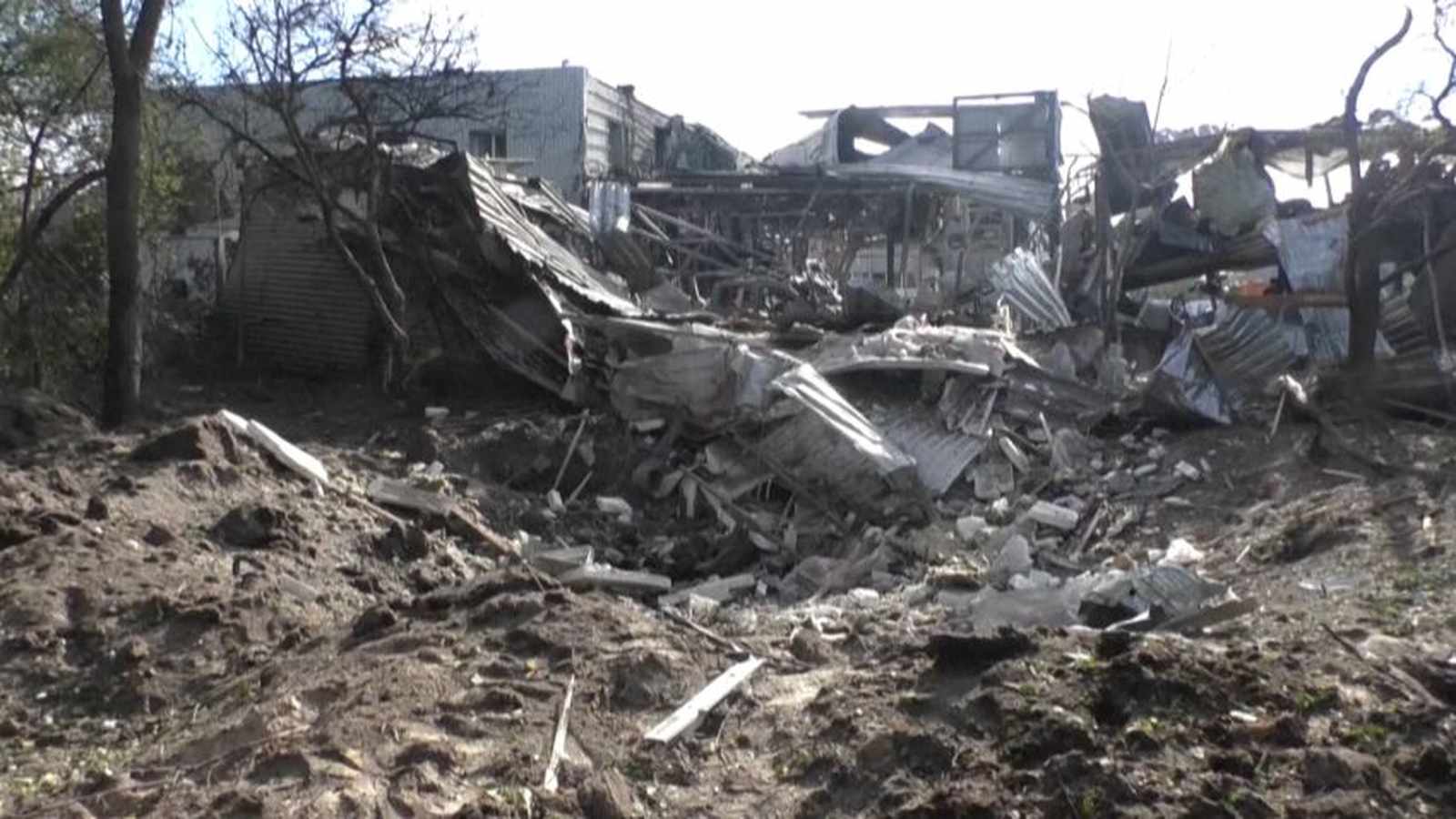
Deadly Double-Tap Strike in Zaporizhzhia
On Monday, November 2, 2026, Russian forces launched a double-tap aerial bombing attack against a humanitarian aid center operating inside a school in the frontline village of Komyshuvakha, located in Ukraine’s Zaporizhzhia region. According to Al Jazeera, the strike killed at least 26 people as local residents had gathered to collect their weekly humanitarian packages. The school building had long been closed to regular education due to its dangerous proximity to the active front line.
Ukrainian officials reported that the assault utilized multiple aerial bombs timed in succession. The initial explosions struck as civilians were arriving at the distribution point, while a secondary bomb targeted the basement shelter where survivors and responders had sought refuge. Emergency services confirmed that the fatalities included two rescue workers and four police officers, while dozens of others sustained injuries or remained trapped under heavy debris.
Humanitarian Impact and Missing Persons
Local authorities have scrambled to coordinate heavy rescue operations amid ongoing security risks. Regina Kharchenko, the secretary of the Zaporizhzhia City Council, stated that at least 27 people remained unaccounted for following the devastation. Regional police forces and emergency rescue teams deployed heavy equipment to clear smouldering rubble, searching for trapped survivors as five injured individuals, including two additional rescue personnel, received emergency hospital care.
Ukrainian President Volodymyr Zelenskyy condemned the assault as a deliberate terrorist action. In his nightly address, he emphasized that Russian military command could not have been unaware that vulnerable residents regularly assembled at the Komyshuvakha site every Monday for essential food and supplies. Zelenskyy argued that the attack demonstrated Moscow’s complete rejection of de-escalation and genuine justice, pointing out that it directly undermined recent localized humanitarian goodwill efforts brokered in Oleshky.
Diplomatic Push and Abu Dhabi Negotiations
The escalation unfolded simultaneously with high-stakes diplomatic announcements regarding renewed international peace initiatives. Hours after the Zaporizhzhia bombing, US special envoy Steve Witkoff announced that official delegations from Ukraine and Russia are scheduled to convene in Abu Dhabi, United Arab Emirates, on November 11 and 12, 2026. According to official disclosures, the upcoming three-way talks will focus on post-war security frameworks, regional de-escalation, humanitarian corridors, and pathways toward ending the ongoing conflict.
The diplomatic push follows a series of closed-door discussions between US representatives and Russian leadership in St Petersburg. Washington mediators are aggressively seeking a substantive breakthrough before severe winter weather fully sets in across the war zone, now entering its fifth consecutive year. However, Ukrainian officials maintain severe skepticism regarding Moscow’s willingness to negotiate in good faith, citing continuous aerial bombardments targeting critical civilian infrastructure nationwide.
Regional Frontline Escalation and Strategic Warnings
Beyond the Komyshuvakha disaster, heavy fighting and aerial attacks continued across multiple Ukrainian regions on Monday. Ukrainian emergency services reported that separate drone strikes injured 12 people in the eastern Kharkiv region, damaging commercial refrigeration facilities, greenhouses, and residential homes. In the strategic Black Sea port of Odesa, another warehouse strike injured five individuals and heavily impacted surrounding neighborhoods.
Simultaneously, Ukrainian intelligence warned that Russian military forces were preparing a broader wave of massive missile and drone strikes targeting national energy grids and logistics networks. Officials noted that these operations appeared strategically timed to coincide with the United States midterm elections, when global diplomatic attention might be temporarily diverted. In response, Kyiv urged international partners, particularly Washington, to apply maximum economic and diplomatic pressure to compel Moscow toward a sustainable political settlement.