

Quick Read
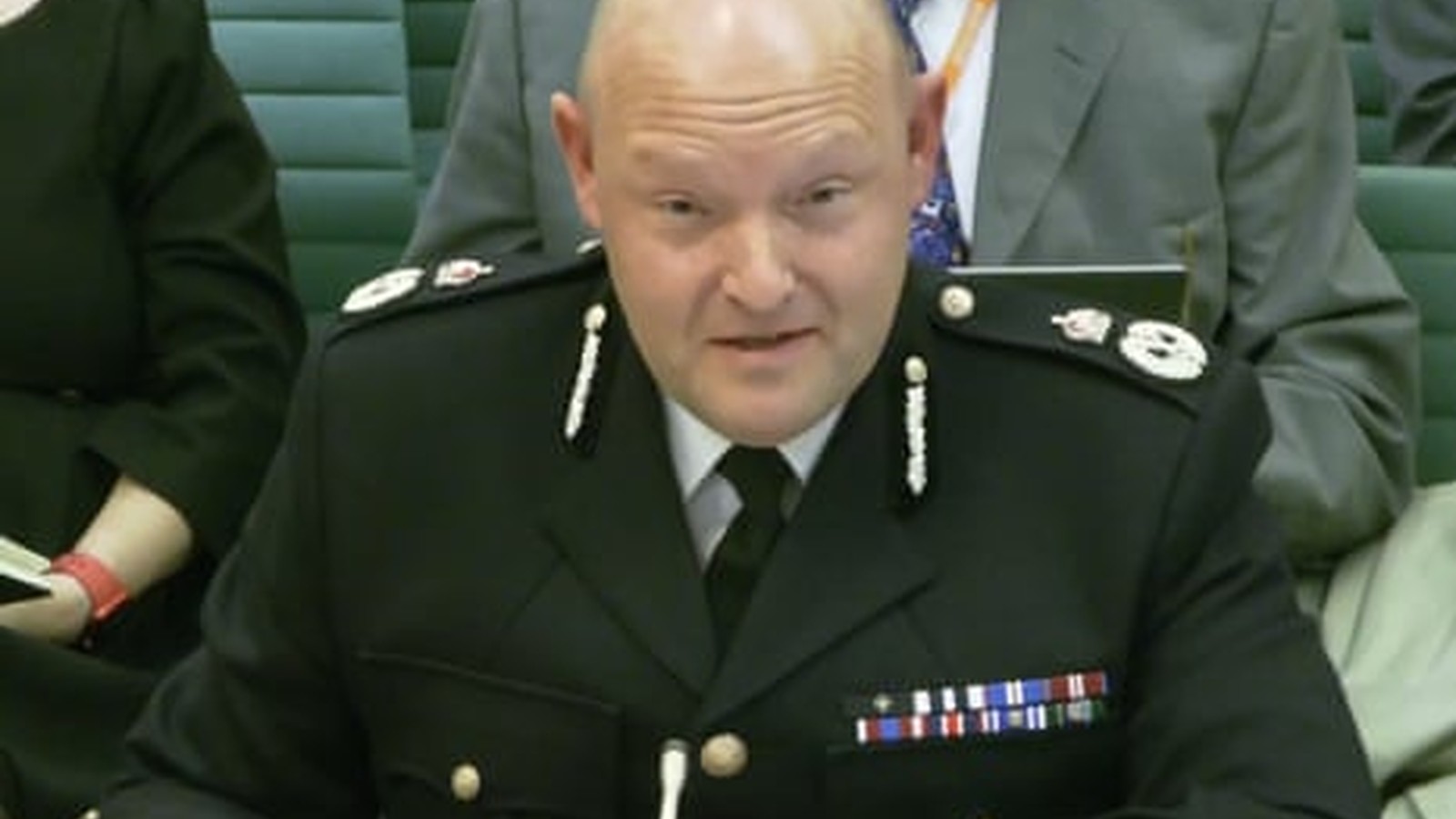
- West Midlands Chief Constable Craig Guildford faces scrutiny over a controversial ban on Maccabi Tel Aviv football fans.
- Guildford apologised to MPs for presenting incorrect evidence, attributing a fictitious match detail to Microsoft Copilot AI.
- Police and Crime Commissioner Simon Foster criticised MPs on the Home Affairs Committee for alleged bias against Guildford.
- The Home Secretary, Shabana Mahmood, is awaiting an HMIC report on the force’s handling of intelligence before deciding on confidence in Guildford.
- MP Ayoub Khan defended Guildford, suggesting he’s a ‘scapegoat’ and warned against political interference in police operations.
The tenure of West Midlands Chief Constable Craig Guildford has been plunged into a maelstrom of controversy, intensified by a recent revelation that incorrect evidence, partially generated by artificial intelligence, was presented to a parliamentary committee. This new twist adds a technological dimension to an already fraught situation concerning the banning of Israeli football fans from a match in Birmingham last November.
At the heart of the storm is the decision by West Midlands Police to prevent Maccabi Tel Aviv fans from attending a Europa League game, citing a high risk of violence. This assessment has been vehemently disputed, igniting a series of inquiries and prompting accusations of antisemitism against the force – claims which the West Midlands Police vehemently deny, asserting their conclusions were not made to appease extremists.
Political Crossfire and Allegations of Bias
The authority to decide Guildford’s fate rests solely with Simon Foster, the West Midlands Police and Crime Commissioner (PCC). Foster has emerged as a critical figure, openly criticising Members of Parliament on the Home Affairs Committee for what he describes as ‘irresponsible and reckless conduct.’ According to The Guardian, Foster revealed that a civil servant had apologised after some MPs were reported to have briefed journalists about their predetermined views on Guildford’s guilt, even before all evidence in their ongoing inquiry had been heard.
“This is deeply regrettable and a matter of the utmost seriousness, that risks compromising and undermining public trust and confidence in the integrity of the [committee] and its forthcoming report,” Foster stated. He emphasized that such actions not only impact the committee’s integrity but also the MPs responsible. Foster called for the implicated MPs to be named, removed from influencing the report, and to publicly apologise, urging them to refer themselves to the parliamentary commissioner for standards.
This political interference threatens to undermine the impartiality of the very processes designed to ensure accountability. Foster had intended to give due regard to the Home Affairs Committee’s report as part of his decision-making process regarding Guildford. However, the alleged premature judgments by MPs cast a long shadow over the credibility of the impending findings.
The AI Blunder: A Fictitious Match
Just as the political tensions reached a fever pitch, Chief Constable Guildford himself added another layer of complexity. Appearing before the Home Affairs Select Committee, Guildford issued an apology for providing incorrect evidence. He admitted that a fictitious match between Maccabi Tel Aviv and West Ham had been included in police intelligence, which he attributed to the use of Microsoft Copilot, an artificial intelligence tool. “I had understood and been advised that the match had been identified by way of a Google search in preparation for attending HAC,” Guildford explained, as reported by The Guardian.
This admission of an AI-generated error raises serious questions about the reliability of intelligence gathering and the vetting processes within the police force, especially when such intelligence is used to justify controversial decisions with significant public impact. The use of AI in sensitive operational contexts, without rigorous human oversight, presents a new frontier of challenges for accountability and accuracy.
Home Secretary’s Role and Calls for Scrutiny
While Foster holds the power to dismiss Guildford, the Home Secretary, Shabana Mahmood, also plays a crucial role in the ongoing scrutiny. Mahmood is awaiting critical findings from an inquiry ordered by her office from His Majesty’s Inspectorate of Constabulary (HMIC). This report will detail how the West Midlands force handled the intelligence used to justify the ban. Upon reviewing these findings, Mahmood will decide whether she retains confidence in the Chief Constable.
However, Mahmood’s aides acknowledge her lack of power to directly sack Guildford, underscoring Foster’s pivotal position. This dynamic makes the PCC’s intervention and his insistence on a fair, unbiased process all the more critical for the future of the West Midlands Police leadership.
Adding another voice to the debate, Ayoub Khan, the independent MP for Birmingham Perry Barr, staunchly defended Guildford. Khan argued that the Chief Constable was being ‘thrown under the bus’ and used as a ‘scapegoat’ for the decision to ban away fans. He highlighted that the Home Office had been made aware of the decision to ban fans even before it was publicly announced. “To all of a sudden seek the removal of the chief constable when you know the highest echelons not only were within the knowledge, but actually supported the decision even by acquiescence, I think it’s disingenuous,” Khan stated.
Khan warned that sacking the police chief under these circumstances would have a ‘chilling effect,’ asserting that ‘politicians shouldn’t get involved in operational matters. People see this as a witch-hunt.’ This sentiment echoes broader concerns about the politicisation of policing decisions and the potential for operational independence to be compromised by external pressures.
For his part, PCC Simon Foster maintains an open mind regarding Guildford’s future. Sources indicate that Foster intends to thoroughly review both the HMIC report and the Home Affairs Committee findings before making a final decision. He has previously commended Guildford for his efforts in reducing crime and improving the force, suggesting a nuanced perspective on the Chief Constable’s overall performance amidst the current controversy.
The Path Forward
The coming weeks are crucial for Craig Guildford and the West Midlands Police. The findings from the HMIC inquiry are expected imminently, followed by the Home Affairs Committee’s report. These documents, along with Foster’s independent assessment, will determine whether the Chief Constable retains his position. The saga has highlighted complex challenges at the intersection of policing, politics, public trust, and increasingly, the responsible integration of advanced technology.
The confluence of alleged political interference and a significant technological misstep in evidence presentation creates a precarious situation for police leadership, underscoring the vital need for unwavering transparency, rigorous verification, and a clear demarcation between political oversight and operational autonomy to safeguard public confidence in law enforcement.