


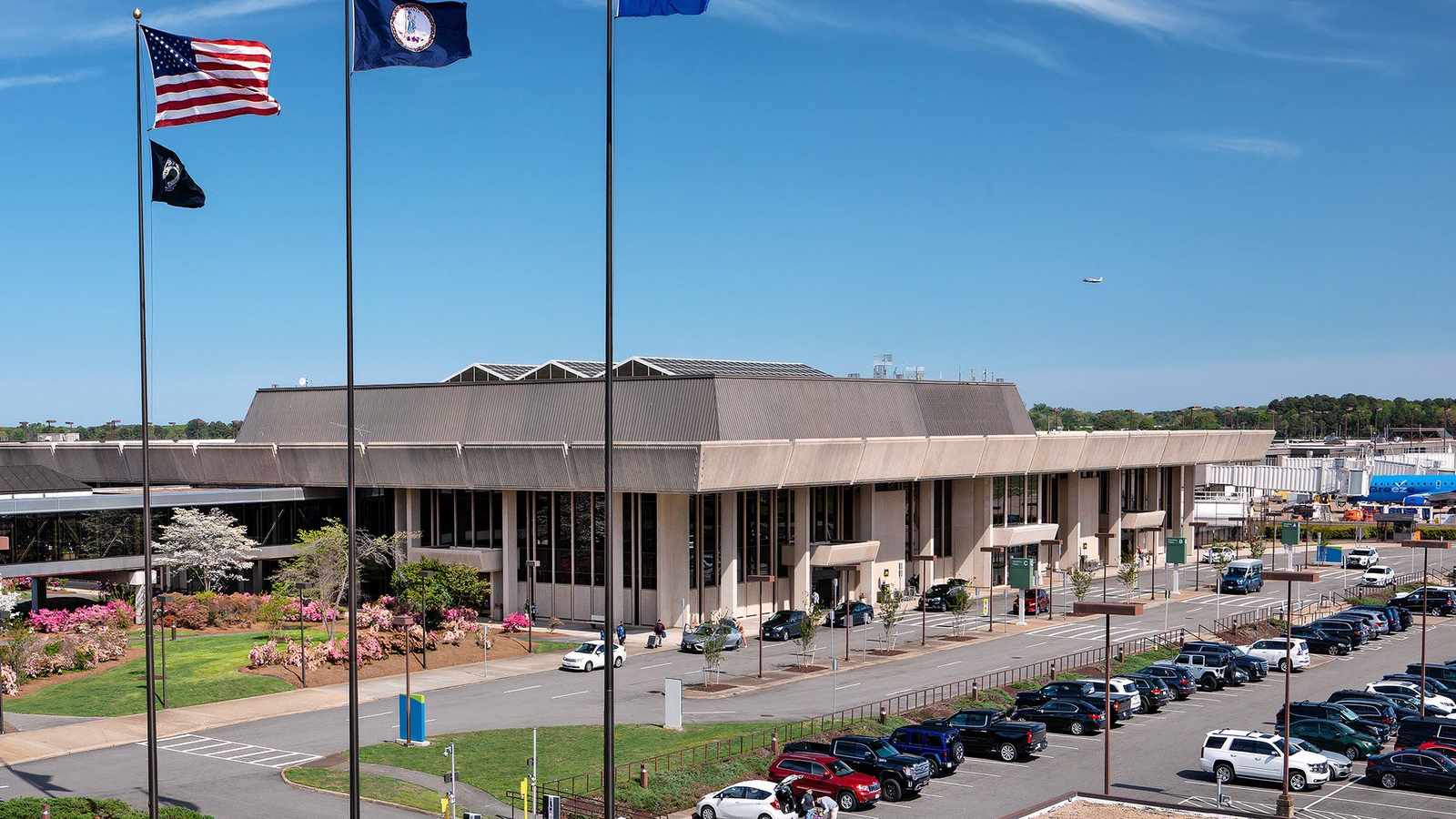
NORFOLK, Va. (Azat TV) – A federal court in Virginia has denied a second motion for a temporary restraining order (TRO) filed by American Rent-A-Car against the Norfolk Airport Authority, allowing the municipal airport operator to proceed with contract termination proceedings while litigation continues. Judge Walker of the U.S. District Court for the Eastern District of Virginia ruled that the car rental operator failed to demonstrate a sufficient likelihood of success on the merits to justify emergency injunctive relief.
Federal Court Rejects Emergency Injunction
The legal dispute, formalized under Case No. 2:26-cv-643 in the Eastern District of Virginia, centers on the Norfolk Airport Authority’s effort to terminate American Rent-A-Car’s operating concession at Norfolk International Airport. In its amended complaint, American Rent-A-Car sought a temporary restraining order to freeze the termination, claiming that the airport authority was manufacturing contractual defaults as a pretext to oust the vendor because of the owner’s Arab ethnicity.
In his July 6 decision, reported by Virginia Lawyers Weekly, Judge Walker held that the plaintiff had not satisfied the demanding legal standards required for a temporary restraining order. Under federal procedural rules, a party seeking an emergency TRO must establish a clear likelihood of success on the merits of its underlying claims, among other factors. Having previously failed to secure an injunction on initial arguments regarding insurance requirement waivers and impossibility of performance, American Rent-A-Car’s second motion relied heavily on revised contract and civil rights claims.
Legal Analysis of the Bond Waiver and Parol Evidence
A central pillar of American Rent-A-Car’s second TRO application (Count Two) was the contention that the airport authority had waived the contractual bond requirement. The rental company argued that the authority had implicitly waived the bond requirement by failing to enforce it over an extended period. Alternatively, the company asserted that an explicit separate agreement existed, under which the bond would not be due until the completion of a new consolidated rental car facility at the airport.
Judge Walker systematically addressed and rejected both theories under Virginia contract law. Regarding the claim of an implied waiver, the court emphasized that establishing an implied waiver requires clear and convincing evidence, and that mere non-enforcement or delay by an contracting entity does not meet this high evidentiary threshold. Furthermore, regarding the alleged explicit promise, the court ruled that the parol evidence rule prohibits a party from relying on contemporaneous or prior oral statements that contradict the express terms of a written contract. Consequently, the court found the plaintiff unlikely to prevail on its bond waiver defense.
Dispute Over Liquidated Damages and Contractual Penalties
American Rent-A-Car also challenged the liquidated damages provision enforced by the Norfolk Airport Authority, arguing that the assessments constituted an illegal penalty untethered to actual financial harm. The company argued that damages resulting from a failure to post a bond are readily calculable based on the specific face value of the bond itself, rendering pre-determined liquidated damages punitive.
The court found this argument unpersuasive, noting that American Rent-A-Car failed to introduce concrete evidence—either in its verified amended complaint or in supporting filings—demonstrating that the liquidated damages lacked a reasonable relationship to the authority’s prospective losses. Additionally, Judge Walker observed that the concession agreement’s liquidated damages clause applies broadly to various types of default, rather than exclusively to bond non-payment, further weakening the plaintiff’s assertion that harm was fixed and easily quantifiable.
Discrimination Allegations and Alleged Pretextual Termination
In Count Five of the amended complaint, American Rent-A-Car alleged that the airport authority breached civil rights provisions, contractual non-discrimination clauses, and the implied covenant of good faith and fair dealing. The rental operator claimed that the airport’s default notices were a pretext to remove an Arab-owned business from the facility. As evidence of bad faith, the plaintiff pointed to the rapid speed with which the airport authority denied its administrative appeal of the default notice, suggesting the outcome was predetermined.
While Judge Walker acknowledged that the swift rejection of the administrative appeal might support a factual inference of pretext, he ruled that it was insufficient on its own to establish a likelihood of prevailing on the merits. Because American Rent-A-Car admitted to the underlying conduct that triggered the default notices, its civil rights claims depended entirely on the validity of its legal excuse defenses—such as waiver and impossibility. With those excuse theories deemed legally tenuous, the court concluded that the civil rights claims could not sustain emergency injunctive relief.
The denial of the TRO allows the Norfolk Airport Authority to maintain its operational enforcement actions while the underlying civil suit proceeds through federal discovery and potential trial stages in Norfolk.