

Quick Read
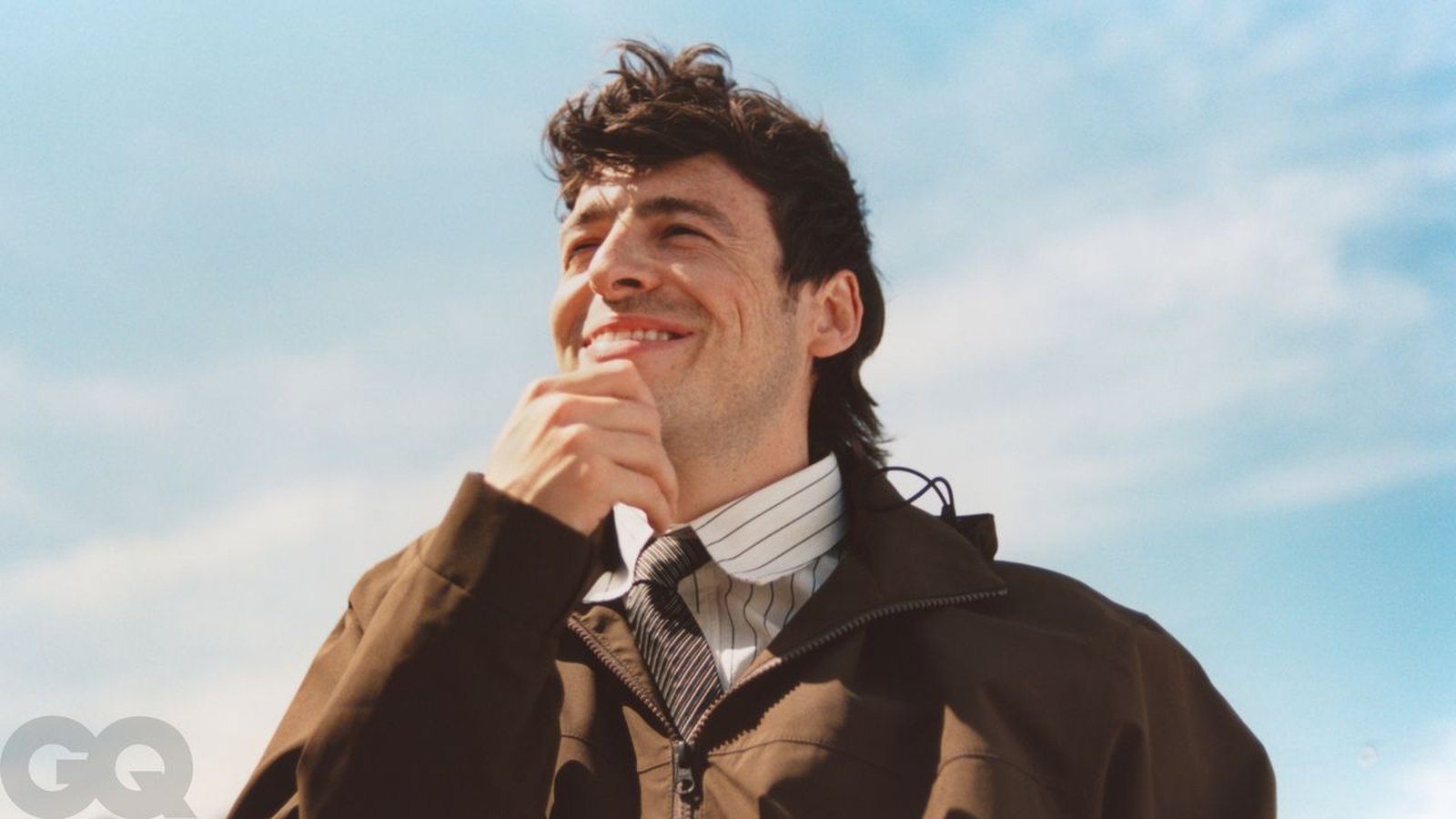
- Anthony Boyle stars as Arthur Guinness in Netflix’s House of Guinness.
- Boyle’s portrayal brings pride and vulnerability to a historic figure.
- The show became Netflix’s most-watched in UK/Ireland upon release.
- Arthur’s sexuality is central to the drama, reflecting modern themes.
- Boyle’s own Belfast upbringing informs his approach to the role.
Anthony Boyle Steps Into the Shadows of Brewing Royalty
In the heart of Liverpool, within a cavernous brick warehouse transformed into a 19th-century brewery, Anthony Boyle found himself deep in character as Arthur Guinness—the head of Ireland’s legendary brewing dynasty—for Netflix’s new historical drama, House of Guinness. The show, penned by Peaky Blinders creator Steven Knight, catapults viewers into the opulent yet gritty world of the Guinness family, set against the backdrop of a turbulent Ireland still under British rule.
Boyle’s approach to Arthur is anything but conventional. For starters, he chose to wear a sculptural, lush moustache reminiscent of the first Baron Ardilaun, despite being told he didn’t have to. It’s a detail that became both a symbol and a burden during the lengthy shoot. “I can’t wait to cut it off,” Boyle confessed during an interview on set, shaking Tic Tacs into a visitor’s palm as he reflected on the transformation.
Defining Arthur Guinness: Pride, Power, and Vulnerability
House of Guinness is more than a period piece—it’s a study in contrasts. Arthur Guinness, as portrayed by Boyle, is unapologetically gay and unashamed, a bold narrative choice given the dangers of being openly gay in 1860s Ireland. Homosexuality was only decriminalized in the country in 1993, and the show uses Arthur’s sexuality as a central engine, intertwining power, danger, and vulnerability in a society where secrets could be deadly.
Boyle, a Belfast native with a straightforward Irish accent, brings a unique authenticity to Arthur, whose voice and mannerisms reflect the Anglo-Irish elite—educated at Eton and ensconced in privilege. The tension between Arthur’s public persona and private life is palpable, driving much of the show’s intrigue. Ballrooms, butlers, political machinations, and personal betrayals swirl around him, all layered over the grime and grit that finances the Guinness fortune.
From the outset, Arthur is caught between duty and desire. His father’s will forces him to stay involved in the family business, while his marriage to Lady Olivia—a union of social necessity rather than romance—gives rise to a complex, open relationship. Both partners have affairs, and their interactions oscillate between tenderness and emotional distance, hinting at a surprisingly modern polyamorous dynamic.
Boyle’s Journey: From Belfast to Global Acclaim
Anthony Boyle’s rise to prominence has been meteoric. Last year alone, he appeared in four major productions: Manhunt, Shardlake, Masters of the Air (a $250 million WWII drama produced by Steven Spielberg and Tom Hanks), and Say Nothing, where he played IRA commander Brendan Hughes in a story rooted in Northern Ireland’s Troubles. These roles have established Boyle as one of the most magnetic young faces in television, but House of Guinness might be his ticket to the acting premier league.
Boyle’s personal history is inseparable from his artistry. Growing up in west Belfast, he endured Perthes disease—a rare condition that left him on crutches and in a wheelchair for years. Rather than withdraw, he observed the world from his window, mimicking voices and soaking in literature. “How do I get in that?” he wondered, after reading Seamus Heaney and watching gritty British dramas late at night. Acting became his calling, leading him from local drama lessons (sometimes taught by former IRA members) to the Royal Welsh College of Music and Drama, and eventually to his breakthrough role as Scorpius Malfoy in Harry Potter and the Cursed Child.
Auditioning for Arthur Guinness was a story in itself—Boyle bribed a co-star with gin and tonics to film his tape in a noisy LA hotel, dodging motorcycle revs for a clean take. The next day, Knight and director Tom Shankland called to say he was in. Boyle celebrated with ten pints of Guinness, a fitting ritual for the role.
Modern Resonance: Sexuality, Family, and Irish Identity
House of Guinness doesn’t shy from using dramatic license. While Arthur’s real-life sexuality remains unconfirmed (he had no children, and some biographers speculate he was “probably gay”), Boyle and Knight agreed on a proud, unashamed portrayal. The show explores how Arthur’s sexuality becomes both a point of pride and a vulnerability, exploited by political opponents seeking leverage over the Guinness family.
Arthur’s relationship with his brother Edward, played by Louis Partridge, is another emotional linchpin. Their bond is competitive, physical, and fraught—Arthur is the indolent dreamer, Edward the cold-blooded workaholic. As the series unfolds, both men find common ground in the agony of impossible love, echoing Boyle’s own experience of sibling rivalry and deep affection.
Oscar Wilde, the iconic Irish writer and dandy, served as a major inspiration for Boyle’s performance. Arthur’s wardrobe, literary flourishes, and introspective moments—such as reciting Hamlet beneath his father’s portrait—pay homage to Wilde’s legacy. Boyle’s theatre roots shine through, infusing Arthur with a mix of flamboyance and quiet despair.
Critical Reception and Cultural Impact
Upon its release, House of Guinness quickly climbed Netflix’s charts, becoming the most-watched show in the UK and Ireland, and the third most-watched English-language show globally, with over 5.2 million views in its first week (Reuters). The show’s blend of historical drama and modern sensibilities resonates widely, tapping into the ongoing Guinness craze and the enduring appeal of 19th-century opulence mixed with real-world hardship.
Boyle’s performance has sparked conversations about Irish identity and representation. Growing up in Belfast, he felt a deep need to honor his unique experience as a northern Irish Catholic, especially when working with colleagues from Dublin, Cork, and Galway. Say Nothing, another of Boyle’s acclaimed projects, brought him back home—literally and figuratively—prompting discussions with viewers who lived through the Troubles. The series didn’t make waves internationally, but Boyle remains proud of its impact on Irish audiences.
For Boyle, awards and acclaim are secondary. Winning a Laurence Olivier award for best supporting actor at 22 taught him that external validation isn’t everything. “It doesn’t fucking feel like anything,” he reflected, realizing that true fulfillment comes from the work itself, not the accolades.
The Next Act: What’s Ahead for Boyle and House of Guinness
As House of Guinness ends its first season on a dramatic cliffhanger—with Arthur shot during an election speech—the future looks bright for both the show and its star. Boyle, ever restless, is already filming another Netflix project in Canada, The Altruists, playing crypto fraudster Sam Bankman-Fried opposite Julia Garner.
Even as he contemplates a return to theatre, Boyle remains committed to the grind of the working actor. The camaraderie and chaos of shared houses, audition callbacks, and post-project rituals have shaped his journey, fueling his drive and kinetic energy. He jokes about the “two wolves” inside him—one craving Guinness and the thrill of performance, the other yearning for rest. For now, the first wolf is winning.
Anthony Boyle’s layered, fearless portrayal of Arthur Guinness in House of Guinness redefines what historical drama can be: a fusion of past and present, vulnerability and bravado, personal truth and public myth. Through Boyle’s lens, the legacy of the Guinness family becomes more than a story of brewing—it’s a testament to the complexities of identity, ambition, and belonging in a changing world.