


A New Strategy for the Home
Apple has officially confirmed a special event scheduled for October 13, 2026, themed “Welcome Home,” signaling a significant shift in the company’s approach to the residential market. While Apple has long maintained a presence in the sector through HomeKit software and existing hardware like the Apple TV and HomePod, the upcoming announcement suggests a pivot toward treating the home as a primary computing platform rather than an accessory space. According to 9to5Mac, the event will feature both an in-person component in New York City and an online video presentation, underscoring the importance of these hardware updates. This event represents a culmination of years of development on a new generation of Siri AI, which Apple is now integrating as the central intelligence across its home ecosystem.
The “HomePad” Smart Display
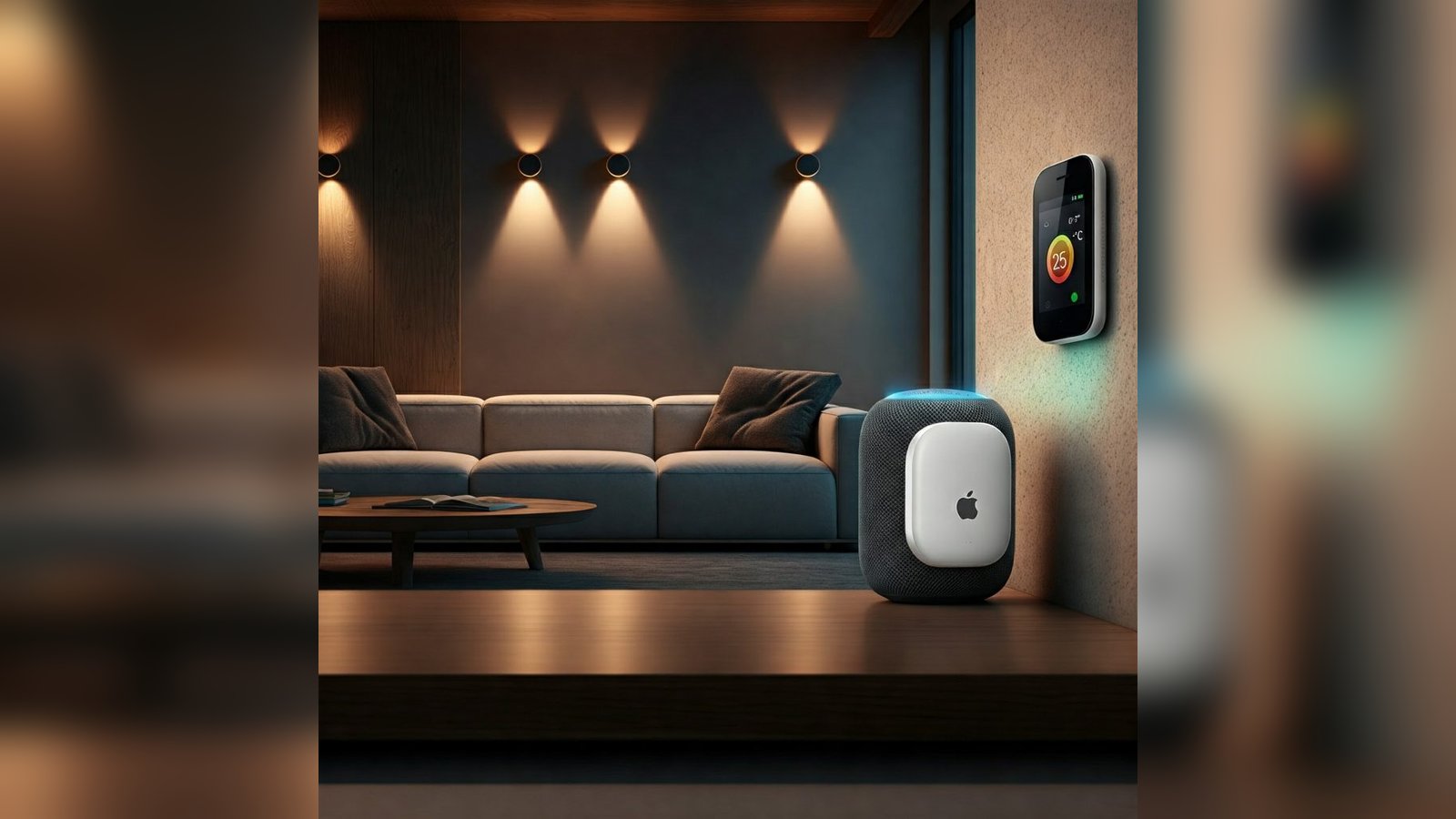
The centerpiece of the event is expected to be a new dedicated smart home hub, frequently referred to in industry reports as the “HomePad.” Macworld reports that the device will feature a 6-inch square touchscreen mounted on a half-dome speaker base, drawing design inspiration from the classic iMac G4. The hardware is designed to serve as a central controller, utilizing built-in cameras to recognize specific household members and dynamically adjust content, app access, and interface elements based on user identity. It will reportedly come in two variations: one designed for wall mounting and another for countertop placement.
This reliance on Apple Intelligence is a core element of the new strategy. By integrating advanced recognition capabilities, the device aims to bridge the gap between passive voice control and active household management. The inclusion of a dedicated homeOS, as noted by industry analysts, suggests that Apple is moving away from repurposed tablet software toward a platform optimized for ambient computing and persistent environmental awareness. The software reportedly blends elements of the Apple Watch, Apple TV, and iPad, utilizing widgets and StandBy-style modes to maximize its utility as a central home hub.
Refreshed Ecosystem Hardware
Beyond the new hub, Apple is expected to update its existing smart home lineup with a focus on processing power to support new AI features. A new Apple TV 4K is anticipated, marking the first hardware update for the set-top box since November 2022. While the chassis design will reportedly remain unchanged, the integration of an A19 or A19 Pro chip will provide the necessary overhead to run local Siri AI and Apple Intelligence tasks, significantly expanding the capabilities of the device as a primary home controller. Speculation suggests this processing power could also support expanded gaming capabilities, particularly if rumors regarding new game controllers materialize.
Similarly, the HomePod mini is set for its first major internal refresh in six years. As detailed by MacRumors, the second-generation model will feature a faster processor capable of handling on-device AI tasks, along with improved acoustic performance and support for Wi-Fi 7 and a second-generation Ultra Wideband chip. The device will reportedly be available in five colorways—pink, white, green, blue, and black—retaining its compact form factor while finally addressing the performance bottlenecks of the original S5-based model. This update is critical for Apple, as the previous generation often struggled with Siri’s limitations, frequently forcing users to rely on their iPhones for complex queries.
Strategic Implications and Second-Party Expansion
The timing of this event is critical. For years, Apple has faced criticism for neglecting the smart home segment, leaving room for competitors to establish dominance in home automation. By leveraging its proprietary silicon and the new Apple Intelligence stack, the company is attempting to create a unified, high-security ecosystem that distinguishes itself from standard smart speakers. The reported collaboration with LG on “second-party” accessories, including smart locks, thermostats, doorbells, and multiple cameras, further signals that Apple intends to move beyond software-only integration to a curated hardware ecosystem. While Bloomberg reports these specific accessories may not launch for at least a few months, their presence at the event will serve to solidify the company’s roadmap for the next several years of home-based computing.
The shift toward hardware-led home integration marks a departure from Apple’s previous reliance on HomeKit as a purely software-based framework. By controlling both the silicon and the interface, Apple is positioning its new devices to act as the “brain” of the modern house, capable of managing complex automation routines that recognize individuals. This is a significant pivot; by treating the home as a primary computing platform, Apple hopes to capture the segment of the market that has felt underserved by the fragmented nature of current smart home devices. The upcoming October 13 presentation will likely provide the clearest look yet at how Apple plans to weave these various threads—on-device AI, dedicated hub hardware, and a refreshed accessory ecosystem—into a cohesive, user-centric experience.
Ultimately, the “Welcome Home” event is about more than just incremental product updates. It is a declaration that Apple is finally prioritizing the residential environment as a key pillar of its business model. With the introduction of the HomePad and the necessary silicon refreshes for the Apple TV and HomePod mini, the company is betting that deep integration, privacy-focused AI, and high-quality hardware will be enough to entice users to standardize their smart home setups around the Apple brand. As the industry watches, the success of this pivot will depend on how well these devices move beyond the limitations of voice assistants to become truly intuitive, identity-aware household companions.