


A New Reality on the Red Sea Coast
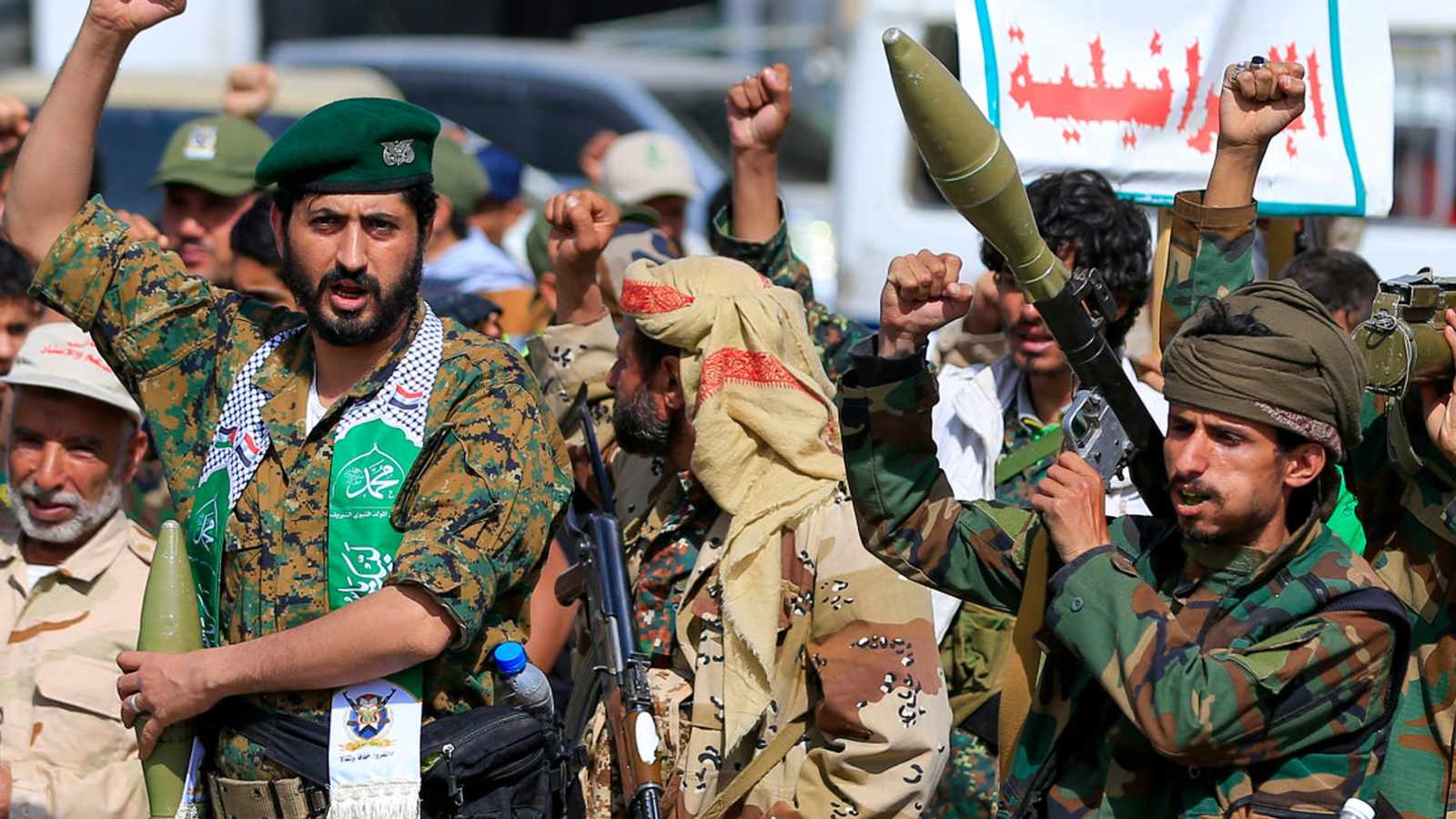
On September 11, 2026, the geopolitical balance of global shipping underwent a profound shift as Houthi forces seized direct physical control of Yemen’s western Red Sea coast and key strategic islands within the Bab al-Mandab Strait. Moving beyond the localized coastal skirmishes and sporadic drone operations that characterized earlier phases of the conflict, the group has successfully secured a dominant position over one of the world’s primary maritime chokepoints. This transition from a disruptive threat to a territorial occupying force directly overlooking the shipping lanes has forced a fundamental reassessment of international maritime security and the limits of state-centric deterrence.
For years, international naval coalitions have patrolled these waters, attempting to shield merchant vessels from low-cost drone and missile attacks. However, the physical occupation of the coastline and adjacent islands alters the strategic equation entirely. The Houthis no longer rely solely on long-range mobile launchers hidden in the mountainous interior of northern Yemen; they now possess direct, line-of-sight oversight of the narrow corridor through which millions of barrels of oil and billions of dollars in commercial goods pass daily. According to an analysis published by Al Majalla, this development represents a critical failure of the post-war security architecture, which was designed to regulate sovereign states rather than technologically empowered, non-state actors who have little to lose in the international arena.
The Stark Math of Asymmetric Warfare
The military efforts to keep the Bab al-Mandab Strait open have exposed a massive economic asymmetry that favors the insurgent forces. Intercepting a Houthi-launched drone, which may cost only a few thousand dollars to manufacture, regularly requires Western naval vessels to fire interceptor missiles costing millions of dollars per shot. During the early campaigns, naval missiles used to protect shipping averaged approximately $2 million per launch. By April 2024, United States naval forces alone had expended nearly $1 billion on munitions in the region. The cost of maintaining this defensive posture has only escalated; by April 2025, at least seven MQ-9 Reaper drones, valued at roughly $30 million each, had been shot down by relatively low-cost Houthi air defense systems.
This ongoing drain on Western military stockpiles has forced governments to seek emergency funding and restructure their defense procurement. In June 2026, the White House submitted an $87.6 billion supplemental funding request to Congress, with $67.1 billion earmarked for defense and $21 billion specifically designated to replenish munitions depleted in the Red Sea and broader regional hostilities. Furthermore, the loss of at least two dozen MQ-9A Reapers has created a persistent capability gap that the U.S. Air Force cannot easily close, as the specific MQ-9A model is no longer in active production. To address these shortages, the U.S. Navy in August 2026 awarded Raytheon a $22.9 billion contract to accelerate Tomahawk missile production, explicitly citing the high operational demands and the urgent need to rebuild munitions capacity. This industrial strain underscores how a localized militia can turn a regional shipping lane into a global logistical and financial bottleneck.
The Institutional Mismatch
The international community’s struggle to contain the Houthi advance stems from a deeper structural mismatch within global governance. The institutions and legal frameworks established after the Second World War—including the United Nations Security Council—operate on the assumption that international actors are sovereign states. These states are expected to have defined territories to defend, national economies to protect, and diplomatic relationships they cannot afford to jeopardize. Consequently, traditional tools of statecraft such as economic sanctions, diplomatic isolation, and formal deterrence are highly effective against governments that must answer to domestic populations or international trade networks.
The Houthis, however, possess none of these vulnerabilities. They operate with minimal international recognition, hold virtually no overseas assets that can be frozen, and do not rely on the rules-based international order for their survival. Although UN Security Council Resolution 2722, adopted in January 2024, demanded an immediate end to attacks on merchant shipping, and its reporting mandate was extended through Resolution 2826 in July 2026, these diplomatic instruments have had no measurable impact on Houthi operational decisions. By selectively enforcing international law when it suits their immediate strategic interests, major world powers have also weakened the moral and legal authority of the very system they rely on to maintain freedom of navigation.
Global Economic Ripples
The consequences of the Houthi takeover extend far beyond the immediate waters of the Red Sea, impacting nations thousands of miles away that have no direct involvement in the conflict. By August 2026, Saudi crude oil shipments through the Bab al-Mandab Strait had dropped precipitously, forcing Saudi Aramco to reroute significant volumes of oil around the Cape of Good Hope or through pipelines across Egypt. This shift has placed immense strain on alternative trade routes, particularly as the Strait of Hormuz remains highly volatile. For major energy importers and export-reliant economies, the disruption has translated into direct domestic costs.
Japan, which relies on the Middle East for approximately 90% of its petroleum imports, faced a critical supply challenge when the shipping corridor was severely restricted. In response, Tokyo was forced to release 80 million barrels of oil from its strategic national reserve—equivalent to 45 days of domestic demand—to stabilize local energy markets. Similarly, in Australia, where the petrochemical and agricultural sectors are heavily dependent on imported diesel and refined petroleum products, economic modeling has highlighted the extreme vulnerability of domestic supply chains. A sustained disruption of this scale threatens to shave percentage points off national GDPs and has accelerated plans in Canberra to establish a domestic, sovereign-flagged strategic shipping fleet to secure essential goods during future maritime crises.
A 21st-Century Precedent
While history is filled with examples of localized groups leveraging geographic choke points to extract concessions—such as the tribal networks of the Khyber Pass or the Barbary corsairs of the Mediterranean—the modern Houthi campaign represents a fundamental shift in scale. Historically, a militia operating from a fragmented coast could only disrupt immediate regional traffic. Today, the widespread availability of commercial drone technology, open-source intelligence, satellite navigation, and precision anti-ship missiles allows a non-state actor to project strategic power across three continents simultaneously.
The physical consolidation of Houthi authority along the Bab al-Mandab Strait indicates that the era of uncontested maritime commons may be drawing to a close. As global shipping lines and insurance underwriters adjust to the reality of a permanent hostile presence at the gate of the Red Sea, the international community faces a difficult choice: either adapt its security architecture to address the rise of technologically empowered non-state actors, or accept a permanently fragmented and highly expensive global trade network.