


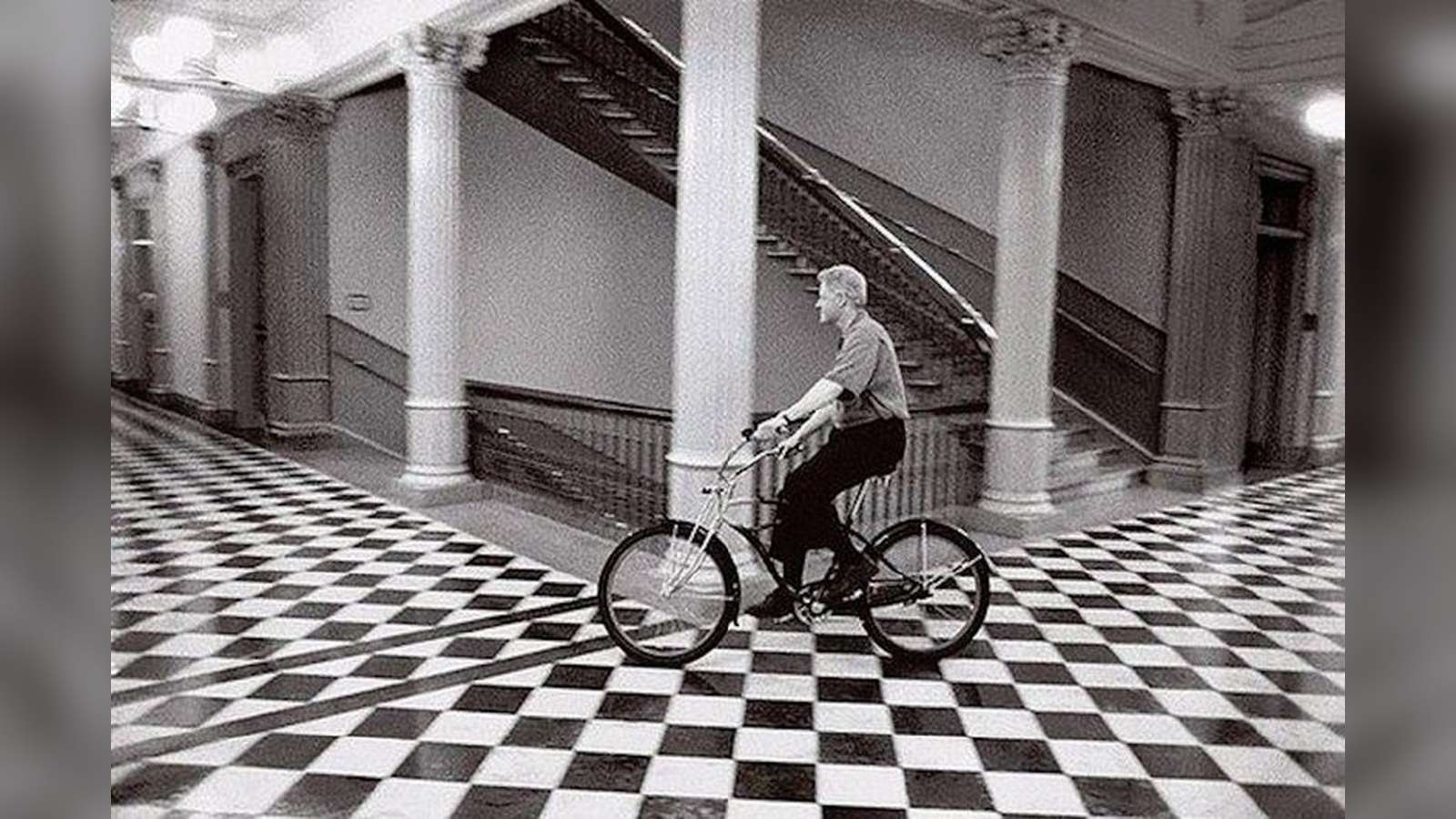
This photograph captures 42nd U.S. President Bill Clinton in mid-motion, pedaling a bicycle down the historic, high-ceilinged corridors of the White House in January 2001. Against a backdrop of classical architectural detailing, polished hardwood floors, and formal interior walls, the sight of a sitting commander-in-chief on two wheels strikes an incongruous, deeply human chord. The image preserves an unscripted, almost domestic episode from the final weeks of an eight-year presidency, inviting a closer look at the intersection of private relaxation and monumental public architecture during a high-stakes presidential transition. It is a moment where the weight of the office seems to momentarily lift, replaced by the mundane rhythm of a man moving through his own home.
What the photograph shows
In the frame, President Clinton is positioned centrally, leaning slightly into a turn as he navigates an expansive White House hallway. He is dressed in casual athletic attire appropriate for exercise rather than the customary dark suit and tie of executive duties. His posture is relaxed yet focused on steering through the narrow confines of an interior corridor designed for ceremonial processions rather than recreational cycling. The bright indoor lighting reflects off the polished wooden flooring, casting soft shadows and highlighting the texture of historic moldings and artwork lining the walls. Every visible detail—from the modern bicycle mechanics to the centuries-old institutional surroundings—underscores the surreal dual nature of the executive mansion as both a high-security workplace and a lived-in family home.
The moment behind the image
The scene unfolded during January 2001, a time of immense political transition as the Clinton administration prepared to hand over power to incoming President George W. Bush. Amid packing boxes, farewell receptions, and final policy briefings, the White House staff and the president himself occasionally sought brief respites from the relentless pressure of the transition. While details regarding the exact photographer and the specific assignment remain part of the broader official White House photographic record preserved in archives, images from this era reflect the daily access afforded to official visual documentarians. Cycling inside the executive mansion was not a routine public spectacle, making this frame a rare snapshot of a president carving out a moment of physical routine within the ultimate fishbowl.
Photographer and provenance
The provenance of such images typically lies within the White House Photo Office archives, which have documented every administration since the mid-20th century. During the Clinton years, official photographers were tasked with creating a comprehensive visual history of the presidency. This specific image likely originated from an official staff photographer who had the unique clearance to follow the President through private residence areas. Because this was not a staged press event, the photographer’s role was that of a fly-on-the-wall, capturing the reality of the “last days” atmosphere. The survival of this image in digital archives, such as those maintained by the White House Historical Association, ensures that the visual record of the transition is not limited to podiums and signing ceremonies, but includes the quiet, human moments that define the end of an era.
Historical context
For eight years, the Clinton presidency had navigated domestic legislative battles, international crises, and intense media scrutiny. By January 2001, the focus had shifted entirely to legacy and departure. The White House, managed by the Executive Residence staff and meticulously documented by official photographers, has long served as a stage where formal statecraft meets private human idiosyncrasy. Moments of levity—such as family pets roaming the grounds or impromptu athletic pursuits—help humanize figures who are otherwise defined by state portraits and historical ledgers. This photograph joins a long visual tradition of presidents finding unorthodox ways to decompress within the heavily guarded confines of Washington’s most famous address.
Why it still matters
Decades after the shutter clicked, this photograph endures because it subverts the typical iconography of executive power. Instead of standing behind the Resolute Desk or stepping down from Marine One, the leader of the free world is caught in a delightfully mundane, human act—riding a bike indoors. It serves as a reminder that even at the pinnacle of global power, the president is a person navigating the same constraints of time, stress, and domestic rhythm as anyone else. Preserved through institutional repositories, the image serves as a poignant visual footnote to the end of a presidency, reminding viewers of the private rhythms that persist behind the closed doors of history.