


A Modern Spin on a Theatrical Institution
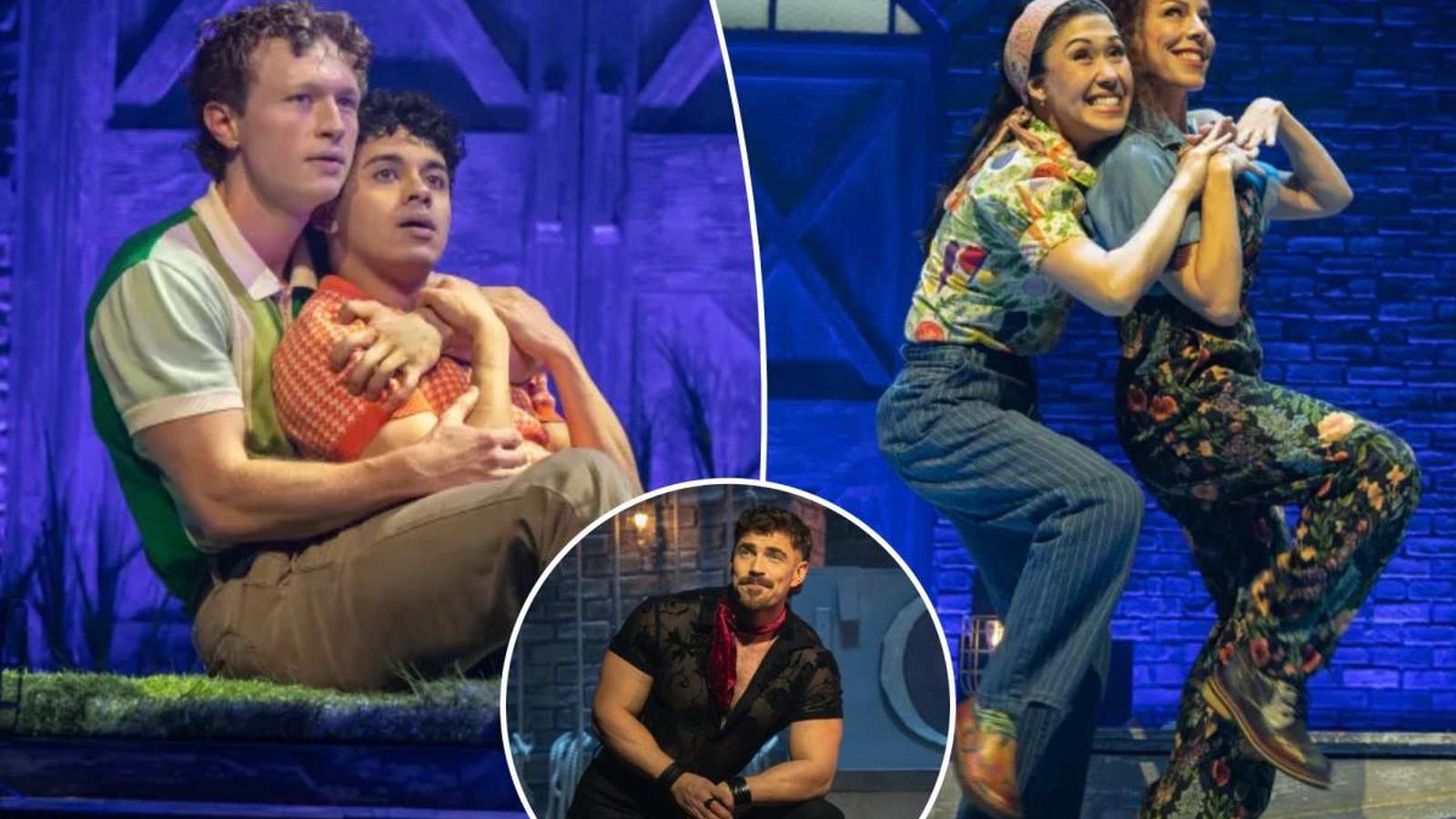
The world’s longest-running musical, The Fantasticks, officially returned to the Broadway stage on November 16, 2026, with a fresh creative vision at the Hayes Theater. Director Christopher Gattelli and Second Stage Theater have undertaken a significant structural update to the 1960 Off-Broadway staple, most notably by reconfiguring the gender dynamics of the central characters. As reported by the New York Post, the production replaces the traditional boy-meets-girl narrative with a romantic arc between two men, while the scheming fathers of the original script have been transformed into meddling mothers. This revival arrives less than a decade after the original production finally concluded its historic run, which spanned 42 years at the Sullivan Street Playhouse and an additional nine years at the Jerry Orbach Theater.
By adjusting the roles of the two young lovers—Matt (Maxim Chlumecky) and Lewis (Nathan Levy)—and casting Leslie Rodriguez Kritzer and Ruthie Ann Miles as the mothers, the production aims to smooth over dated cultural sensibilities from the 1960s. The core music by Tom Jones and Harvey Schmidt remains intact, preserving the show’s signature charm while adapting to a contemporary audience landscape. Crucially, the legendary Tom Jones himself participated in the process, providing his blessing and working on lyrical adjustments to ensure the narrative felt authentic to the new configuration.
Creative Choices and Character Dynamics
The decision to swap genders functions as more than a superficial update. In the original 1960 version, the ingenue lead, Luisa, often faced criticism for being one-dimensional, and the obsession of two fathers over their children’s marriage felt increasingly out of place in modern theater. By shifting these roles, Gattelli allows the actors to explore new dimensions of character. Nathan Levy, in particular, has garnered attention for his portrayal of the manic Lewis, balancing narcissism with moments of genuine, grounded vulnerability. Levy’s performance has been described as a modern take on the character’s hyperactivity, while Chlumecky provides a grounded, commanding presence as Matt.
The mothers, played by Kritzer and Miles, serve as the production’s comedic engine. Their duets, such as “Never Say No,” provide a sharp, campy contrast to the younger characters’ earnest romantic journey. These creative choices allow the production to retain its “bubblegum” essence while effectively navigating the “Mad Men”-era social tropes that previously defined the narrative. The staging itself pays homage to the past; the opening sequence at the Hayes Theater features a visual transition from a minimalist set reminiscent of the original Sullivan Street Playhouse—complete with a piano and harp—to the polished, stark-white stage of the modern Broadway production designed by Jason Sherwood.
The Stakes of a Classic Revival
Revisiting a show with such a massive historical footprint carries inherent risks. The Fantasticks is synonymous with its record-breaking 42-year run. The challenge for Second Stage Theater was to justify a Broadway revival without stripping the piece of the intimacy that made it a success. The production largely succeeds by exercising restraint; Gattelli manages to avoid the temptation to over-produce the material, allowing the music to take center stage. Zane Phillips, in his Broadway debut as the narrator El Gallo, anchors the production with a baritone delivery that offers a fresh take on the iconic “Try to Remember,” bringing a magnetic, almost mythical presence to the role that contrasts with the domestic focus of the mothers.
While the first act remains a boisterous, lighthearted affair, the production does not shy away from the darker, more introspective second act. The shift from the blissful “happily ever after” of the first half to the disillusionment of reality in the second half remains the show’s critical anchor. Critics have noted that while some of the Shakespearean-style character tropes involving the roles of Henry (David Patrick Kelly) and Mortimer (Kevin Del Aguila) feel slightly dated, their performances are lauded as an utter delight. The revival ultimately serves as a bridge, honoring the show’s humble origins while recognizing that Broadway audiences in 2026 demand a level of visual and thematic sophistication that matches the intimacy of the Hayes Theater. By successfully moving the material uptown, Second Stage Theater has proven that the universal themes of adolescent romance and parental interference remain just as resonant when the boy-meets-boy dynamic replaces the original, and at times problematic, heteronormative structure.
Refining the Legacy
The success of this production lies in its ability to balance nostalgia with necessary evolution. As noted in reviews, the show retains its “bubblegum” core, avoiding heavy-handed social commentary in favor of heartfelt character development. The inclusion of an expanded eight-piece orchestra, compared to the original piano-and-harp setup, adds a layer of sonic richness that suits the Broadway environment without losing the show’s signature intimacy. The production, which is scheduled to run through February 7, 2027, stands as a testament to the enduring power of Jones and Schmidt’s songwriting, proving that the material is flexible enough to accommodate modern perspectives while still delivering the emotional payload that has captivated theatergoers for over six decades. Ultimately, the 2026 revival is not just a trip down memory lane, but a thoughtful re-examination of what makes a classic musical timeless.