


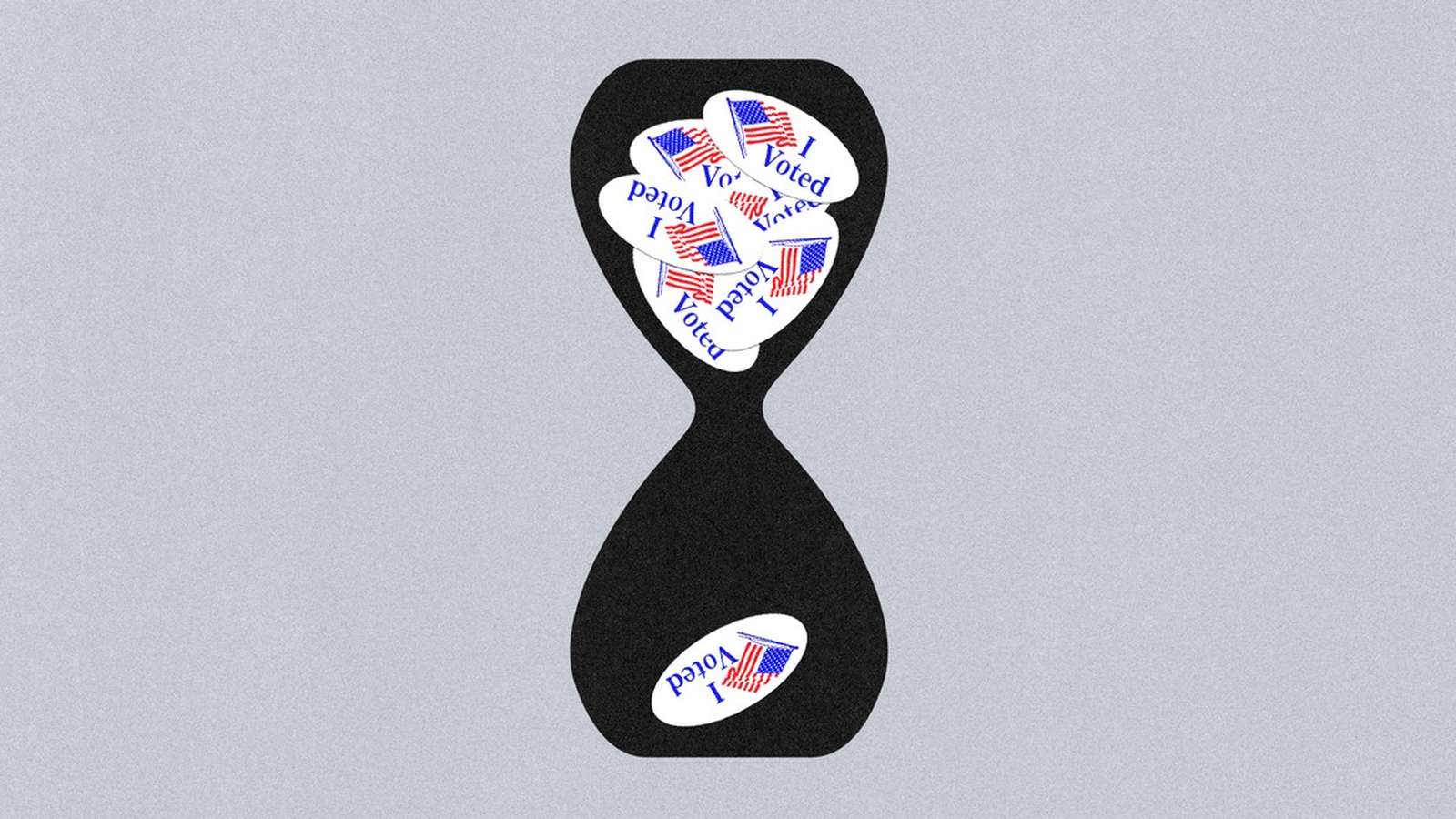
The Mechanics of Delay
Following the June 2 primary, California election officials faced a week-long window before confirming that Democrat Xavier Becerra would face Republican Steve Hilton in the gubernatorial general election. With an estimated three million ballots remaining uncounted statewide days after polls closed, the delay has drawn criticism from political observers and voters alike.
According to James Kus, the Registrar of Voters for Fresno County, the bottleneck is not a lack of effort but a byproduct of structural legal requirements and voter behavior. The state allows ballots to arrive up to seven days post-election, provided they are postmarked by Election Day. This creates a massive influx of late-arriving mail-in ballots that must be verified, extracted, and scanned.
The “Two-Card” Bottleneck
A significant physical constraint in the 2026 primary was the ballot design itself. Due to the high number of candidates for governor, counties were forced to utilize a two-card ballot system. Fresno County reported that this doubled the time required for processing, as each voter’s ballot required twice the extraction and scanning labor. Registrar James Kus noted that while his office typically tabulates 80,000 cards per day, the two-card requirement effectively halved that capacity.
Security vs. Speed
The debate over California’s election pace is fundamentally a question of priorities. Historically, the state has emphasized maximizing voter access and ensuring the integrity of mail-in ballots over rapid reporting. Donna Crane, a political science professor at San Jose State University, suggests that California’s reliance on mail-in voting and the state’s “jungle primary” system contribute to the complexity of the count.
However, the political climate has shifted. Senator Alex Padilla, a former California Secretary of State, recently acknowledged the growing pressure to balance these values. “We want to maximize participation and protect the fundamental right to vote. That being said, can California counties count more quickly? Sure,” Padilla stated.
Critics argue that the slow pace invites speculation and undermines public trust, particularly in an era of heightened electoral scrutiny. Yet, election officials maintain that rushing the process risks the integrity of the count, citing the need for strict supervision of staff and the complex legal requirements for signature verification.