


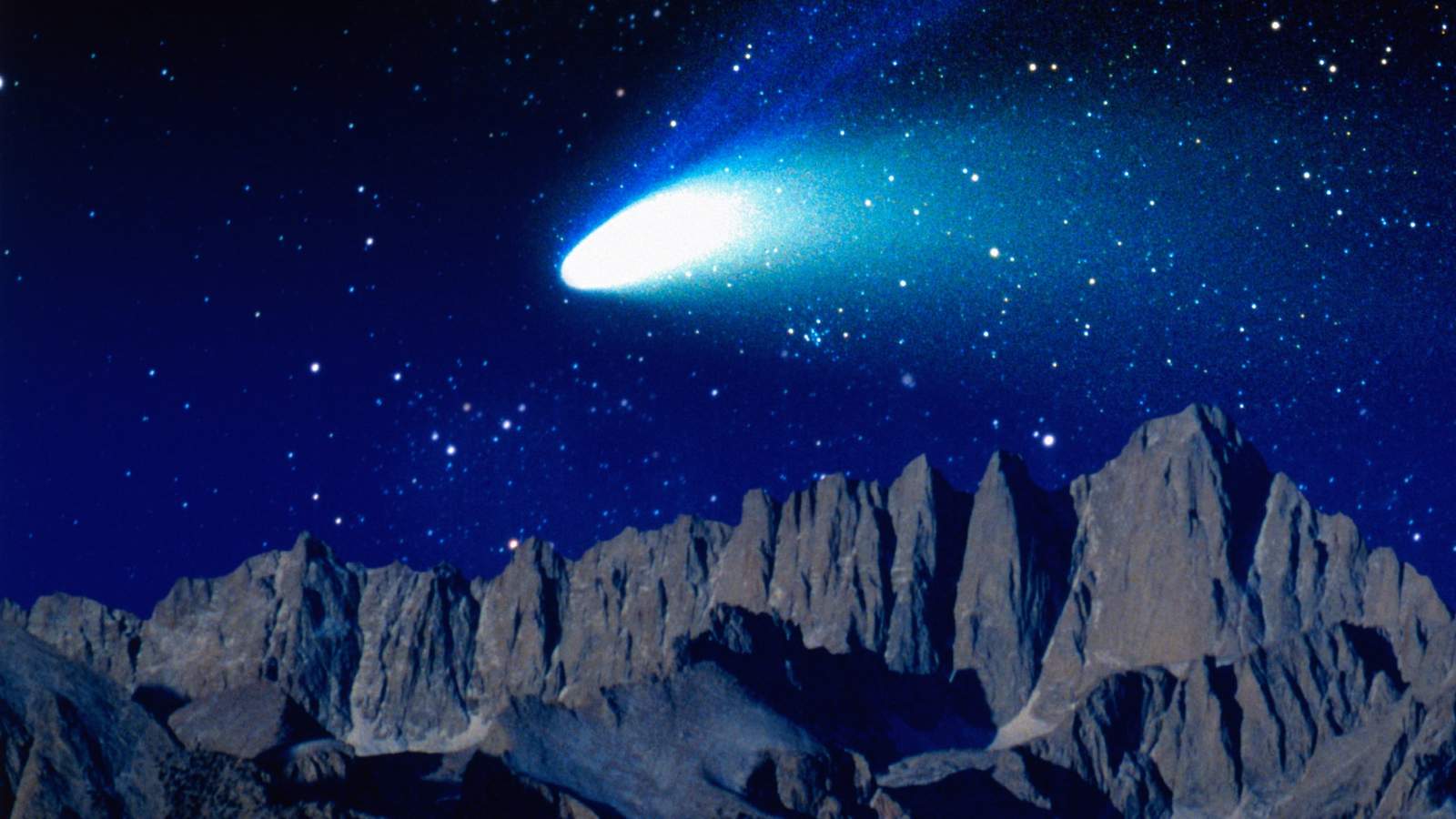
New scientific simulations conducted by researchers at the University of Cambridge suggest that comets are extremely unlikely to have seeded life on Earth. In a study published on October 29, 2026, in ScienceAlert, astronomers modeled 100,000 individual comet impacts mirroring Earth’s early bombardment period to test whether fragile prebiotic molecules could survive planetary entry.
The longstanding hypothesis, explored for over a century, proposes that comets acted as cosmic delivery vehicles that brought essential organic chemicals to our early planet. To test this, lead researcher Richard Anslow and his colleagues focused their models on hydrogen cyanide, a crucial feedstock molecule found in comets that helps synthesize lipids, sugars, nucleobases, and nucleotides. While hydrogen cyanide is abundant enough in solar system comets to be considered prebiotically relevant, the new physics-based models indicate that the overwhelming majority of incoming material fails to survive the violent deceleration process.
The Physics of Comet Vaporization
According to the findings detailed in Gizmodo, comets typically travel at velocities and angles that cause their frozen payloads to vaporize completely upon atmospheric entry. In 54 percent of the 100,000 computer simulations, incoming comets failed to deliver a sufficient quantity of hydrogen cyanide to land surfaces. Many of these bodies broke apart entirely in the atmosphere or struck Earth’s oceans, where any surviving molecules would have been instantly diluted beyond effective concentrations.
Only 46 percent of the simulations suggested that at least one successful comet could theoretically transport enough feedstock material to land. However, the researchers noted that even these rare successful deliveries would have provided only a fleeting window for prebiotic chemistry to begin. Astronomer Richard Anslow described the sequence of events as a potential “one-off fluke” requiring exact impact speeds and optimal angles.
Implications for Mars and Venus
While Earth’s conditions proved hostile to intact chemical delivery, the simulations offered contrasting results for neighboring planets in the solar system. The research team discovered that Mars provides a more favorable environment for cometary organic transport due to its thinner atmosphere and lower impact velocities, permitting over five times as many successful deliveries as Earth.
Conversely, Venus presents an impenetrable barrier for incoming comets. Its dense atmospheric layer destroys multi-kilometer-wide cometary bodies outright before they can reach the surface. These findings force a broader reassessment of exogenous delivery theories across planetary science, highlighting how local atmospheric physics dictates whether cosmic materials can successfully initiate prebiotic evolution.