


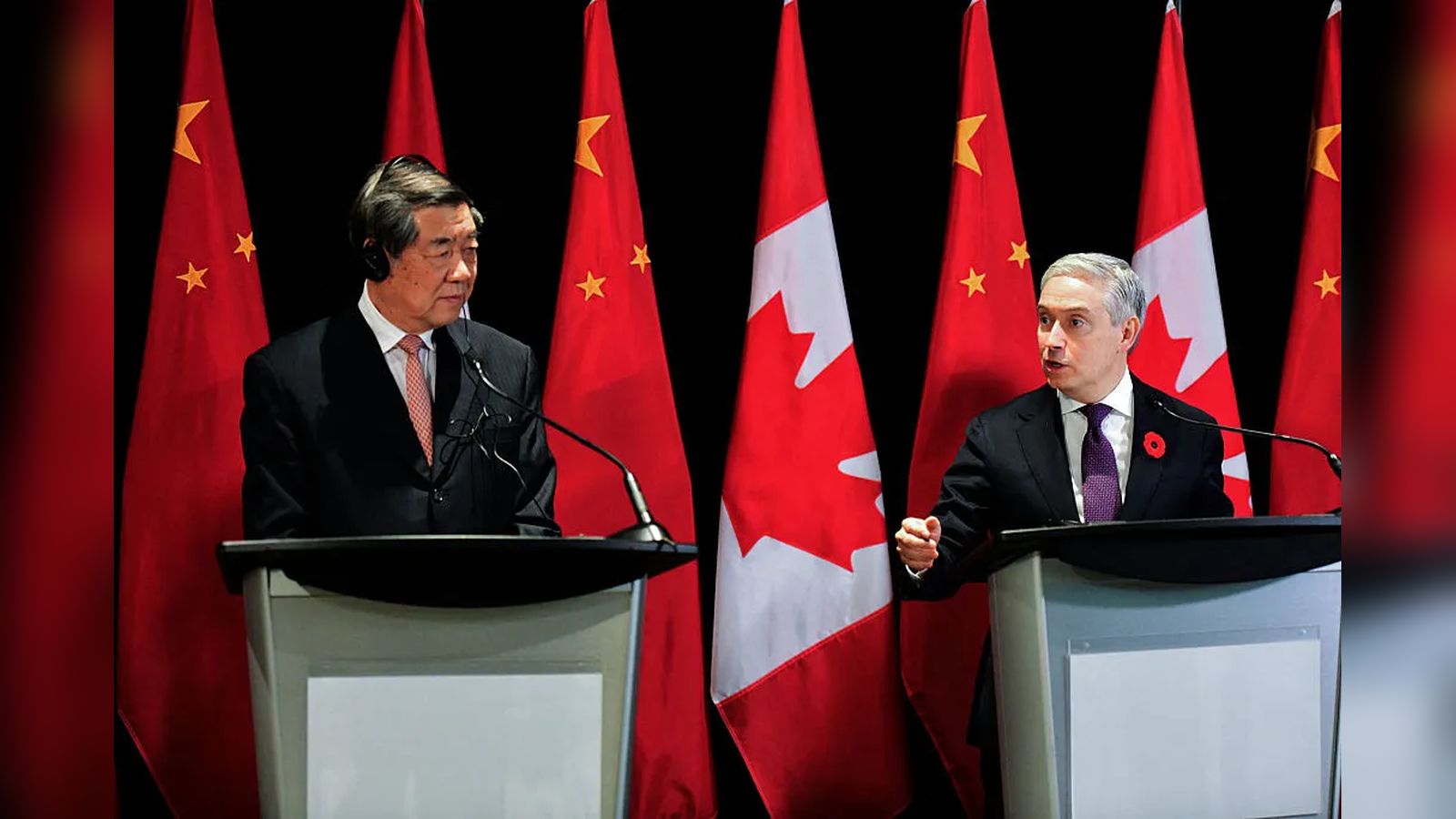
New Economic Framework Solidified
Canada and China finalized a series of new economic agreements in Vancouver, as the administration of Prime Minister Mark Carney seeks to broaden international trade partnerships. The announcement, released late on Monday, November 9, 2026, follows a significant shift in the trilateral trade landscape: the United States government under President Donald Trump has officially dropped a trade-related demand that would have granted Washington final approval over Canada’s future trade agreements with third-party nations.
The high-level negotiations in Vancouver were led by Canadian Finance Minister François-Philippe Champagne and International Trade Minister Maninder Sidhu, who hosted Chinese Vice-Premier He Lifeng. According to Newsweek, the discussions produced three primary agreements focused on institutional cooperation between the two nations’ finance ministries, financial regulators, and central banks. These arrangements are designed to establish more frequent dialogue on economic policy and facilitate closer cooperation in financial-services market access.
Trade Diversification and Strategic Stakes
The agreements provide immediate benefits for specific sectors of the Canadian economy. Both nations have agreed to extend an existing trade deal through the end of 2028. Under these terms, China will maintain lower tariffs on key Canadian agricultural and seafood exports, including canola meal, peas, lobster, and crab. In a reciprocal move, Canada will continue to allow the import of certain Chinese steel and aluminum products without the imposition of additional tariffs. This arrangement is viewed as a critical component of Prime Minister Carney’s broader strategy to reduce Canada’s heavy economic reliance on the United States.
Minister Champagne emphasized that the engagement is a standard practice for G7 nations. “If one of the pillars is to diversify our trade, I would say it’s kind of obvious you have to talk to your second largest trading partner,” Champagne said. Philippe Rheault, director of the China Institute at the University of Alberta, noted that the Canadian government is signaling a clear intent to lean into engagement with Beijing, despite the unpredictable nature of recent political developments in Washington. The timing of these agreements is particularly significant as Prime Minister Carney prepares to travel to Shenzhen for the Asia-Pacific Economic Cooperation (APEC) summit, where trade and investment will remain central themes.
Economic Impact and Future Outlook
The easing of trade restrictions has already yielded measurable growth. Following an initial agreement reached during Carney’s January visit to Beijing, Canadian exports saw substantial gains: canola meal exports to China doubled to $277 million, while pea exports rose to $245 million. The current framework intends to build on this momentum, supporting industries that account for more than 600,000 jobs across Canada. While the immediate focus is on expanding market access, both sides have also welcomed progress on a bilateral currency-swap arrangement. As Ottawa continues to navigate pressure from its largest trading partner, these agreements serve as a buffer, ensuring that economic channels with the world’s second-largest economy remain functional and resilient.