

Quick Read
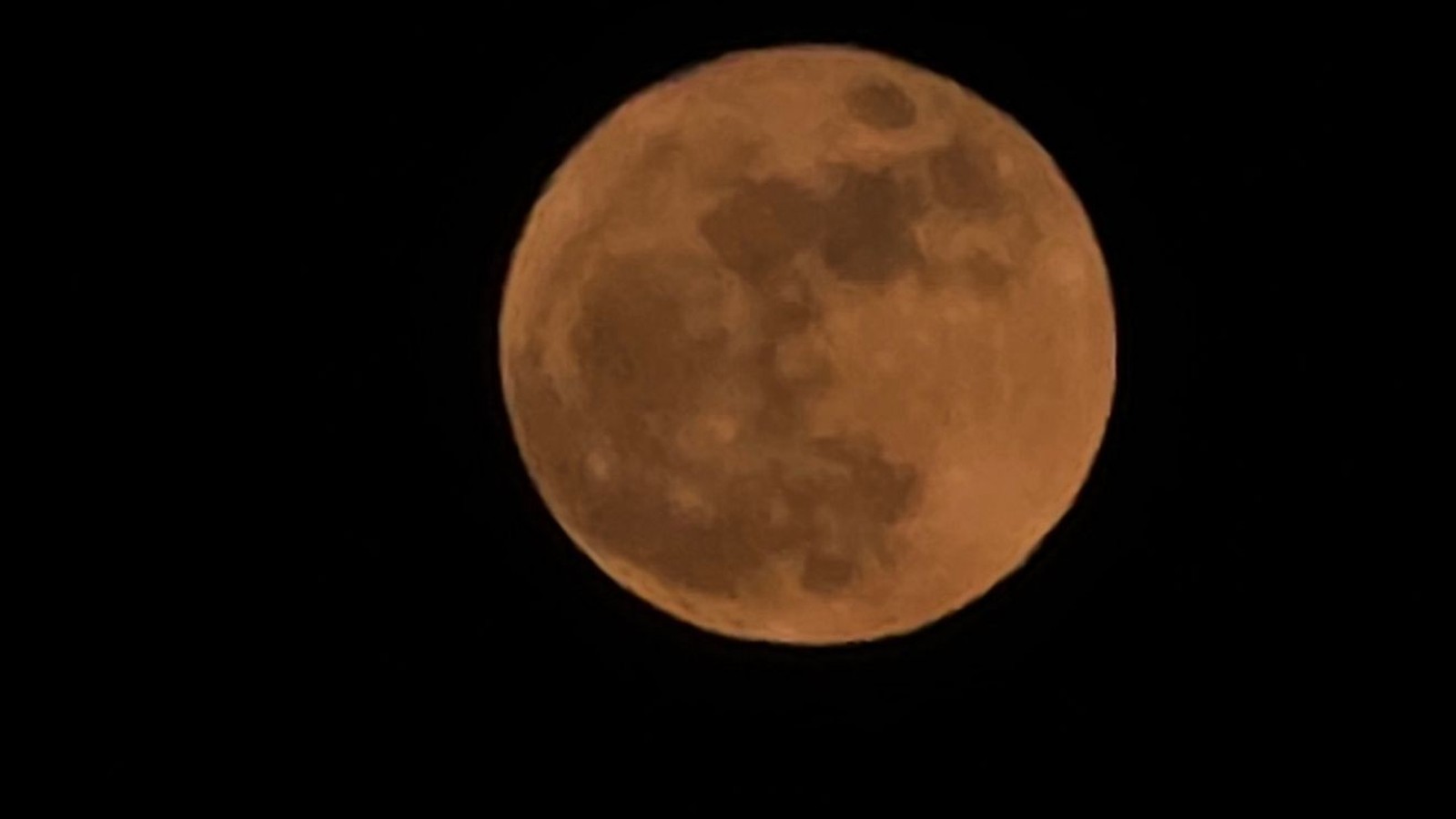
- The May 31 blue moon is the second full moon of the calendar month.
- It coincides with a micromoon, occurring when the moon is at its farthest orbital point (apogee).
- Increased lunar gravity will trigger higher-than-average tidal currents.
- Ecological impacts include seasonal worm swarms and horseshoe crab spawning migrations.
The Dynamics of the Blue Moon and Micromoon
On May 31, 2026, the night sky will host a significant astronomical event: a “blue moon.” In modern astronomical parlance, a blue moon refers to the second full moon occurring within a single calendar month. Because the lunar cycle lasts approximately 29.5 days, this phenomenon typically occurs once every two to three years. While the moon will not appear blue in color to the naked eye, its presence marks a rare synchronization of the calendar and the lunar orbit.
Adding to the unique nature of this event is the moon’s position at apogee—the point in its orbit farthest from Earth. This positioning results in a “micromoon,” where the lunar disk appears slightly smaller and dimmer than a typical full moon. Despite the reduced size, the gravitational influence exerted by the moon remains a potent force, dictating environmental shifts that are felt acutely across coastal and aquatic regions.
Ecological and Maritime Stakes
The impact of this lunar cycle extends beyond celestial observation, exerting measurable influence on natural cycles. Marine biologists and environmental agencies have noted that the intensified tidal currents associated with this full moon are expected to trigger significant biological activity. In the Chesapeake Bay region, for instance, this lunar phase is linked to the emergence of annual worm swarms, a critical event that provides a surge of nutrition for local fish populations. The increased tidal flow also facilitates the spring spawning migration of horseshoe crabs, which are appearing on beaches where salinity levels exceed 6ppt.
For maritime sectors, the event necessitates adjustments in resource management and fishing strategies. The increased tidal currents can alter water clarity and bottom oxygen levels, factors that dictate the movement and feeding patterns of species such as striped bass, blue catfish, and white perch. Anglers are advised to account for these shifts, as the lunar-driven behavior of aquatic life often requires a recalibration of traditional fishing techniques, such as adjusting depth targets and bait selection to match the heightened, albeit cyclical, activity of the local fauna.
Scientific and Observational Significance
The convergence of a blue moon and a micromoon provides a valuable data point for scientists tracking lunar-terrestrial interactions. While the visual difference of a micromoon is subtle, the gravitational implications for tidal currents are well-documented. According to data from the National Oceanic and Atmospheric Administration (NOAA), the upcoming period will see above-average tidal currents, which serve as a primary catalyst for the redistribution of nutrients and the movement of migratory species. These environmental conditions are essential for maintaining the health of tidal rivers and estuaries.
The May 31, 2026, lunar event serves as a reminder of the complex interplay between celestial mechanics and terrestrial ecosystems. By analyzing the synchronization of the blue moon and the apogee of the lunar orbit, researchers and environmental managers can better predict shifts in marine behavior and tidal volatility. As the moon reaches its maximum illumination, the resulting ecological ripples—from worm swarms to crustacean migrations—underscore the necessity of integrated environmental monitoring. Ultimately, this event highlights the precision of natural cycles and the importance of adapting human activity to the rhythmic fluctuations of the planet’s most influential satellite.