


A Modern Take on a Foundational Epic
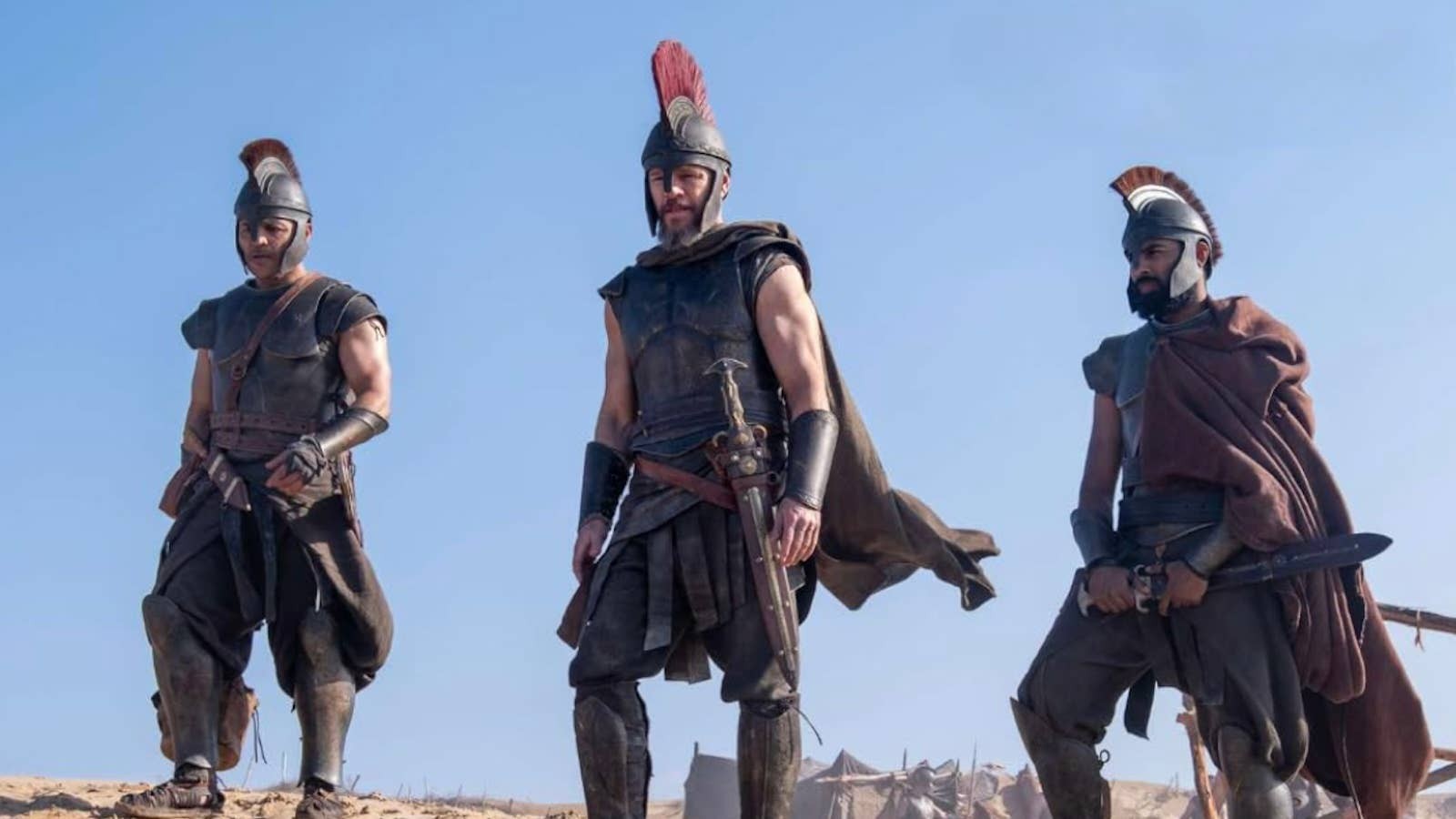
Christopher Nolan’s adaptation of The Odyssey has emerged as a significant cinematic event, grossing over $660 million worldwide and holding a 94% approval rating on Rotten Tomatoes. By prioritizing practical effects over CGI—as evidenced by the elaborate burial of stuntmen in sand for desert sequences—Nolan aims to ground the mythological narrative in a tactile, human reality.
The director has framed the project as an attempt to make the ancient text accessible to modern audiences, regardless of their prior knowledge of the poem. The film balances the high-stakes journey of Odysseus with the domestic tension of the Ithacan palace, utilizing an extensive ensemble cast to anchor the story’s emotional core.
The Central Figures of Ithaca
Matt Damon leads the film as Odysseus, the King of Ithaca. Damon describes the character as a “very complicated protagonist” living with the consequences of his actions. Opposite him, Anne Hathaway portrays Queen Penelope. Hathaway sought to move beyond the traditional archetype of a “paragon of patience,” exploring who the queen is when she is not under the constant scrutiny of the suitors occupying her home.
Tom Holland plays Telemachus, whose coming-of-age journey provides a parallel narrative to his father’s homecoming. Holland notes the intimate connection maintained between the two characters despite their physical separation throughout much of the film.
Gods, Antagonists, and Loyalists
The film’s villainy is anchored by Robert Pattinson as Antinous, the leader of the suitors. Nolan notes that Pattinson drew inspiration from a “creepy and amusing” desire to replace Telemachus as a paternal figure, grounding the antagonist’s behavior in a “cowardly nature.”
Zendaya takes on the role of the goddess Athena, tasked with portraying a divine entity through a human lens. Her performance focuses on the pedagogical relationship between the goddess and Odysseus. Meanwhile, Lupita Nyong’o tackles a dual role as Helen of Troy and her sister Clytemnestra, aiming to explore the “cost of war” and the human emotions of rage and guilt often overlooked in classical interpretations.
Practicality and Character Depth
The production’s commitment to practical effects extends to the portrayal of the Cyclops, played by Bill Irwin. Rather than relying solely on digital animation, Nolan collaborated with Irwin to find the creature’s “soul,” drawing inspiration from Francisco Goya’s art. John Leguizamo, who plays the loyal swineherd Eumaeus, highlighted the physical rigors of the shoot, noting that his character’s near-blindness serves as a stylistic tribute to the traditional depiction of Homer himself.