


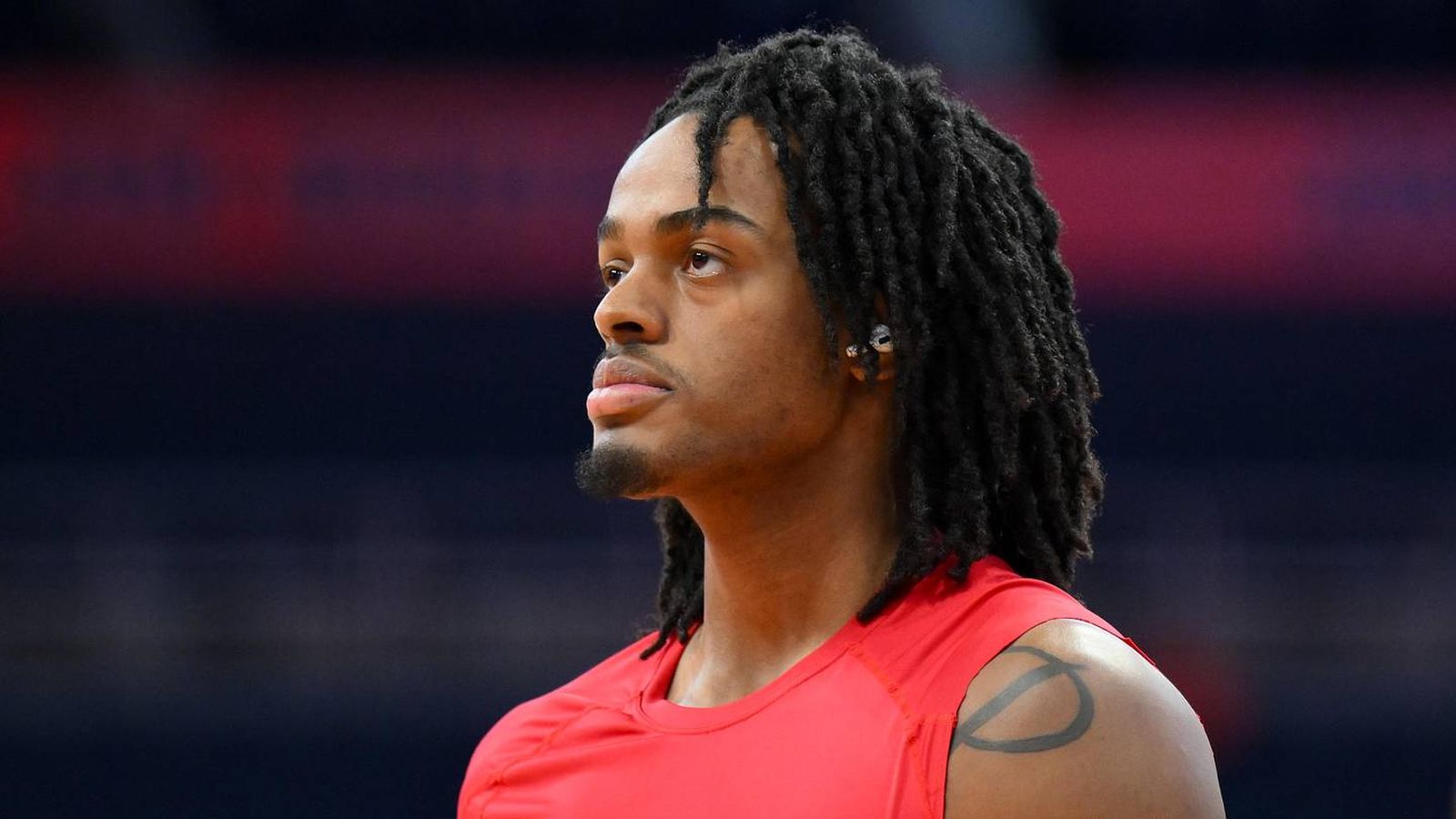
LAWRENCE (Azat TV) – Kansas head coach Bill Self addressed his roster’s most glaring vacancy on Thursday, securing a commitment from Radford standout Dennis Parker Jr. to provide the veteran perimeter scoring the Jayhawks lacked during critical stretches last season. Parker, a 6-foot-6 guard who transformed into one of the most efficient scorers in the transfer portal, announced his decision during an interview on The Field of 68, signaling a major tactical shift for the Jayhawks heading into the 2026-27 campaign.
The addition of Parker comes at a pivotal moment for a Kansas program that has already secured the nation’s top-ranked recruit, Tyran Stokes. While the arrival of elite freshmen often dominates headlines, Self’s recruitment of Parker suggests a prioritized need for proven, high-volume production. Last season at Radford, Parker averaged 18.3 points and 5.9 rebounds per game, shooting a robust 48.4% from the field. His breakout year was punctuated by a historic 53-point performance against Coppin State, a game in which he converted 10 three-pointers, cementing his reputation as a dangerous offensive weapon.
Addressing the Kansas Perimeter Scoring Void
The primary motivation behind this recruitment appears to be the offensive stagnation that occasionally hindered the Jayhawks in 2025. Despite having significant talent, Kansas struggled at times to find reliable shot creation outside of their primary sets. According to reports from Busting Brackets, Bill Self was explicit in his pitch to Parker, telling the guard directly that the team specifically needs him to put the ball in the basket. This clarity of role likely accelerated the commitment process.
Parker’s physical profile allows him to slot into multiple positions within Self’s system. At 6-foot-6, he possesses the length to defend Big 12 wings and the athleticism to finish in transition. However, it is his jump-shooting that represents the most significant upgrade. During his previous tenure at NC State, Parker struggled from deep, shooting just 28%. After transferring to Radford, that figure jumped to nearly 38% on significantly higher volume. Kansas is betting that this statistical leap is sustainable and that Parker can serve as a floor-spacer for Stokes and other incoming talent.
Dennis Parker Jr. and the Path from NC State to Radford
Parker’s journey to Lawrence is a testament to the modern transfer portal’s ability to revitalize a player’s trajectory. Originally a four-star recruit out of Richmond, Virginia, Parker spent two seasons as a rotational piece at NC State. While he gained invaluable experience during the Wolfpack’s improbable run to the 2024 Final Four, he did not find a consistent offensive rhythm until moving to the Big South. At Radford, he was forced to become the focal point of the offense, a responsibility that clearly accelerated his development.
Speaking with The Topeka Capital-Journal, Parker highlighted that his defensive growth preceded his offensive explosion. He described himself as a “two-way dog,” a mentality that aligns with Bill Self’s historically rigid defensive standards. Parker noted that he had already consulted with Jayhawks veteran Melvin Council Jr. regarding the defensive expectations in Lawrence, suggesting that he is prepared for the physical toll of Big 12 play. This combination of high-major experience and mid-major production makes him a unique asset for a team with championship aspirations.
Bill Self and the Strategic Roster Evolution
The 2026-27 Kansas roster is beginning to look markedly different from the interior-heavy teams Bill Self has favored in the past. With the inclusion of Parker alongside transfers like Keanu Dawes and Leroy Blyden Jr., the Jayhawks are building a lineup defined by length, versatility, and perimeter shooting. This evolution reflects a broader trend in college basketball toward positionless play and high-efficiency scoring from the wings.
While the spotlight will remain on Tyran Stokes and the highly-touted freshman class, Parker provides a necessary bridge between youth and experience. Freshmen, regardless of their ranking, often face a steep learning curve in the Big 12. Parker’s presence ensures that Self has a reliable scoring option who has already performed under the pressure of the NCAA Tournament. As KCTV5 noted, Parker scored in double figures in 30 of his 32 appearances last season, providing the kind of consistency that coaches value during the grueling conference schedule.
The strategic acquisition of Dennis Parker Jr. indicates that Kansas is no longer content with relying on raw potential alone, opting instead to insulate its elite freshmen with proven, high-efficiency scorers who can mitigate offensive droughts.