


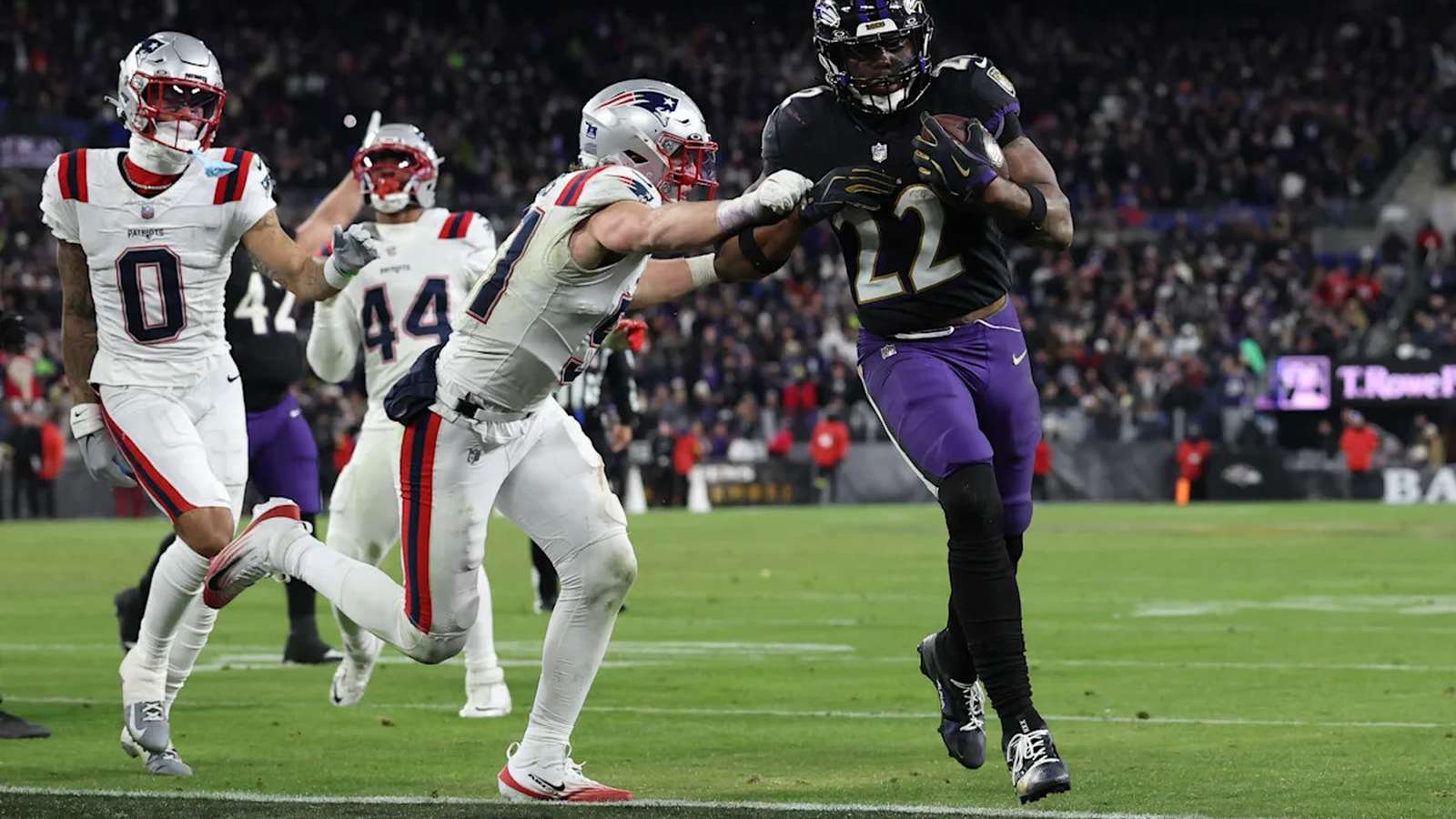
Derrick Henry’s Dominant Start: Setting the Stage
Sunday Night Football in Week 16 had all the makings of a classic: playoff implications, superstar matchups, and a spotlight on Baltimore’s marquee running back, Derrick Henry. For fantasy football managers and Ravens fans alike, this was supposed to be Henry’s night. He wasted no time proving why, ripping off a 21-yard touchdown on the first drive, instantly putting New England on the back foot. The Patriots’ run defense, shaky in recent weeks, looked overwhelmed, and the momentum seemed to be swinging Baltimore’s way.
But football is rarely linear. After an early interception by Baltimore’s defense, the tide shifted again. Henry, who’s battled ball security issues all season, lost a fumble on a promising drive. New England, led by rookie quarterback Drake Maye, capitalized and the game quickly evened out. Injuries also played a role, with Baltimore rookie TreVeyon Henderson sidelined by a concussion, forcing the Ravens to lean even harder on their star veteran.
Coaching Decisions Under the Microscope: Why Henry Sat Late
As the game wore on, the focus shifted from Henry’s explosive runs to a puzzling coaching decision. Despite averaging a remarkable 7.1 yards per carry and racking up 128 yards and two touchdowns on just 18 attempts, Henry was conspicuously absent in the fourth quarter’s most critical stretches. Instead, the Ravens rotated in Keaton Mitchell, a move that baffled fans and analysts alike.
According to Yahoo Sports and further reporting from MassLive, the Ravens’ coaching staff opted to sit Henry for the final 12 minutes and 50 seconds of the game. While official post-game comments cited the need to “keep the rotation fresh,” the decision was met with skepticism. Henry was punishing defenders, and the Patriots’ tacklers appeared to want no part of him. With Baltimore’s playoff hopes hanging in the balance, many questioned why their most effective weapon was left on the sidelines.
Complicating matters was the loss of star quarterback Lamar Jackson to injury just before halftime. Backup Tyler Huntley steadied the ship briefly, but Baltimore’s offense lost its rhythm and urgency. In moments where a power running game could have stabilized the team, the Ravens instead went away from Henry. The move may have cost them the game—and potentially the playoffs.
Fantasy Football Fallout and Playoff Ramifications
For fantasy managers, Henry’s night was both a blessing and a tease. His stat line—128 yards, two touchdowns, a gaudy 7.1 yards per carry—was championship-caliber, especially for those who trusted him in their lineups. Yet, anyone watching knew the numbers could have been even bigger had he stayed on the field. “December Derrick Henry” has long been a fantasy legend, a player who peaks when the stakes are highest. This year, he was on pace for a monster outing before the unexpected benching.
For the Ravens, the loss to New England is a gut punch. The team now needs to win out and hope for help from other contenders to keep their playoff hopes alive. With Jackson’s status uncertain for next week, Baltimore faces critical decisions about how to deploy Henry going forward. The instant reaction from analysts: if Lamar misses time, the offense must run through Henry. The veteran back has shown he can carry the load and turn games with his physicality and vision, especially in high-pressure situations.
The Bigger Picture: Trust, Strategy, and the Human Element
There’s a deeper story here than just play calls and stat lines. Derrick Henry’s role in Baltimore’s offense is a microcosm of how teams balance star power, health, and strategic risk as the season reaches its climax. Coaches are constantly weighing rotation, injury prevention, and matchup dynamics. But sometimes, the human element—the will of a player, the trust of a team, the energy of a crowd—can be just as decisive as any analytics model.
Henry’s frustration was evident as he watched from the sidelines. For a player who thrives on late-game volume and has built a reputation as one of football’s most punishing closers, being held back at crunch time is tough to swallow. Fans, too, felt the sting. Social media lit up with questions and critiques, demanding clarity on why the “King” was benched when the team needed him most.
Ultimately, football’s drama is shaped as much by these moments of doubt and second-guessing as by the highlight-reel touchdowns. For Baltimore, the decision to sit Henry late will be dissected for weeks, especially if the playoff run falters. For Henry, it’s another reminder that even superstars can be at the mercy of circumstance and coaching philosophy.
The Ravens’ handling of Derrick Henry against the Patriots underscores a classic tension in football: the push and pull between analytics, game management, and gut instinct. While the data may justify rotations, sometimes the right call is trusting your star to finish the job. Baltimore’s playoff fate may now hinge on whether they learn that lesson in time.