


A critical diplomatic push to address the protracted conflict in eastern Ukraine’s Donbas region unfolded this week, as delegations from the United States, Russia, and Ukraine convened for rare trilateral talks in Abu Dhabi. These high-stakes discussions, the first of their kind since Russia’s full-scale invasion of Ukraine, underscore the international community’s urgent efforts to navigate one of the most intractable geopolitical disputes of our time. Simultaneously, a new US-led global peace initiative, President Donald Trump’s “Board of Peace,” has emerged, drawing both participation from Russian President Vladimir Putin and significant reservations from key allies like the United Kingdom, highlighting the complex and often fragmented landscape of contemporary diplomacy.
The Abu Dhabi meeting honed in on the singular issue of territorial integrity, specifically the eastern Ukrainian regions of Donetsk and Luhansk, collectively known as the Donbas. Ukrainian President Volodymyr Zelensky firmly reiterated Kyiv’s unwavering stance that permanent territorial concessions are non-negotiable, despite acknowledging a willingness to consider freezing the conflict along existing front lines to halt hostilities. This position, backed by European allies, aims to preserve Ukraine’s sovereignty while seeking an end to the bloodshed. Conversely, Kremlin aide Yury Ushakov made it clear that Russia would not compromise, warning that no long-term settlement could be achieved “without resolving the territorial issue” and threatening continued military action until an agreement is reached, as reported by CNN and BBC News. US President Trump, who had previously suggested a deal was close, now faces the reality of these deeply entrenched positions.
The Donbas, a coal-rich industrial heartland connecting to the Sea of Azov, holds immense strategic and economic value. Vladimir Putin’s desire to control this region predates the 2022 full-scale invasion, stretching back nearly 12 years to 2014. At that time, following Russia’s illegal annexation of Crimea, Moscow began backing pro-Russian separatists in Donetsk and Luhansk, supplying them with weapons, advisory support, and embedding its own officers, according to US, NATO, and Ukrainian officials. This covert operation destabilized the region, leading to a low-intensity conflict that claimed some 14,000 lives over eight years. Putin has consistently dismissed Ukraine’s right to independent existence, portraying Ukrainians as part of a larger “historical Russia” and baselessly accusing Kyiv of “genocide” against Russian speakers in the Donbas. In February 2022, he formally recognized the self-proclaimed Donetsk People’s Republic (DPR) and Luhansk People’s Republic (LPR) as independent states, a prelude to his full-scale invasion.
Despite committing vast resources and suffering immense casualties—NATO Secretary General Mark Rutte estimated 20,000 to 25,000 Russian soldiers killed monthly—Moscow has struggled to achieve its military objectives in the Donbas. While Russian forces control almost all of Luhansk, they have only managed to seize approximately 70% of Donetsk. The remaining Ukrainian-controlled portion of Donetsk, particularly its fortified industrial cities, railways, and roads, forms a critical “fortress belt” for Ukraine’s defense. Losing this area would leave the rest of eastern Ukraine vulnerable to future Russian aggression. The Institute for the Study of War, a US-based conflict monitor, suggests that at the current rate of advance, it could take Russia another year and a half to fully capture the remaining Donbas territories under Kyiv’s control, underscoring the slow and costly nature of the conflict. Amid these military realities, the US has reportedly proposed creating a “free economic zone” in the parts of Donbas still under Ukrainian control, offering security guarantees in exchange for Ukraine’s withdrawal from those areas. However, Russia’s recent statements do not indicate a willingness to accept such a compromise.
Beyond the battlefield and diplomatic tables, the human toll of the conflict in occupied Donbas remains stark. International human rights organizations, the United Nations, and media outlets including CNN have extensively documented widespread human rights abuses under Russian occupation. These allegations include arbitrary detentions, enforced disappearances, torture, sexual violence, and a severe clampdown on civil rights. Survivors and Ukrainian authorities report forced acceptance of Russian passports, indoctrination of children in schools and “re-education” camps, and violent repercussions for any resistance. Russia consistently denies these accusations, despite a growing body of evidence to the contrary, as highlighted in the latest UN report on human rights in Ukraine.
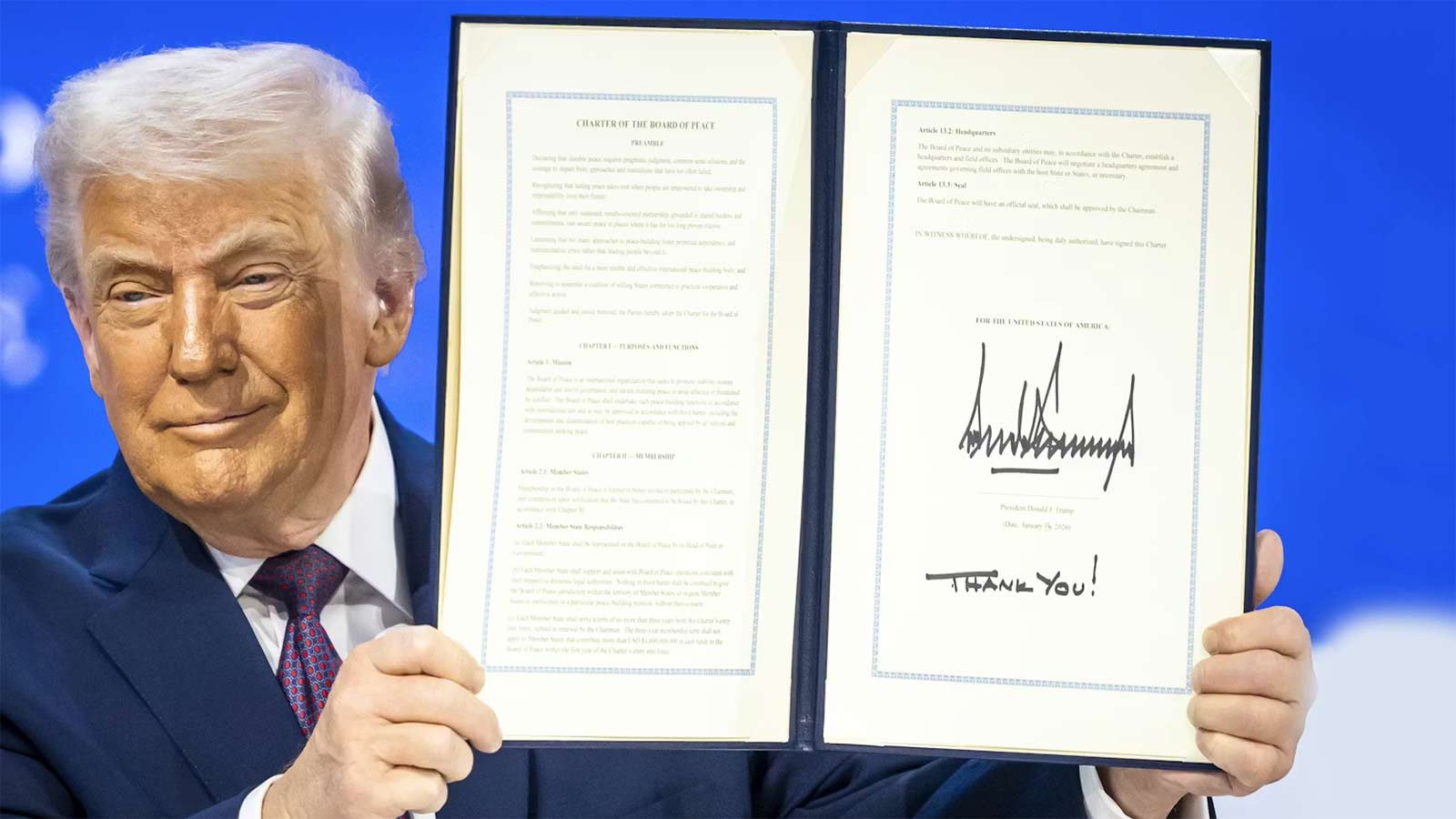
Adding another layer to the complex international landscape is President Trump’s newly unveiled “Board of Peace,” an ambitious initiative aimed at resolving global conflicts, initially focused on the Israel-Hamas war in Gaza. Trump, who will chair the board, has been joined by leaders and representatives from 19 countries, including Argentina, Hungary, Morocco, Saudi Arabia, and Turkey. Notably, Russian President Vladimir Putin has accepted an invitation to join the initiative, with discussions reportedly underway regarding the use of frozen Russian assets as a potential contribution to the board, according to BBC News. The board’s founding charter outlines its mandate as an international organization promoting stability and peace in conflict-affected areas, granting its chairman significant decision-making powers.
However, the Board of Peace has not been met with universal acclaim. The United Kingdom has notably held off joining, with Foreign Secretary Yvette Cooper expressing significant concerns over Vladimir Putin’s possible participation. Speaking from Davos, Cooper told the BBC that while the UK supports Trump’s plan to end the Gaza war, the board itself is a “legal treaty that raises much broader issues” and that Putin has shown no willingness “to come and make that agreement.” The UK’s reluctance stems from questions about the board’s legitimacy and its potential to supersede established international platforms for conflict resolution, such as the UN Security Council. This divergence underscores a broader diplomatic challenge: how to engage with a nation accused of violating international law while simultaneously seeking its cooperation on global peace initiatives.
As diplomatic efforts intensify on multiple fronts—from focused trilateral talks on Donbas to the emergence of new, broader peace initiatives—the fundamental disagreements over territorial integrity, adherence to international law, and the legitimacy of key actors like Russia continue to complicate any definitive path toward a lasting global peace, leading to a fragmented and often contradictory international response.