


Strait of Hormuz Proposal Rejected by Washington
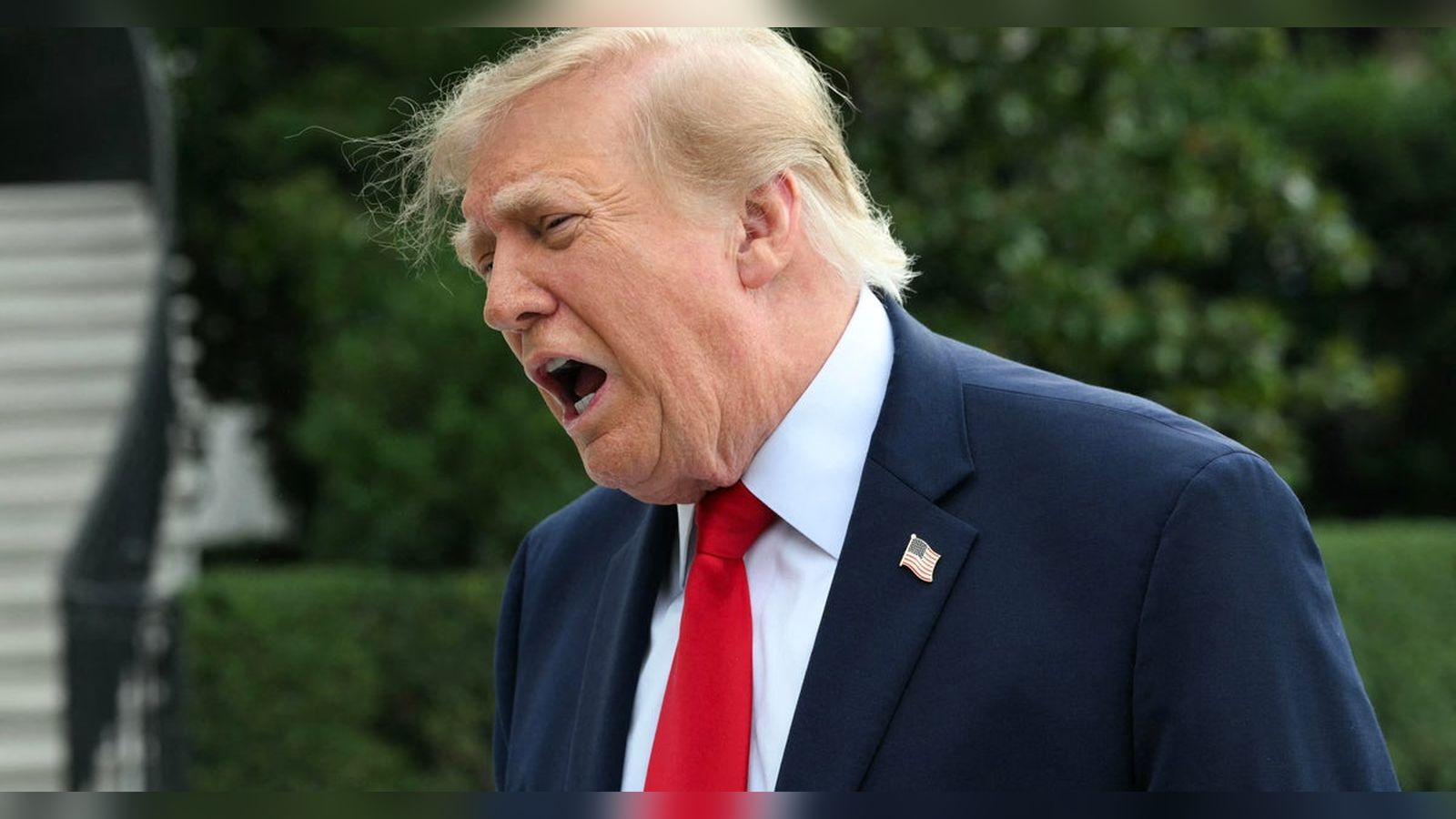
President Trump announced Saturday that he has rejected a seven-day proposal from Iran aimed at reopening the critical Strait of Hormuz and restarting broader nuclear negotiations, according to CBS News. Speaking to reporters as he left the White House, President Trump asserted that Washington maintains strong control over the waterway and that American military escorts successfully guided 29 vessels out of the Persian Gulf under supervision.
Iranian Foreign Minister Abbas Araghchi stated that Tehran stands by its conditions, which require a cessation of hostilities across multiple Middle East theaters, including Lebanon, and the revival of a ceasefire framework that collapsed months ago. Araghchi noted that while the initial U.S. response was negative, Iranian officials await formal word from regional mediators.
Global Economic Squeeze and Banking Restrictions
As diplomatic channels stall, U.S. Treasury Secretary Scott Bessent announced that Washington’s “Operation Economic Outcast” is delivering tangible results by isolating Iran’s financial and aviation networks. According to CBS News, Bessent stated on X that enforcement teams have successfully pressured international partners to restrict Iranian commercial carriers and financial institutions.
Regional measures have accumulated swiftly in recent days. The United Arab Emirates central bank blocked transactions involving branches of Iran’s Bank Melli over alleged money laundering and arms proliferation violations, while Turkey revoked the operating license of Bank Mellat. Furthermore, Turkey, Oman, and the UAE have moved to halt incoming and outgoing flights operated by Iranian airlines, including Mahan Air, dealing a heavy blow to commercial links centered around Dubai.
International Reactions at the United Nations General Assembly
The diplomatic standoff dominated speeches at the United Nations General Assembly in New York, where regional powers voiced deep alarm over maritime security and energy supply chains. Saudi Foreign Minister Faisal bin Farhan warned that ongoing disruptions in the Strait of Hormuz and the Bab el-Mandeb Strait pose a severe threat to global energy stability, demanding an immediate return to pre-February shipping conditions without levies or fees, as reported by CBS News.
Omani Foreign Minister Badr Albusaidi called for regional self-restraint and renewed dialogue, reaffirming Muscat’s readiness to mediate navigation security across the vital waterway. Meanwhile, Russian Foreign Minister Sergei Lavrov stated that Moscow is prepared to contribute to regional stabilization, though specific mechanisms were not detailed. In contrast, Chinese Vice President Han Zheng emphasized the sovereignty of Gulf states during his U.N. address, offering a pointed counterweight to Western pressure campaigns despite recent bilateral meetings between President Trump and Chinese leader Xi Jinping.
Energy Supplies and Operational Security
The persistent closure of regional transit lanes has kept global energy markets on edge, with international benchmark Brent crude closing the week near $104 per barrel after touching $108 earlier in the period. To offset tightening supplies, the White House confirmed that President Trump pressed Chinese President Xi Jinping during their recent state visit to increase refined petroleum production to stabilize global markets.
On the ground and at sea, military friction persists. The Israel Defense Forces confirmed that they carried out a targeted strike in southern Lebanon destroying an alleged Hezbollah weapons storage facility used to launch attacks into Israel’s designated security zone, underscoring how interconnected regional conflicts continue to complicate broader diplomatic resolutions.