


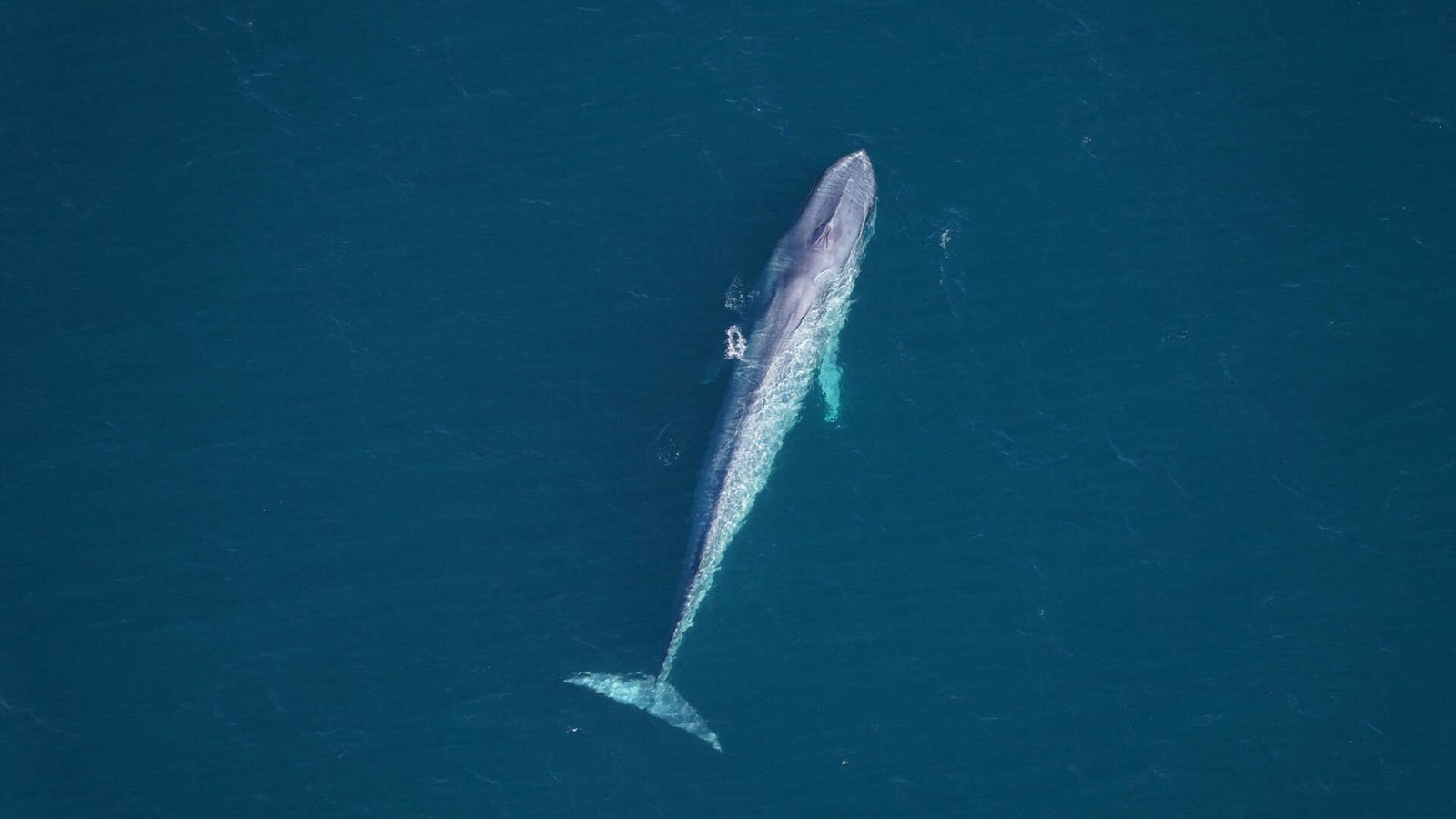
Researchers from the Aquarium’s survey team spotted three blue whales within a 24-hour period in late February 2026. On February 27, one blue whale was observed at the base of Lydonia Canyon, an area within the Northeast Canyons and Seamounts Marine National Monument. Just one day later, on February 28, the team sighted two additional blue whales approximately 15 miles south of Martha’s Vineyard. Associate Scientist Katherine McKenna, who participated in both survey flights, noted the rarity of these observations, stating that finding blue whales in two different ocean areas hours apart was unprecedented for their team.
Rare Blue Whale Sightings Off New England Coast
The presence of blue whales in southern New England waters is particularly notable as these endangered giants are typically studied in their summer feeding grounds in Canada’s Gulf of St. Lawrence. Research Scientist Orla O’Brien, who sighted whales during the February 28 flight, suggested that favorable oceanographic conditions, likely rich in food sources like krill and plankton, drew the whales to the region. The Northeast Canyons and Seamounts Marine National Monument, known for its unique biodiversity and nutrient-rich waters, serves as a crucial breeding ground for such prey. The Western North Atlantic blue whale population is critically small, estimated to consist of only 400 to 600 individuals, making each sighting vital for understanding their movements and overall health.
Endangered Species and Marine Protections
The aerial survey not only documented blue whales but also observed over 300 other marine animals, including three endangered fin whales, three endangered sperm whales, about 50 pilot whales, and hundreds of dolphins. This rich biodiversity underscores the ecological importance of the region. However, these sightings coincide with recent policy changes that have drawn criticism from marine life advocates. The New England Aquarium highlighted the recent rollback of protections for the Northeast Canyons and Seamounts Marine National Monument. President Donald Trump issued a proclamation last month to open the nearly 5,000 square miles of the monument to commercial fishing, a move met with approval from fishing industry leaders but strong opposition from conservation groups.
Policy Reversals Impacting Marine Life
Further compounding concerns for marine life, the National Oceanic Atmospheric Administration (NOAA) announced plans to eliminate speed limits for vessels, which were originally implemented to protect North Atlantic right whales. This decision, part of the Trump Administration’s broader deregulation efforts across various government sectors, has been widely condemned by environmental organizations who argue that such measures are essential for the recovery of endangered whale populations. Marine life advocates emphasize that effective protective measures are crucial for the long-term survival of these vulnerable species, including the blue whales now being observed in new areas.
The recent sightings of endangered blue whales off New England underscore the critical need for robust marine conservation efforts, especially as policy changes threaten established protections. The rare presence of these giants in unexpected areas provides valuable data for scientists, yet simultaneously amplifies concerns about their future amidst increasing human activity and reduced regulatory oversight in vital oceanic habitats.