


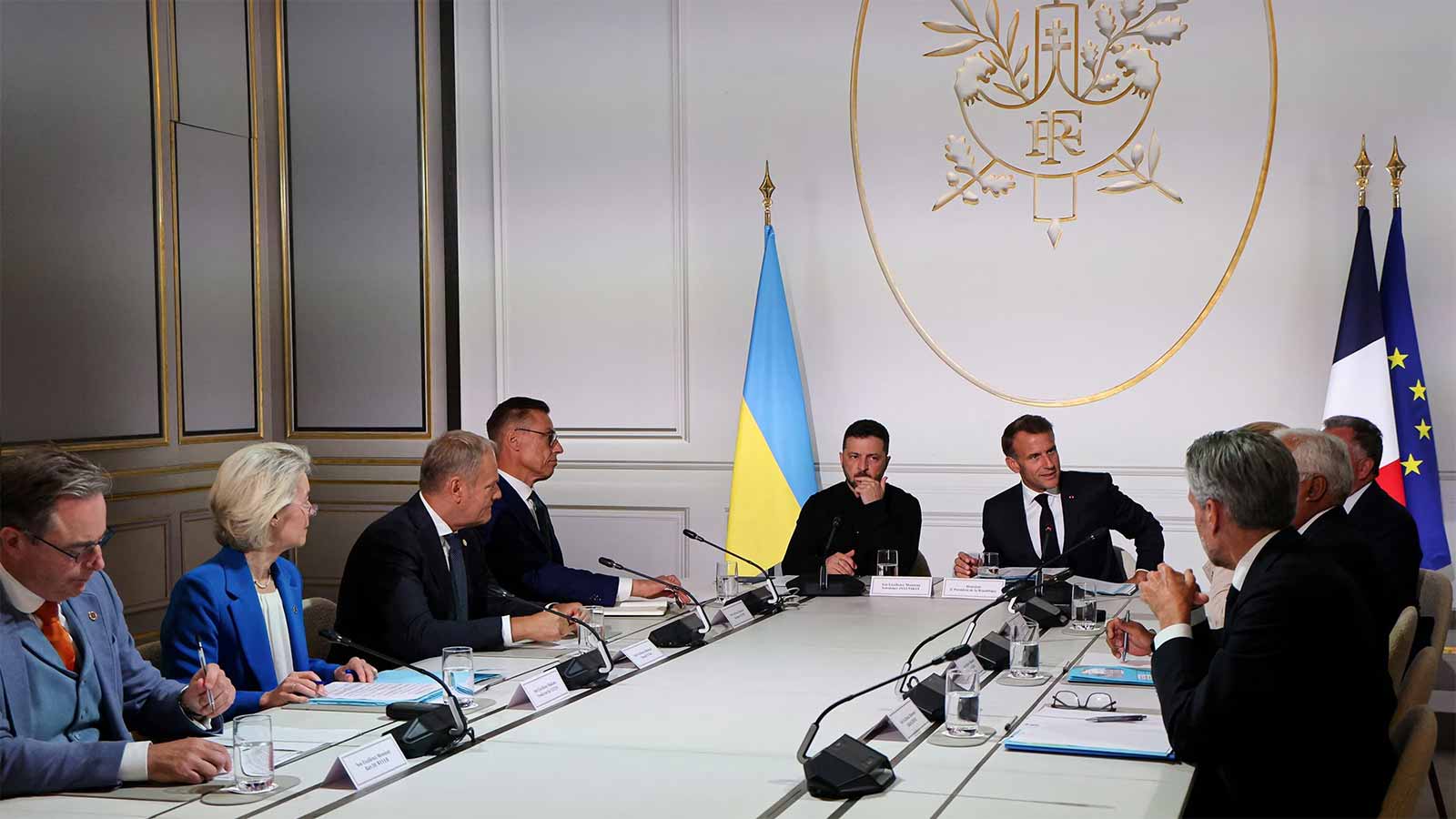
In a high-stakes meeting held in Paris on September 4, European leaders convened to deliberate on pressing issues surrounding the ongoing conflict in Ukraine. Dubbed the “Coalition of the Willing,” the gathering brought together key figures such as French President Emmanuel Macron, British Prime Minister Keir Starmer, German Chancellor Friedrich Merz, European Commission President Ursula von der Leyen, and NATO Secretary-General Mark Rutte. Ukrainian President Volodymyr Zelenskyy also joined the discussions, underscoring the urgency of securing peace amidst Russia’s unyielding aggression.
Coalition of the Willing: A European-Led Effort
The Paris meeting marked a pivotal moment as European powers sought to take the lead in resolving the Ukraine crisis. French President Emmanuel Macron emphasized Europe’s readiness to provide “security guarantees” for Ukraine once a peace deal is achieved. While Macron refrained from disclosing specific details, he stressed that these guarantees would need to be robust and enforceable to prevent Russia from exploiting a potential ceasefire to regroup and rearm. British Prime Minister Keir Starmer added that the coalition’s commitment to Ukraine remains “unbreakable” and that additional measures are being considered to pressure Russian President Vladimir Putin into halting hostilities.
However, tensions within the coalition surfaced as Spanish Prime Minister Pedro Sánchez was unable to attend the meeting in person due to technical issues with his aircraft, participating virtually instead. Despite these logistical challenges, European leaders presented a united front, signaling their intent to underwrite Ukraine’s security in the face of continued Russian aggression.
Trump’s Role: Shifting Responsibility to Europe
U.S. President Donald Trump participated in the Paris discussions via video call, where he called on European nations to intensify their efforts against Russia. Trump criticized Europe for continuing to purchase Russian oil, which he argued was indirectly funding the war. According to Axios, Trump stated, “Europe must cut off Russia and pressure China to do the same.” While acknowledging Europe’s significant reduction in Russian oil imports since the war began, Trump emphasized that further action is necessary, particularly from nations like Hungary and Slovakia, which maintain exemptions from EU import bans.
Trump’s remarks also highlighted the growing complexity of his administration’s role in the conflict. After initial claims that he could resolve the Ukraine crisis within 24 hours, Trump has faced mounting criticism for the lack of tangible progress. During a recent phone interview with CBS News, he admitted, “Something is going to happen, but they are not ready yet. But something is going to happen. We are going to get it done.”
Russia’s Stance: Escalation Over Negotiation
While European leaders and Trump discussed pathways to peace, Russian President Vladimir Putin signaled no intention of softening his stance. During a visit to Beijing on September 3, Putin reiterated his demands for Ukraine to surrender and rejoin Moscow’s sphere of influence. He warned that if Ukraine refuses to comply, Russia would escalate its military efforts. According to NBC News, Putin stated, “If common sense prevails, then it is possible to agree on an acceptable option for ending this conflict. But if Ukraine does not accept our demands, we will solve all our tasks by force.”
This uncompromising position has left European leaders and Zelenskyy wary of any ceasefire proposals. Ukrainian officials have repeatedly cautioned that a ceasefire without enforceable security guarantees could allow Russia to regroup and launch further attacks, not only on Ukraine but potentially on neighboring European nations as well.
Next Steps: Balancing Diplomacy and Defense
As the meeting concluded, the path forward remained fraught with challenges. European leaders pledged to continue their diplomatic efforts while bolstering Ukraine’s defenses. Zelenskyy, speaking to reporters after the talks, reiterated Ukraine’s need for comprehensive security guarantees, stating, “The war launched by Russia must be stopped. President Trump’s principle of ‘peace through strength’ is exactly the kind of approach that can influence the aggressor.”
Meanwhile, Macron and other European leaders hinted at the possibility of imposing additional sanctions on Russia if Putin refuses to engage in meaningful negotiations. They also acknowledged the importance of addressing China’s role in supporting Russia, with Trump urging Europe to apply economic pressure on Beijing to curb its involvement.
Despite these concerted efforts, the road to peace remains uncertain. With Russia showing no signs of compromise and European nations grappling with internal disagreements, the global community continues to watch closely as the crisis unfolds.
As the conflict enters yet another critical phase, the international community faces a stark choice: escalate pressure on Russia or risk prolonging a war that has already caused untold devastation. The coming weeks will be crucial in determining whether diplomacy or force will shape the future of Ukraine.