


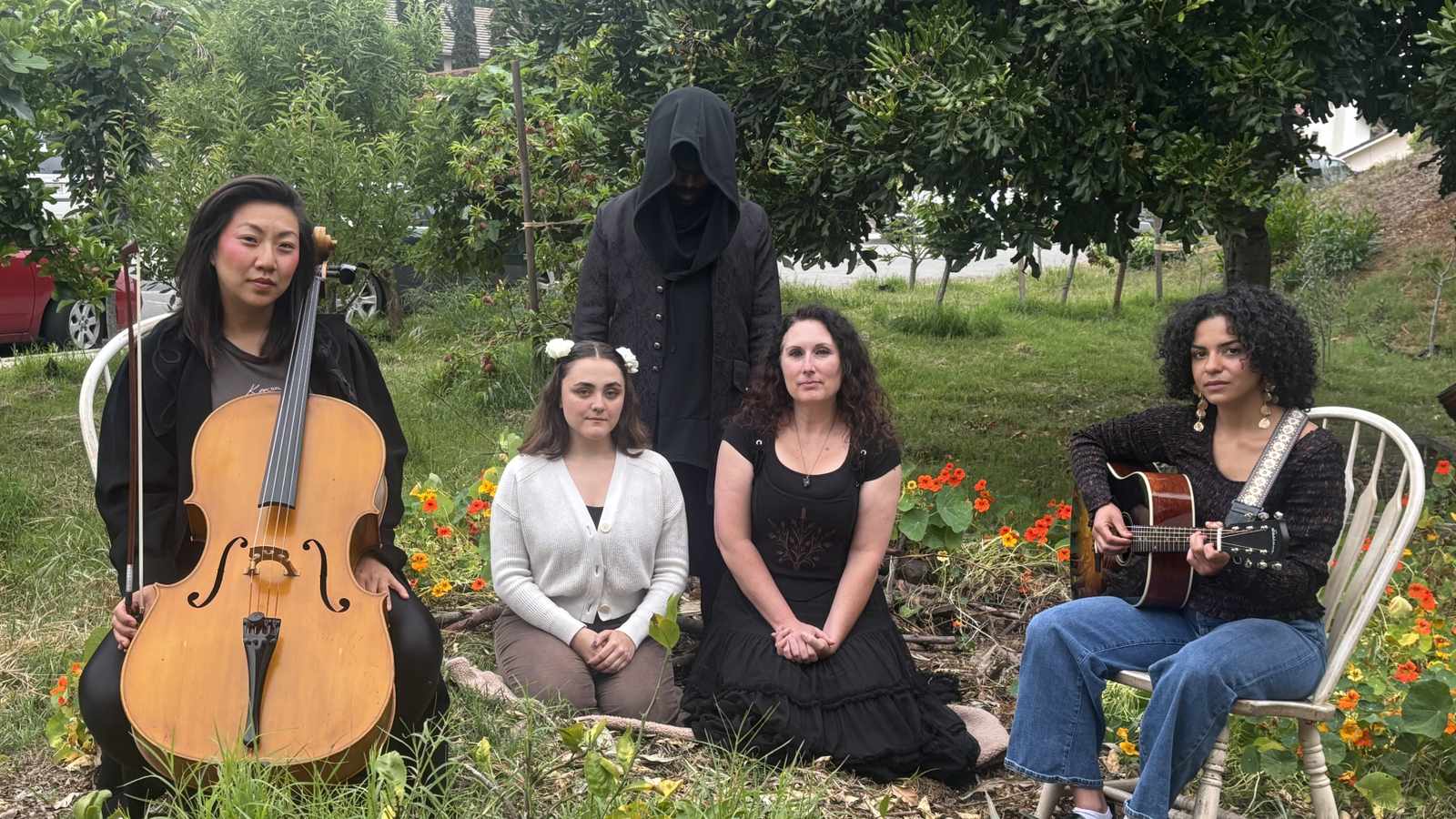
A New Perspective on Familiar Tales
Riot Productions has brought an ambitious, expanded version of The Fairy Tale Monologues to the stage at the Moxie Theatre. Running through August 9, 2026, this original musical—written and composed by Sarah Alida LeClair—seeks to dismantle the traditional archetypes of fairy tales by questioning who holds the power to narrate these stories. Following an award-winning run at the 2026 San Diego International Fringe Festival, the production has evolved into a full-length exploration of agency, identity, and the search for belonging.
The Narrative Shift
The play opens with a narrator, Little Red (Gigi Filipovich), who begins to read from a dusty storybook, only to find the characters within—the Witch, the Princess, and the Baker’s Wife—interrupting her to challenge their prescribed roles. The script, directed by Julie Benitez, effectively uses humor to poke fun at the absurdity of inherited fairy tale conventions, such as the persistent belief in “magic beans” despite warnings of poison, or the rigid “toxic narratives” that define the female protagonists. By giving these characters a voice, the play shifts the focus from the action-oriented plot to the internal lives of those often treated as mere supporting figures.
Character Depth and Musicality
The ensemble brings a palpable sincerity to their roles. Josalyn Johnson portrays an emotionally unmoored Baker’s Wife struggling with the societal pressures of domestic fulfillment, while Delia Mejia’s Princess grapples with grief and the rejection of royal expectations. Timothy Benson’s Prince and Sarah LeClair’s Witch provide a grounded contrast, with their unexpected friendship serving as a highlight of the production. The onstage presence of music director Christopher T. Miller, performing an original score inspired by Irish folk traditions, adds an intimate, storytelling quality that grounds the more fantastical elements of the script.
Areas for Development
Despite its heart, the production shows signs of its status as a developing work. The structure occasionally struggles to balance its wide array of themes—which include mental health, queer identity, and motherhood—leading to moments where transitions feel rushed or metaphors become overly dense. Furthermore, while the songs effectively function as emotional monologues, the score lacks the melodic “stickiness” that defines many long-running stage musicals. However, these issues are consistent with a new piece currently finding its final form. Riot Productions has succeeded in creating a heartfelt work that challenges audiences to reconsider the “truth” hidden between the pages of the stories they grew up with.