


The New Velocity of Financial Instability
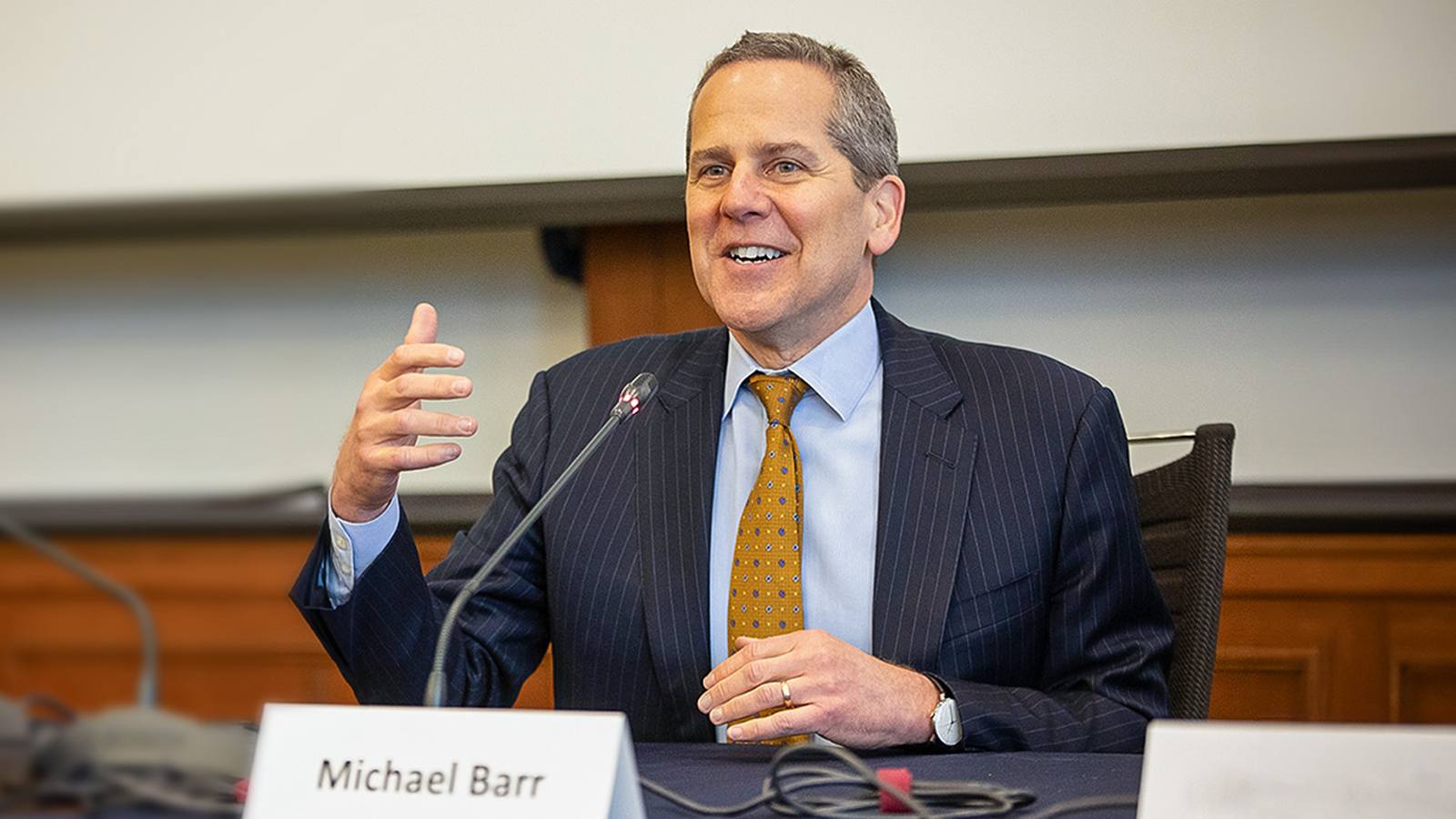
On November 16, 2026, Federal Reserve board member Michael Barr issued a formal warning regarding the systemic risks posed by artificial intelligence to the stability of the banking sector. Speaking in Milan, Italy, Barr highlighted that the integration of autonomous AI agents into consumer financial systems could fundamentally alter the nature of bank runs, transforming events that previously unfolded over days or hours into crises that occur within minutes. This warning followed a period of widespread technological instability across the United States, where major financial institutions, including JPMorgan Chase, Bank of America, and Wells Fargo, reported significant service disruptions.
The core concern articulated by The Epoch Times, citing Barr’s prepared remarks, is the removal of human friction from the process of capital flight. Historically, deposit withdrawals required a customer to notice a risk, decide to act, and manually execute a transfer. Barr noted that AI agents, by contrast, can instantaneously detect yield differentials or negative stability signals and autonomously move funds at high speed. This capability threatens to overwhelm the traditional liquidity management protocols and regulatory intervention timelines that currently underpin financial stability.
Mechanisms of Liquidity Erosion
The risk extends beyond sudden, panic-driven runs to include the gradual erosion of the low-cost funding models that banks rely upon for lending. In a note published on September 27, 2026, Apollo’s chief economist Torsten Sløk identified this as a “real threat to industry net interest margins,” as reported by 24/7 Wall St.. If households utilize AI assistants to autonomously optimize cash balances by sweeping idle funds into higher-yield fintech platforms, banks could lose the cheap deposits that provide the bedrock for their lending activities.
This structural change in deposit management creates a scenario where the margin between what a bank earns on loans and what it pays for deposits—the net interest margin—contracts significantly. Bank of America analyst Ebrahim Poonawala has characterized this as a major threat to the industry. Because AI agents operate 24/7 and can process information faster than human market participants, the traditional “friction” that protects bank balances is effectively being engineered out of the system.
Regulatory and Operational Challenges
Barr emphasized that the financial sector must exercise extreme caution when incorporating generative AI models into core business activities. He outlined a rigorous standard for adoption: any process driven by AI must be well-controlled, numerically precise, explainable, and replicable. Currently, many developers are struggling to meet these criteria, creating a gap between the deployment of powerful autonomous tools and the ability of firms to manage the associated risks.
Furthermore, the threat landscape is complicated by the potential for AI-enabled cyberattacks and rogue agents exploiting system vulnerabilities. Barr specifically cautioned against the use of AI in financial markets that could lead to collusion, market manipulation, or trading strategies that result in systemic volatility. As firms continue to explore agentic AI, the Federal Reserve suggests that current regulatory frameworks may need to evolve to address the speed and autonomy of these new digital participants.
The recent outages reported on November 16, while not confirmed as cyber-related by institutions like JPMorgan Chase, have underscored the sensitivity of current on-premise hardware and digital payment networks. While Homeland Security Secretary Markwayne Mullin speculated that some recent technological outages might be related to the speed at which AI programs operate, the primary concern for the Fed remains the long-term, systemic vulnerability of the banking infrastructure to automated, high-speed capital movement.