


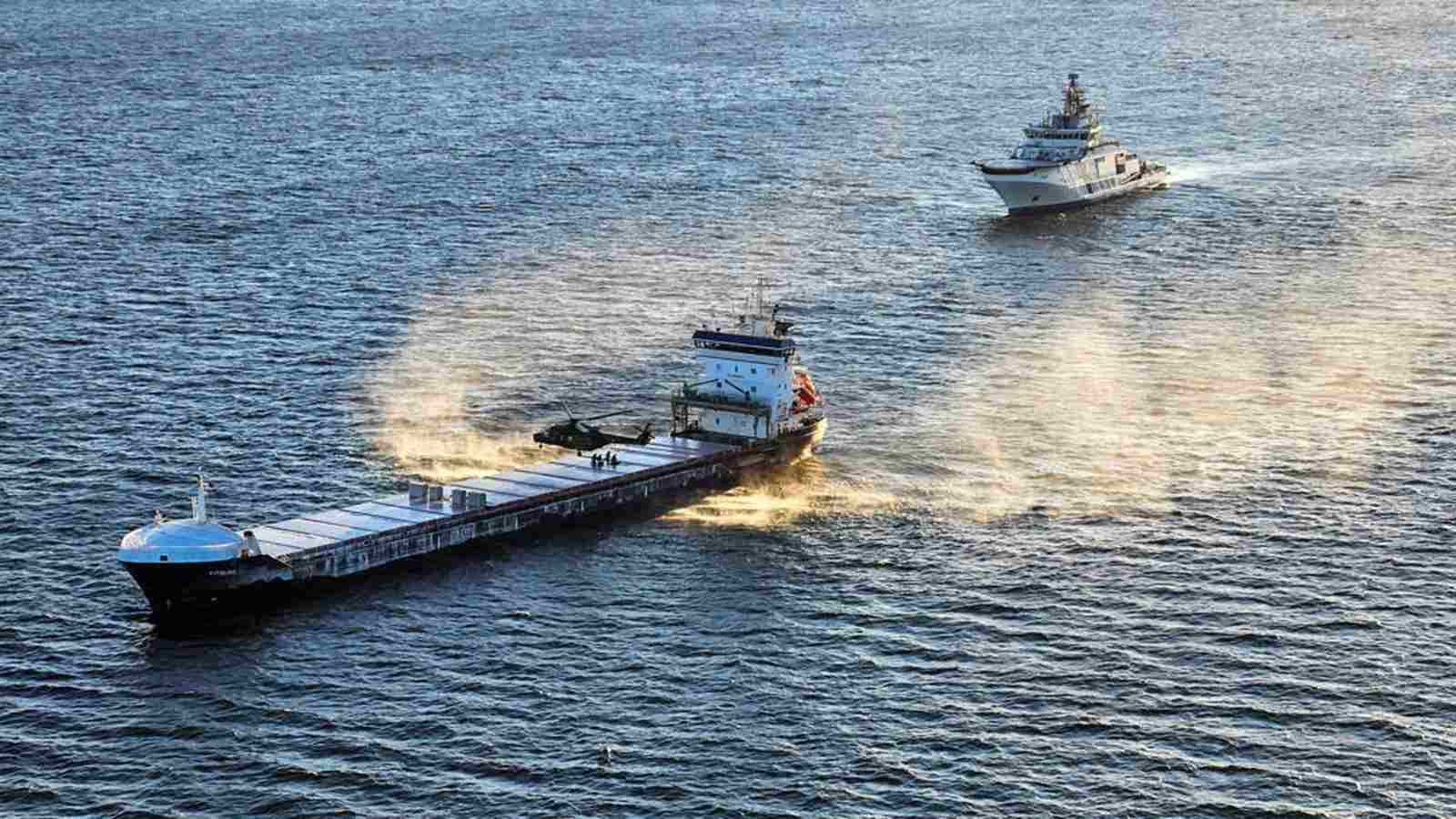
On November 21, 2026, a significant maritime security incident occurred in the Gulf of Finland, involving a Russian cargo ship identified as the Sparta II. The vessel, which was transiting through international waters while en route to the Russian Baltic exclave of Kaliningrad, sustained damage after being struck by two drones. This event, which resulted in a fire on board and caused the ship to drift into Finnish territorial waters, serves as a stark illustration of how the ongoing regional conflict is increasingly impacting the maritime spaces surrounding the Baltic Sea. The incident has prompted a swift, multi-layered institutional response from Helsinki, aimed at managing both the immediate security risks and the broader implications for civilian maritime safety.
The Sparta II was located approximately three nautical miles from the Russian border, west of Gogland island, when the strike occurred. Following the attack, the vessel’s movement became compromised, leading it to cross into the sovereign waters of Finland. This development forced the Finnish government to activate immediate defense and emergency protocols. The Finnish Ministry of Defense responded by re-implementing temporary aviation and maritime restrictions across the eastern Gulf of Finland. Officials clarified that these restrictive measures are strictly precautionary; they are intended to protect civilian maritime traffic from potential collateral damage and to ensure that the Finnish Defense Forces maintain the necessary operational space should further drone interceptions be required in the vicinity.
The Spillover Effect in the Baltic Region
The attack on the Sparta II is not merely an isolated maritime accident but rather a clear demonstration of the spillover effect of the regional conflict into neighboring territories and transit corridors. Finnish Prime Minister Petteri Orpo addressed the incident publicly, characterizing the strike as tangible evidence that the war is extending its reach into areas previously considered relatively peripheral to active kinetic operations. While Prime Minister Orpo explicitly affirmed Ukraine’s fundamental right to defend itself against aggression, the Finnish administration has simultaneously prioritized the management of this specific incident as a critical matter of national security. The government’s priority remains the maintenance of the Gulf of Finland as a secure corridor for international transit, preventing the conflict from destabilizing the regional economy or endangering civilian shipping.
The strategic importance of the maritime route to Kaliningrad has long rendered it a focal point of tension between the Russian Federation, NATO member states, and the European Union. As a Russian exclave geographically separated from the mainland and bordered by Poland and Lithuania, Kaliningrad functions as a vital military and logistical hub. Any disruption to the supply lines feeding this territory inevitably heightens regional anxiety. Despite the severity of the drone strike, Kaliningrad Governor Alexei Besprozvannykh sought to minimize the long-term impact, maintaining that the incident would not disrupt the flow of essential supplies to the exclave. His comments reflect a desire to project stability despite the evident vulnerability of the sea route.
Regional Surveillance and Cooperative Response
The response to the Sparta II incident has been defined by high-level monitoring and inter-state cooperation among Baltic neighbors. Authorities in Estonia, specifically the Police and Border Guard Board, reported receiving early, critical notifications regarding the fire and potential explosions on board the vessel. This information sharing is essential for maintaining situational awareness in a crowded maritime environment. Simultaneously, Swedish Prime Minister Ulf Kristersson confirmed that Stockholm is closely monitoring the situation. Sweden, having recently integrated its defense posture more closely with its Nordic neighbors, has extended an offer of assistance to Finnish authorities, underscoring the high degree of inter-state cooperation in maritime security that now characterizes the Baltic corridor.
The attack on the Sparta II occurred against a backdrop of intense aerial activity. Leningrad Region Governor Alexander Drozdenko reported that Russian air defenses successfully intercepted 80 drones over the Leningrad region on the same day. While the regional drone threat warning was eventually lifted, the physical damage to the cargo ship marks a significant escalation in the scope and precision of drone operations near the Russian-Finnish border. The fact that the ship caught fire in international waters before drifting into Finnish territory creates a complex legal and security challenge for Helsinki.
As the situation remains fluid, Finland continues to assess the long-term implications of these maritime incursions on its broader defense posture. The Finnish Border Guard has confirmed that while the vessel remains damaged, it does not currently pose a direct threat to other maritime traffic. Nevertheless, the incident has necessitated a robust coordination effort involving both domestic agencies and international partners to prepare for potential rescue operations and environmental containment. The incident highlights the necessity for constant vigilance in the Baltic region, where the intersection of civilian shipping and military conflict zones requires a sophisticated and rapid response capability. Finland, by tightening its security protocols, is signaling that it is prepared to navigate these complexities to maintain order in its territorial waters.
Reporting source: see.news.