


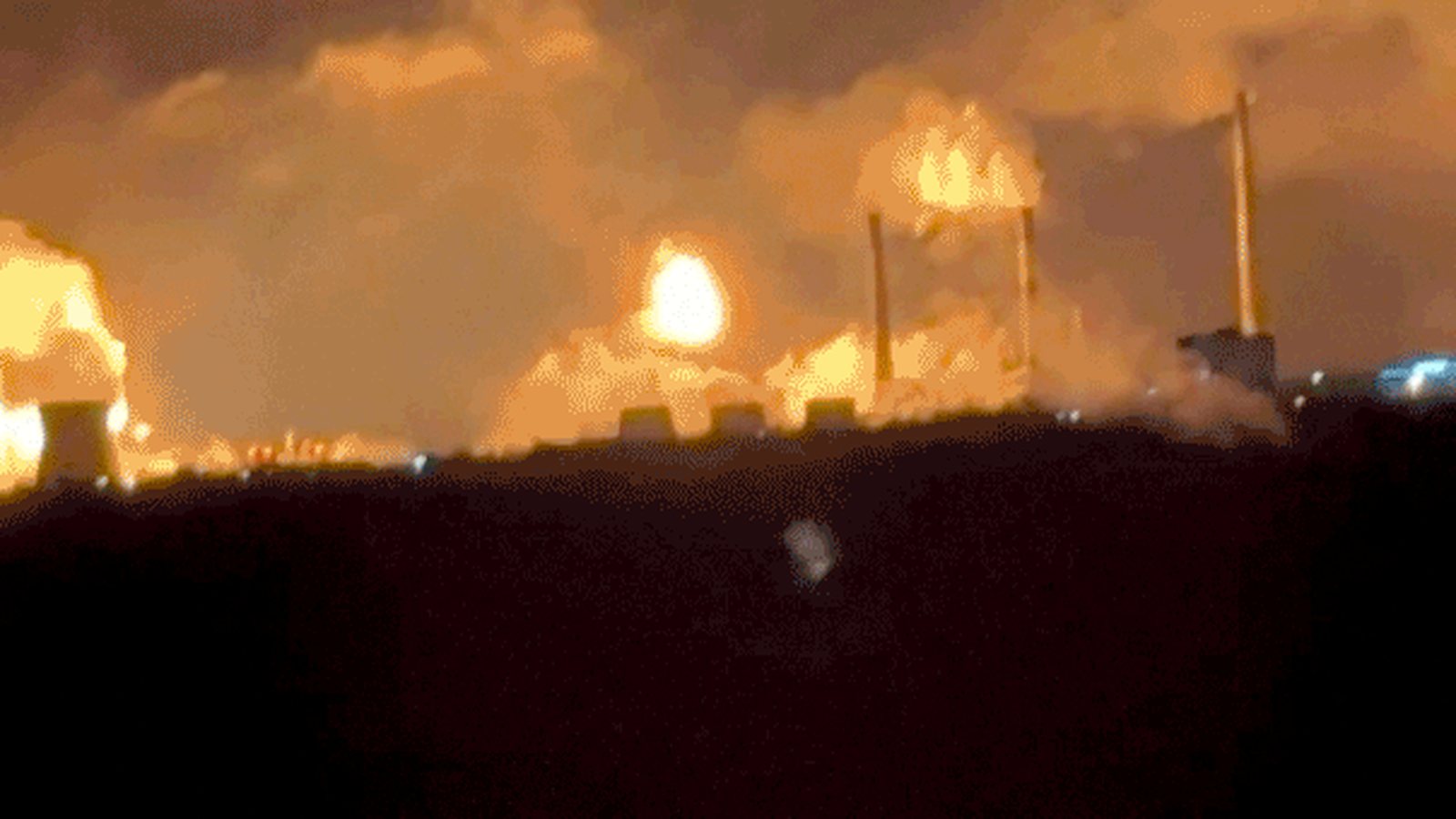
Record Drone Blitz Targets Kerch Bridge and Russian Energy Infrastructure
On November 16, 2026, Ukraine executed what Russian authorities described as the largest overnight drone assault of the nearly five-year war, targeting Vladimir Putin’s strategic Crimea bridge and industrial facilities across multiple regions. Fox News reported in an article published by Fox News that Russia’s Defense Ministry claimed its air defenses intercepted 1,336 Ukrainian drones across 16 regions, surpassing the previous single-night record of 1,254 set on October 29. Moscow Mayor Sergei Sobyanin stated that approximately 600 drones had been launched toward the capital region alone since Sunday evening, with 191 intercepted by ground defenses.
The coordinated bombardment struck critical logistical and economic installations. Russian-installed Crimean governor Sergei Aksyonov confirmed that the Kerch Strait bridge, which connects occupied Crimea to mainland Russia, sustained damage that temporarily suspended road traffic for repairs, though Russian transportation officials reported that train services continued operating. The 19-kilometer structure serves both as an essential supply line for Russian forces and as a potent political symbol of Moscow’s 2014 annexation of the peninsula.
Industrial and energy targets were hit hard in southern regions. Yuri Slyusar, the governor of the Rostov region, reported fires at four industrial facilities in the city of Azov, resulting in three injuries. In neighboring Krasnodar, a separate fire broke out at an industrial plant in Ilsky, while falling drone debris injured six additional people. Ukrainian President Volodymyr Zelenskyy asserted that recent long-range strikes had disabled more than half of Russia’s domestic oil refining capacity, a claim that could not be independently verified. However, two separate industry sources estimated to Fox News that recent operations reduced refining capacity by approximately 30%.
Strategic Calculus Ahead of High-Level Diplomatic Summits
The massive aerial campaign unfolded days before a high-stakes diplomatic summit scheduled for November 19, 2026, in Shenzhen, China, where U.S. President Donald Trump, Russian President Vladimir Putin, and Chinese President Xi Jinping are expected to meet. These renewed U.S.-brokered discussions follow recent talks in Abu Dhabi that produced a major prisoner-exchange agreement but failed to bridge deep disagreements over territorial control.
Retired Air Force Lt. Gen. Richard Newton told Fox News that Ukraine’s expanded manufacturing capability and long-range strike tactics are deliberate components of a strategy designed to exert sustained military and economic pressure on Moscow. “Ukraine has developed the capability to produce large numbers of drones and strike targets once considered a safe haven deep inside Russia,” Newton said. He noted that while the campaign has not yet reached a culminating point capable of forcing an immediate reversal of Kremlin policy, it aims to weaken Russian logistics and alter the Kremlin’s negotiating leverage ahead of international talks.
Meanwhile, domestic political developments in Moscow added further complexity to the strategic landscape. The Russian newspaper Vedomosti reported on November 16 that Kremlin officials instructed lawmakers from the ruling United Russia party during a closed seminar to prepare for eventual “victory” and the return of military personnel from the front lines. The directive, delivered by senior presidential administration official Sergei Kiriyenko, provided no timeline and did not indicate that a formal withdrawal order had been issued.