


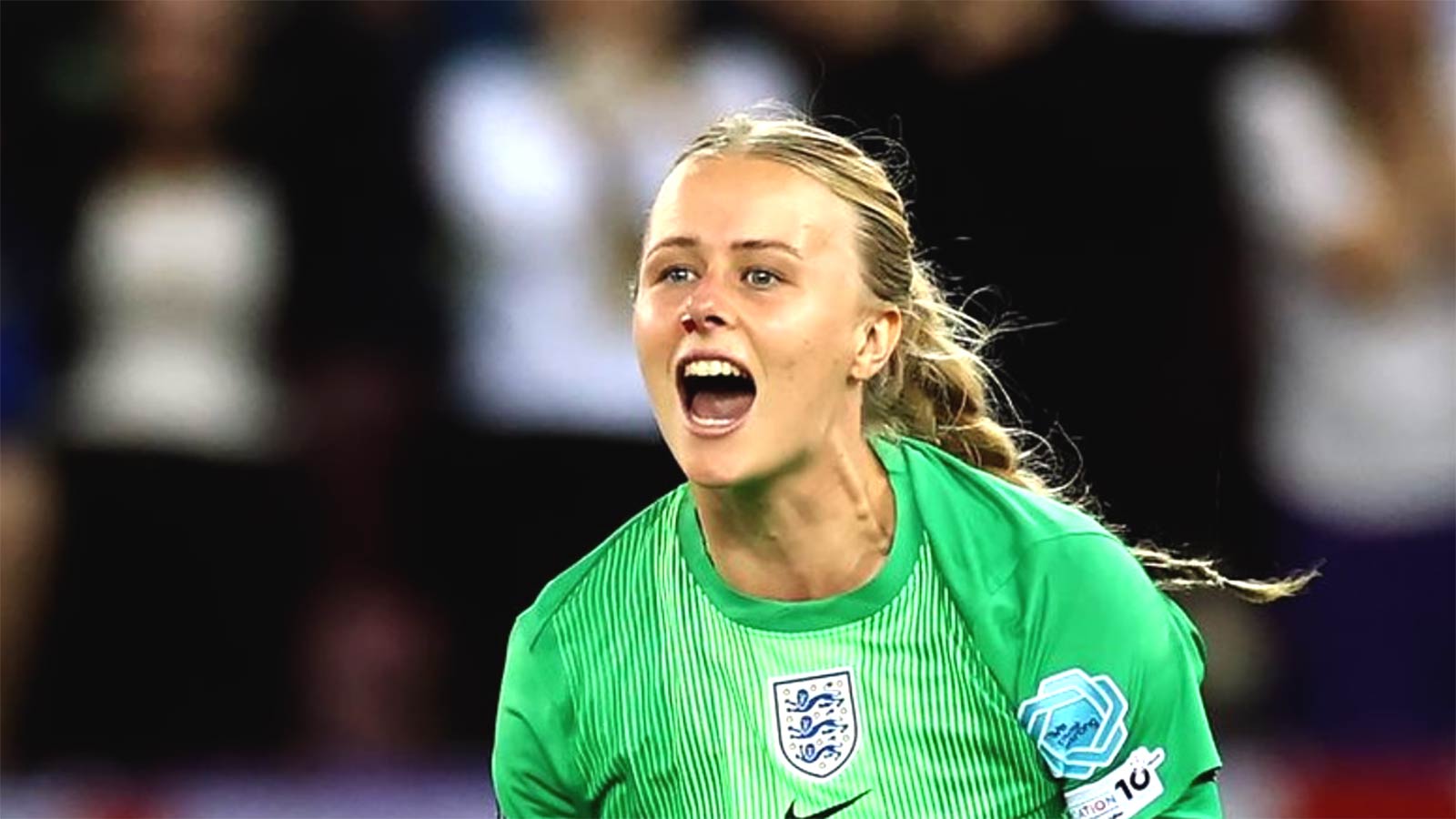
BBC Women’s Footballer of the Year: A Moment That Echoes Beyond the Trophy
November 25, 2025. For Hannah Hampton, the day was more than a ceremony—it was the culmination of a journey marked by resilience, brilliance, and a few well-timed surprises. At Chelsea’s Cobham training ground, manager Sonia Bompastor orchestrated a playful, memorable presentation. Amid jokes about birthday rabbits and laughter among teammates, Hampton was handed the BBC Women’s Footballer of the Year award, a gleaming token of a season that had already rewritten the record books for both club and country.
“I was actually expecting a rabbit!” Hampton laughed, her humility on display as she processed the magnitude of her achievement. It’s easy to see why the 25-year-old goalkeeper was caught off guard—the shortlist for the BBC award was stacked with world-class talent: Spain’s Aitana Bonmatí (three-time Ballon d’Or winner), Arsenal’s Alessia Russo, and Spanish stars Patri Guijarro and Mariona Caldentey. Each nominee had played a starring role for their clubs and countries, but Hampton’s campaign stood apart for its consistency and impact.
Treble Triumph: Chelsea’s Unbeaten Run and Hampton’s Defensive Wall
At club level, Hampton was nothing short of sensational. She started every Women’s Super League fixture for Chelsea, keeping 13 clean sheets across 22 league appearances—a statistic that underlines her dominance between the posts. More than just numbers, Hampton’s leadership and composure propelled Chelsea to an unbeaten domestic campaign, capturing the league title, FA Cup, and League Cup without a single defeat against English opposition. It’s a treble, a feat as rare in English women’s football as a perfect season.
Her impact was felt in the season’s biggest moments: a shutout in the League Cup final against Manchester City and another clean sheet at Wembley, where Chelsea triumphed over Manchester United in the FA Cup final. Manager Sonia Bompastor summed up the mood: “Hannah’s been incredible on and off the pitch since I joined Chelsea. She has been one of our leaders, performing really well. She has been the best goalkeeper in the world and it’s a pleasure to present her with the trophy.”
England’s New Number One: From Personal Loss to European Glory
If Hampton’s club performances were stellar, her international form was transcendent. The landscape of England’s goalkeeping changed dramatically when Mary Earps, her predecessor and former teammate, announced a surprise international retirement. The move was not without controversy—Earps, in her 2025 autobiography, described a “difficult professional dynamic” with Hampton and criticized what she saw as the national team rewarding “bad behaviour.”
Hampton didn’t shy away from the topic. In her award acceptance, she acknowledged the legacy of Earps, as well as predecessors Carly Telford and Karen Bardsley, and made it clear: “They’ve changed the perception of women’s goalkeeping. It’s definitely taking off and we’re trying to change the perception slowly but surely.”
Taking over as England’s number one, Hampton faced immense pressure—not just from the expectations of fans and teammates, but from personal tragedy. Just two days before the start of Euro 2025 in Switzerland, Hampton’s grandfather passed away. “When I then got the news about my grandad, that gave me that extra push to go and show everyone what I can do because that was our dream together,” she shared. The human side of elite sport—grief, drive, and the need to perform—was evident in her every save.
On the pitch, Hampton delivered. She started every match for the Lionesses, anchoring a defense that withstood the continent’s best. In the quarter-final against Sweden, her penalty saves proved decisive. In the final against Spain, with the score locked at 1-1, Hampton’s shootout heroics helped England retain their European crown. Her composure in these moments was not just technical excellence; it was the manifestation of a year spent facing challenges head-on.
Changing Perceptions: The Keeper’s Journey and Breaking New Ground
Goalkeeping, as Hampton describes it, is “a lonely position, but it’s also very rewarding.” The highs are spectacular; the lows, often solitary. “You could be the hero at moments and you could also be the villain at moments. I want to achieve a lot more in the game and I can’t dwell on people’s thoughts—that’s going to hinder me, not help me,” she explained. Her openness about the pressures and the need for resilience has helped shift how women’s goalkeeping is viewed, not just in England but globally.
Her accolades this year go beyond the BBC trophy. Hampton made history as the first woman to win the Lev Yashin goalkeeper award at the Ballon d’Or, took home the Women’s Kopa Trophy, and earned a place in the FIFPro Women’s World XI. These honors cement her status among football’s elite, but the journey has not been without setbacks. Currently sidelined with a quad injury, Hampton is using her time off to reflect and look forward, determined to return stronger.
The BBC Women’s Footballer of the Year award, decided by a global public vote from a shortlist selected by experts, coaches, and journalists, has highlighted Hampton’s impact. She is the sixth British winner and only the second goalkeeper, following Mary Earps in 2023. The award’s history is dominated by Women’s Super League stars, but Hampton’s story is one of breaking barriers and redefining what is possible for keepers in the women’s game.
Jon Zilkha, Controller of BBC World Service English, put it best: “Hannah’s composure, resilience, and outstanding performances on the pitch make her a truly worthy winner of this award. Each of our nominees has enjoyed an exceptional year, and together they are helping to shape the future of women’s football by inspiring players and fans around the world.”
Hannah Hampton’s rise is more than a tale of medals and clean sheets—it’s a story of persistence, reinvention, and the ability to thrive under pressure. Her achievements are reshaping the narrative around women’s goalkeeping and inspiring a new generation to believe that the loneliest position on the pitch can also be the most powerful.