


A Rapidly Escalating Crisis
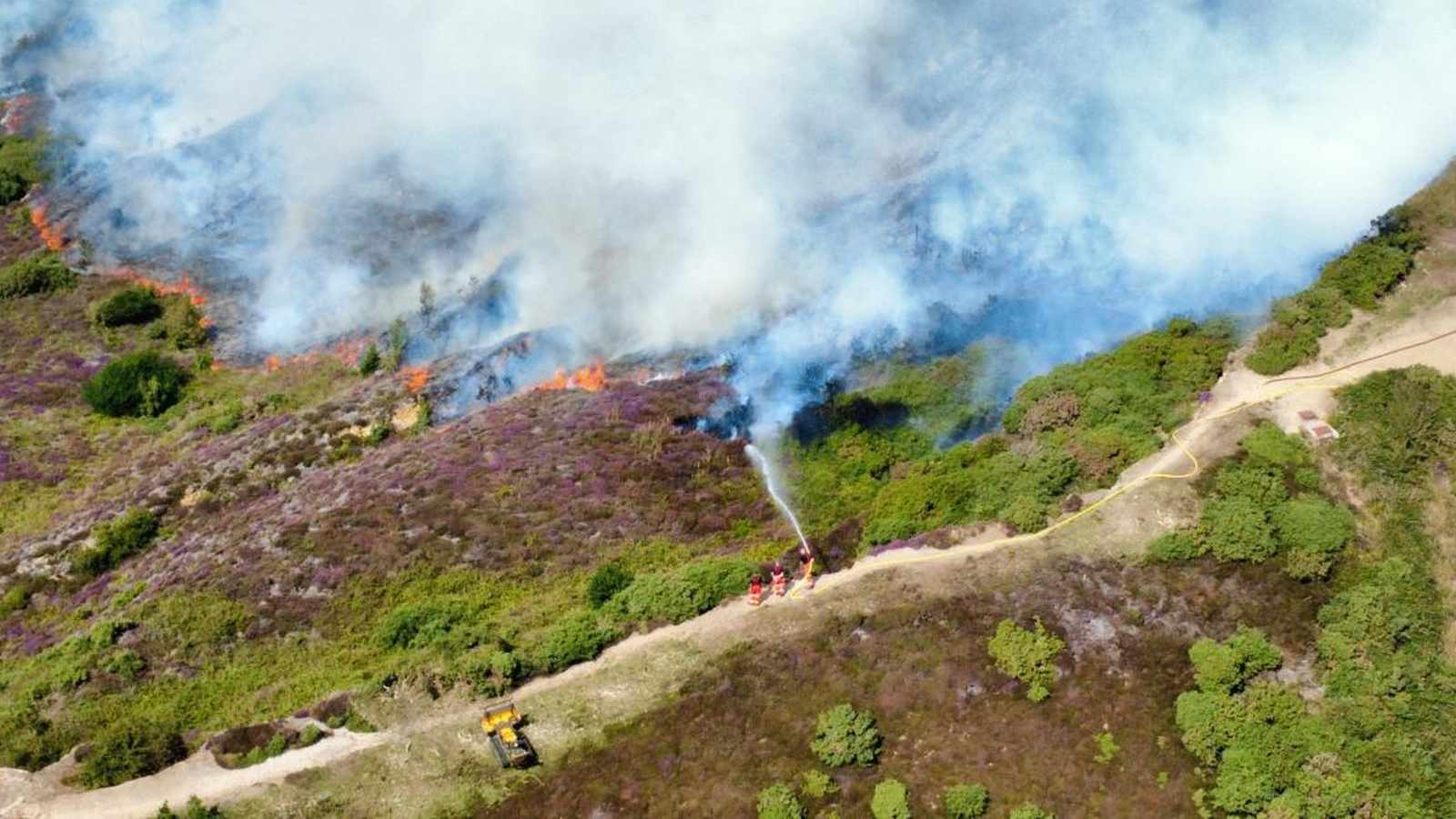
On Thursday, July 23, 2026, a significant wildfire broke out at Headon Warren on the Isle of Wight, a site of special scientific interest (SSSI) owned by the National Trust. What began as a localized gorse fire—initially reported as 150m by 150m—rapidly escalated in tinder-dry conditions during a regional heatwave, expanding to approximately 1,000m by 800m.
Hampshire and Isle of Wight Fire and Rescue Service (HIWFRS) deployed over 80 firefighters from both the island and the mainland to combat the blaze. Crews from Newport, Cowes, Ventnor, Freshwater, Shanklin, East Cowes, Ryde, and Sandown were bolstered by mainland units from Southsea, Lymington, Emsworth, Portchester, St Mary’s, Hardley, Havant, and Hightown. The logistical challenge of moving equipment across the Solent was mitigated by Wightlink, which transported 16 fire engines to assist with containment efforts, occasionally delaying ferry services to prioritize emergency transit.
Human-Caused Ignition and Environmental Stakes
Firefighters at the scene have identified the likely cause as a “man-made fire,” citing the discovery of burnt wooden blocks near the origin point. This incident highlights the acute vulnerability of the area, which had been flagged by local residents just a week prior due to historic wildfire risks. The National Trust has emphasized that Headon Warren is one of the UK’s rarest habitats, and the destruction of such land threatens to undo decades of dedicated conservation work.
To assist in containment, local farmers deployed tractors to create fire breaks, a move instrumental in slowing the spread across the steep coastal slopes. Meanwhile, the Waterfront Bar and Restaurant at Totland Bay restricted public access to nearby steps to allow emergency services to extract water directly from the sea.
Operational Challenges
The firefighting effort has been characterized by extreme conditions, with teams navigating narrow footpaths and steep terrain in intense heat and smoke. HIWFRS has advised residents on both sides of the Solent to keep windows and doors closed as smoke drifts across the region. While the situation remains volatile, the emergency response has been bolstered by the Rapid Relief Team UK, which provided welfare support to exhausted crews working into the night.