


Containment status and response
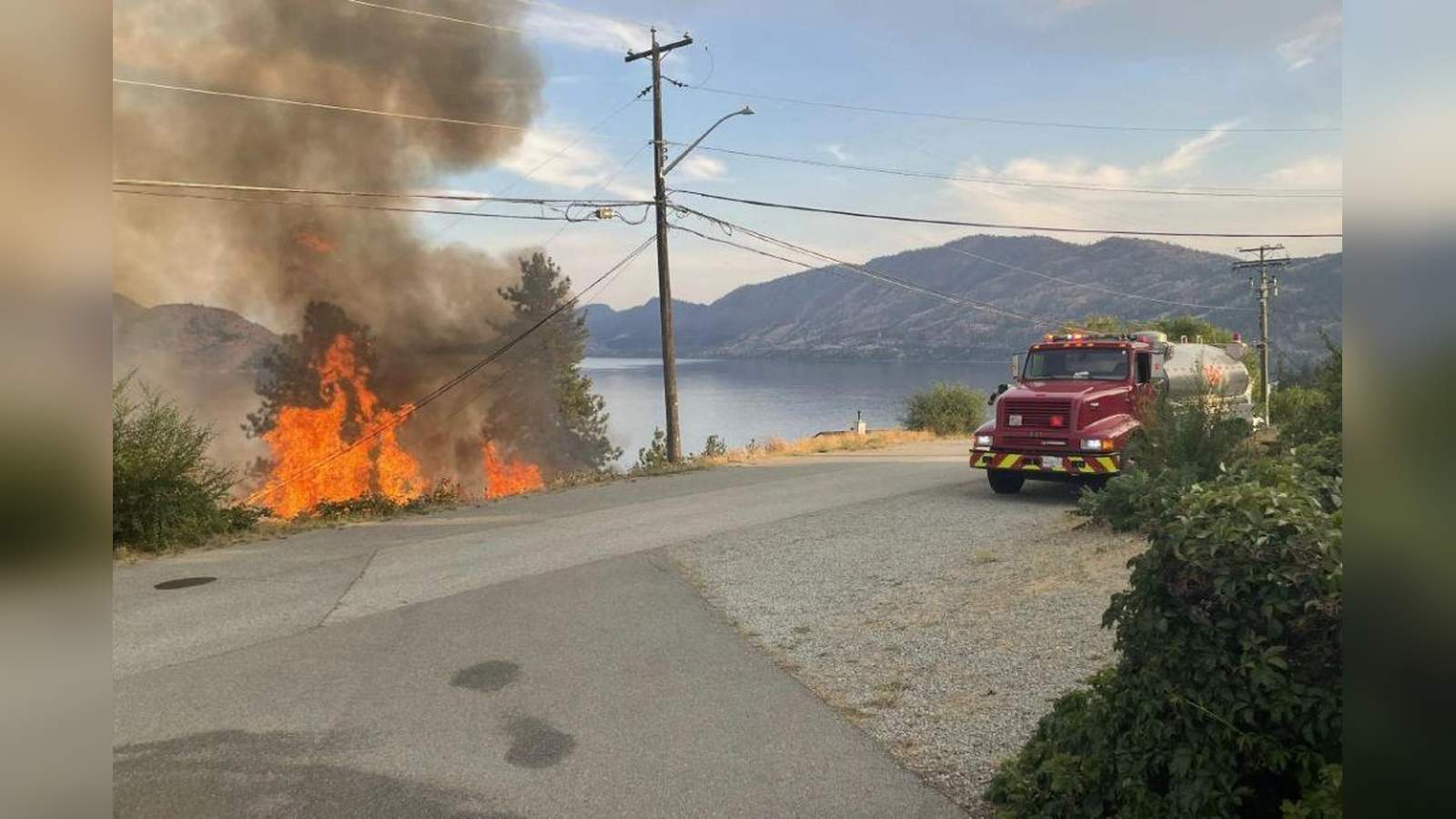
A brush fire that broke out in Peachland on the evening of August 25, 2026, has been officially classified as “being held” by the BC Wildfire Service (BCWS). The designation indicates that the fire is not expected to spread beyond its current perimeter under prevailing environmental conditions.
The fire, which originated west of Highway 97 near Lipsett Avenue shortly after 6:00 p.m., prompted an immediate joint response from the Peachland Fire and Rescue Service and the BC Wildfire Service. By 8:25 p.m., officials confirmed that the fire, estimated at less than a hectare, had been brought under control. Crews remained on-site throughout the evening to address remaining hot spots.
Operational challenges
During the initial suppression phase, aerial firefighting efforts were complicated by unauthorized drone activity in the area. BCWS confirmed that they were forced to ground aerial resources due to the presence of a drone flying over the blaze, which posed a significant safety risk to pilots and ground personnel. Under Canadian Air Regulations, a five-nautical-mile radius around any wildfire is considered restricted airspace. Authorities reiterated that operating drones in these zones is illegal and can lead to criminal charges.
Before being grounded, helicopters were observed performing water bucketing operations on the hillside. The blaze was initially visible from Highway 97, with residents reporting flames candling trees and a large column of smoke rising above Okanagan Lake.
Stakes and community impact
The fire posed a direct threat to residential areas in the 6100 block of Lipsett Avenue near Aitkens Road. Local officials, including Peachland Mayor Patrick Van Minsel, credited the rapid intervention of local and provincial fire departments with preventing structural damage. While utility lines were seen burning near the site, the extent of power service interruptions remains an area of assessment.
The cause of the fire has not yet been determined. Authorities continue to monitor the area for flare-ups as mop-up operations conclude.