


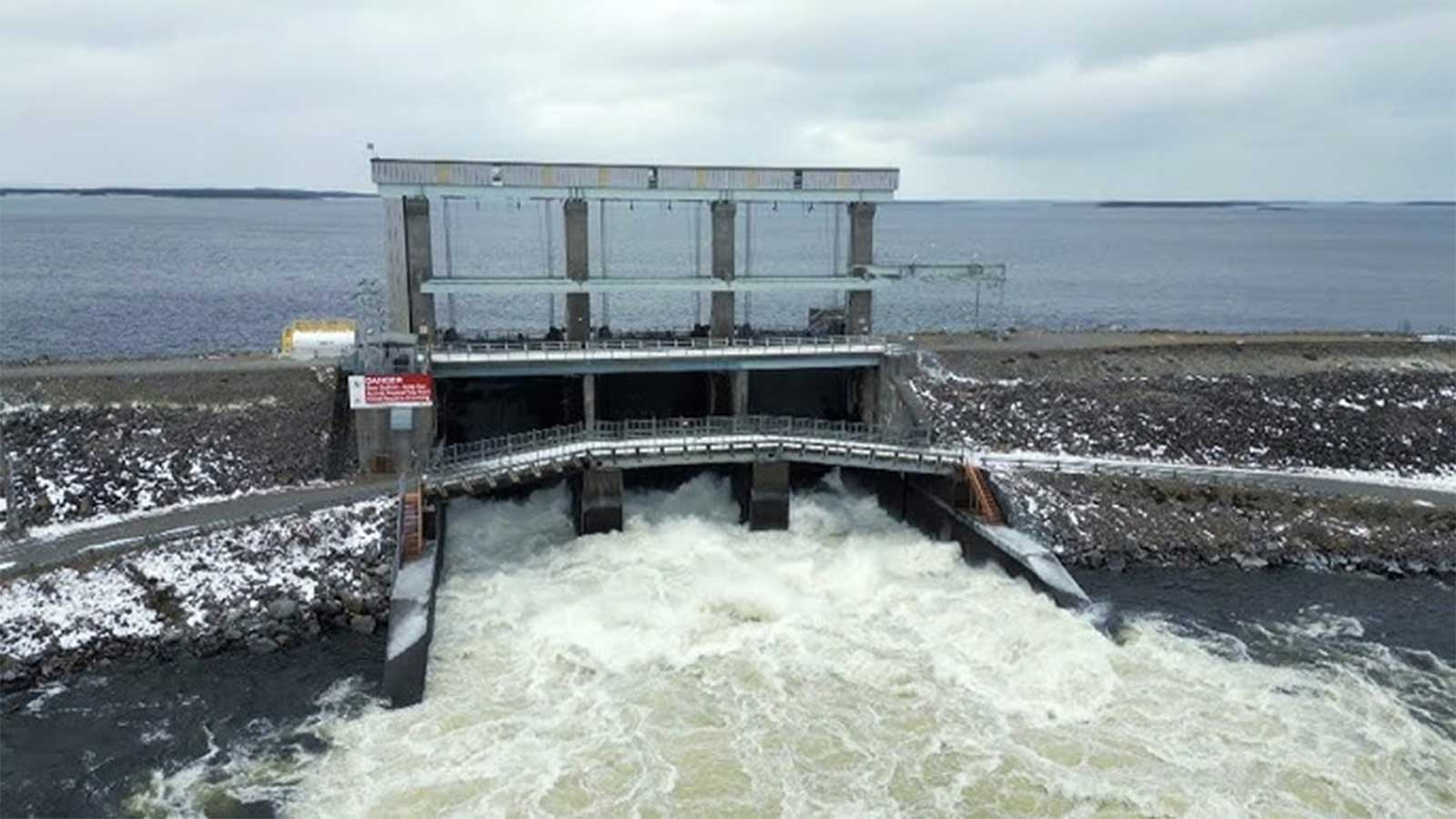
Churchill Falls MOU: One Year Later, Still No Answers
It’s been a year since Newfoundland and Labrador inked a historic memorandum of understanding (MOU) with Quebec regarding the Churchill River’s immense hydroelectric potential. The deal was heralded as a once-in-a-generation opportunity—a chance to rewrite decades of what many have called an unfair arrangement, and to secure billions in revenue, energy access, and jobs for Newfoundland and Labrador. But as the anniversary passes, the silence from the province’s Progressive Conservative (PC) government is causing frustration and concern.
The Official Opposition Liberals are demanding transparency. According to a SaltWire report, they’ve made repeated attempts to get answers about the Churchill Falls MOU, only to be met with closed doors and unanswered letters. The cancellation of the House of Assembly’s fall sitting has further fueled speculation and public uncertainty. Opposition Leader John Hogan emphasized that “this historic opportunity” should not slip away in a fog of government silence.
The stakes are enormous: the MOU holds the promise of ending a disadvantageous contract 17 years ahead of schedule, generating an estimated $225 billion over its lifetime, multiplying Newfoundland and Labrador’s power access fourfold, and creating thousands of jobs. Premier Tony Wakeham, in a recent mandate letter, reaffirmed his commitment to an independent review of the MOU, promising transparency and public involvement—potentially through a referendum. Yet, critical questions remain unanswered:
- Who will choose the independent review panel?
- Have negotiations with Hydro-Québec stalled?
- Are other partners being considered?
- When might a referendum take place, and who will craft its question?
- If the MOU is abandoned, what is the alternative for replacing the lost revenue?
For now, the government’s reluctance to engage publicly has left both politicians and citizens in the dark, with the Opposition vowing to keep pressing for answers.
Hydro-Québec Faces a Strained Grid Amid Winter Cold
While political negotiations unfold behind closed doors, Hydro-Québec is wrestling with a more immediate challenge: keeping the lights on. The early days of December 2025 brought a biting cold snap to Quebec, pushing the provincial grid to its limits. According to Radio-Canada, Hydro-Québec issued two rare public alerts, warning of possible power failures as demand soared to unprecedented levels on December 3 and 5. The utility even considered rolling out a load-shedding plan—a drastic measure to prevent a catastrophic system overload.
A senior Hydro-Québec official, speaking to Radio-Canada, voiced concern about what may be a ‘turbulent winter ahead,’ with further complications likely if the cold persists. The warnings are a stark reminder of the vulnerability even advanced grids face when weather and demand collide. For millions of Quebecers, reliable electricity is not just a convenience—it’s a necessity during harsh winters.
The Stakes of Energy Security and Inter-Provincial Partnerships
The convergence of these two stories—the Churchill Falls MOU and Hydro-Québec’s grid struggles—highlights the intricate web of energy politics in Eastern Canada. Churchill Falls, with its vast hydroelectric capacity, has long been a linchpin in Quebec’s energy mix. The current negotiations, or lack thereof, could reshape not just Newfoundland and Labrador’s fortunes, but Quebec’s own energy security as it faces mounting demand and aging infrastructure.
What happens if the Churchill Falls deal unravels? Could Hydro-Québec secure alternative sources quickly enough to buffer its grid? And what are the risks if political gridlock in Newfoundland and Labrador delays or derails the MOU?
Public Trust, Transparency, and the Path Forward
For now, the public is left to speculate. The PC government’s commitment to an independent review and possible referendum signals at least a rhetorical nod to transparency, but without open dialogue or concrete timelines, trust is fragile. The Opposition’s persistent questions reflect a broader anxiety: in a province where energy development and economic futures are so tightly intertwined, even the perception of secrecy can fuel uncertainty and division.
Meanwhile, Hydro-Québec’s operational challenges serve as a real-world reminder that energy security is never guaranteed. As the winter deepens, both Quebec and Newfoundland and Labrador face a test—not just of their infrastructure, but of their political resolve to deliver on big promises and protect the public interest.
The coming months will reveal whether the Churchill Falls MOU becomes a turning point or a missed opportunity. What’s clear is that in the world of Canadian hydro, silence can be as disruptive as any winter storm. In the absence of clear answers from leaders, both the grid and public confidence remain under pressure.