


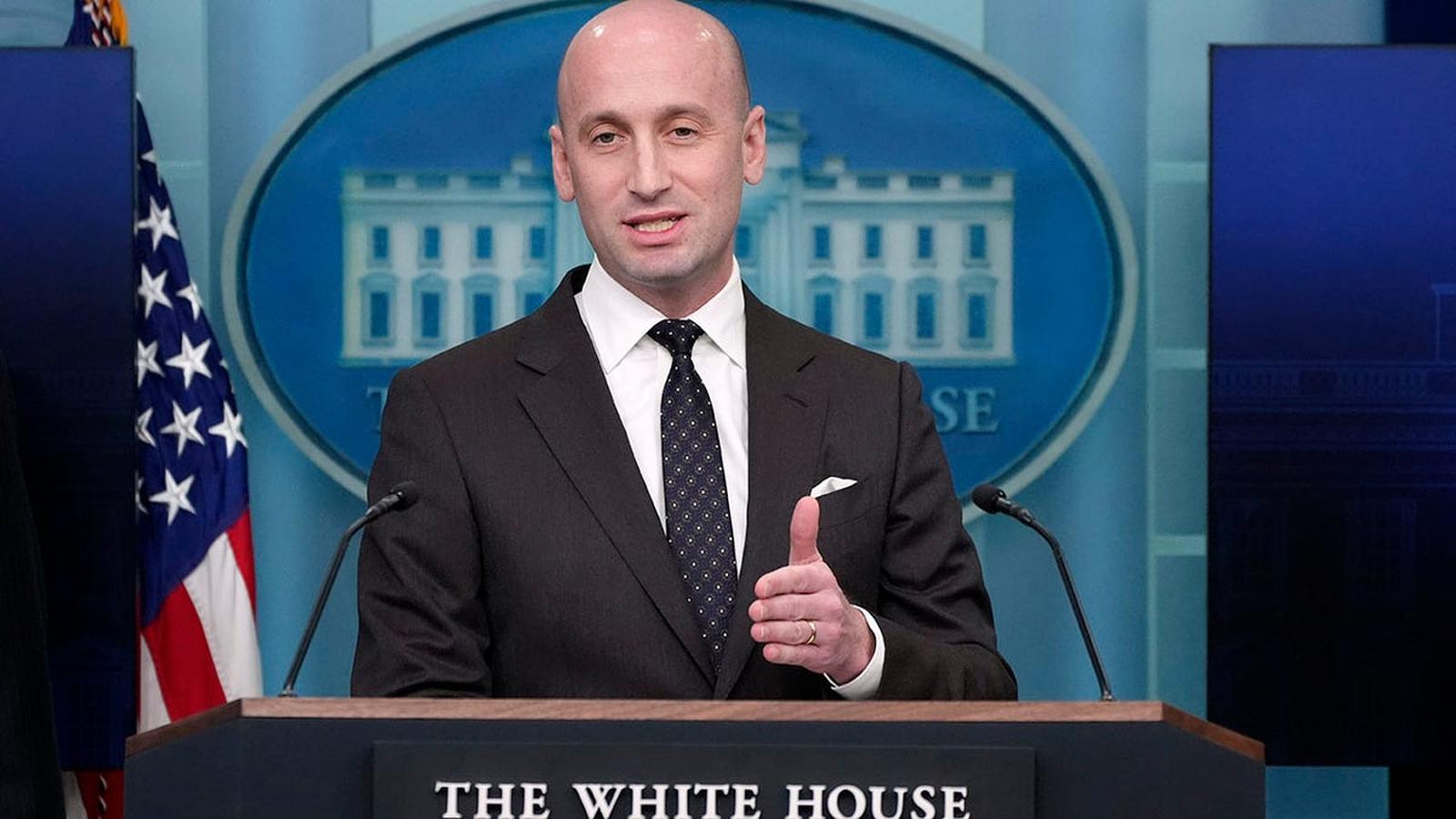
WASHINGTON (Azat TV) – Stephen Miller has formally taken the reins as White House chief of staff, marking his first week in office by dismantling traditional West Wing gatekeeping and pivoting the administration toward a hard-line populist platform. According to reporting published by the Hindustan Times, Miller has told associates that he does not intend to limit access to President Trump or filter the ideas presented to him. This marks a distinct shift from predecessors who attempted to impose strict management structures on the Oval Office, which advisers have often likened to Grand Central Terminal.
Since starting his role on November 6, Miller has launched a comprehensive overhaul of executive operations. He issued two central memos during his first week to restructure policymaking. In the first memo, reviewed by Hindustan Times, Miller named Caleb Orr—a top adviser to Marco Rubio at the State Department—as deputy chief of staff for policy, while establishing decentralized processes designed to empower individual cabinet secretaries. He also brought back longtime ally May Mailman on a temporary basis to assist with administrative restructuring.
Combating Corporate Lobbyists and Restructuring Operations
In a second directive issued days later, Miller instituted a ban prohibiting staff from meeting with corporate lobbyists on White House grounds to discuss policy issues without explicit permission. People close to the administration note that the policy is intended to curb the influence of special interests following internal complaints that allies of former Chief of Staff Susie Wiles maintained overly cozy relationships with K Street lobbyists. This restriction immediately rattled lobbying firms in Washington, who are now scrambling to adjust their compliance strategies.
Miller’s operational strategy involves relentless engagement with the federal bureaucracy. He has conducted a marathon series of one-on-one meetings with cabinet secretaries and agency heads to evaluate ongoing initiatives and identify policy actions that stalled during Wiles’s tenure, particularly regarding Make America Healthy Again programs, urban crime, healthcare, and affordability. To focus on broader strategic realignment, Miller handed over his daily 10 a.m. interagency immigration call to a deputy.
Political Friction and Capitol Hill Confrontations
The rapid pivot has triggered sharp reactions from lawmakers on Capitol Hill. Democrats, who are preparing a wave of investigations into the administration, have met Miller’s elevation with fierce opposition. Set-to-be House Speaker Hakeem Jeffries publicly stated he would refuse to work with Miller, asserting that the new chief of staff “should be eradicated like a malignant tumor,” while retiring Republican Sen. Thom Tillis labeled him “the worst of all possible choices.” In response, White House spokeswoman Taylor Rogers defended the appointment, stating that Miller had proven to be “one of the most effective implementers of federal policy and bureaucratic reform in Washington, D.C.”
Tensions escalated further as the administration adopted a combative posture toward incoming congressional oversight. The White House issued warnings to the incoming chairman of the House Oversight Committee, cautioning that certain verbal threats from Democrats against executive branch officials could cross the line into criminal conduct. Meanwhile, Miller has placed a red hat emblazoned with the word “VETO” on his West Wing desk as a visible symbol of his approach to the remaining two years of the presidency.