


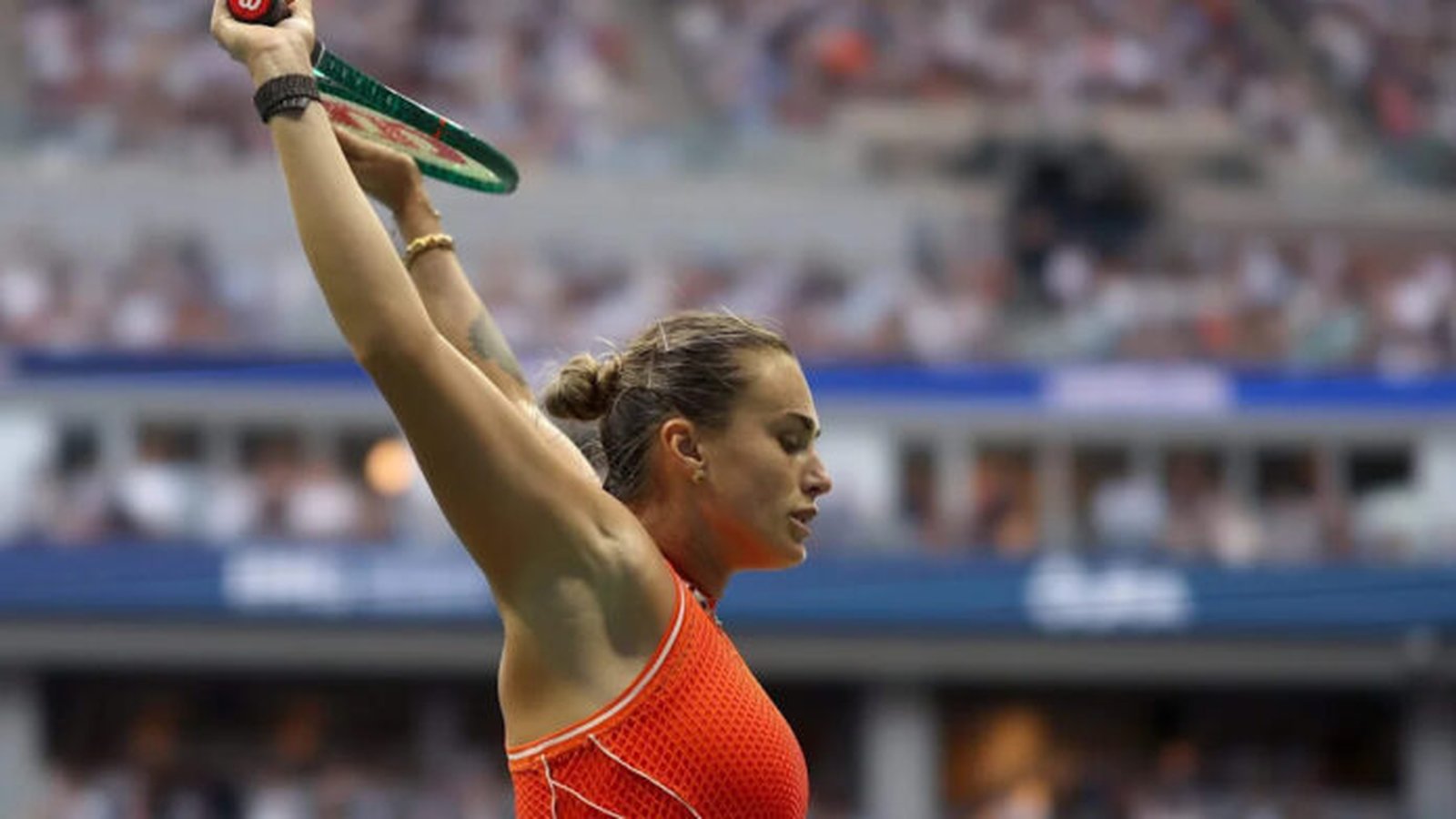
INDIAN WELLS, Calif. (Azat TV) – Aryna Sabalenka concluded her 2026 tennis season on Friday, November 13, following a 6-3, 3-6, 6-1 defeat to Elina Svitolina that eliminated her from the WTA Finals in Indian Wells, California. Reporting by The Athletic detailed how the loss capped a turbulent year for the Belarusian player, who finished the season without a Grand Slam title and lost the world No. 1 ranking.
A Sharp Contrast to Previous Dominance
The late-season collapse marks a significant shift from 2024, when Sabalenka secured the year-end world No. 1 ranking after capturing the Australian Open and U.S. Open titles, alongside WTA 1000 victories in Wuhan and Cincinnati. She followed that success with four trophies in 2025, including another U.S. Open crown. However, her performance in major tournaments has since declined, yielding a 1-5 record in major finals since the start of 2025.
Elena Rybakina overtook Sabalenka for the top ranking during the 2025 U.S. Open and defeated her in the final, while 19-year-old French Open champion Mirra Andreeva claimed the world No. 2 spot. Sabalenka finishes 2026 with an overall 48-13 record, though 26 of those victories occurred before May.
Key Turning Points and Mounting Struggles
Sabalenka began 2026 strongly by winning the Sunshine Double at Indian Wells and Miami, saving a match point against Rybakina in the BNP Paribas Open final. Her momentum stalled in May at the Madrid Open, where she lost to then-No. 32 Hailey Baptiste to snap a 15-match winning streak. Subsequent struggles included a quarterfinal loss to Diana Shnaider at the French Open, an early exit against Naomi Osaka at Wimbledon, and a Cincinnati Open defeat to Sára Bejlek.
In her final match against Svitolina, Sabalenka held leads in the first and third sets but struggled with footwork, over-rotated on her forehand, and lost the final six games of the match. Svitolina capitalized on these errors, converting six of eight break points to secure her first victory against Sabalenka in six years.
Team Changes and Offseason Outlook
Facing an uncertain landscape, Sabalenka has already initiated changes within her coaching staff, parting ways with secondary coach Max Mirnyi ahead of the offseason while retaining longtime coach Anton Dubrov. She also changed hitting partners and her physiotherapist during the year.
As Rybakina, Iga Świątek, and other competitors prepare for the new season, Sabalenka enters the winter break with clear questions to address regarding her tactical consistency and competitive edge. Her team must develop a comprehensive strategy to regain her standing at the top of women’s tennis.
The broader implications of this late-season unraveling extend far beyond a single tournament elimination in the Californian desert. Having spent 99 weeks defending the summit of the women’s game, Sabalenka’s inability to close out pivotal moments in major matches has exposed a vulnerability that her primary rivals have ruthlessly exploited. While her early-season triumphs—most notably the hard-fought Sunshine Double—demonstrated that her absolute ceiling remains among the highest on the WTA tour, the compounding weight of her losses in major finals has altered the psychological dynamics between her and the rest of the top ten.
Competitors like Rybakina and Andreeva have established firm footholds at the very top of the rankings, shifting the traditional hierarchy. Rybakina’s potent combination of a devastating serve and steady baseline execution has yielded multiple Grand Slam titles, while Andreeva’s rapid ascent has injected new youth and momentum into the upper tier. Meanwhile, Iga Świątek has shown signs of a calculated resurgence after recalibrating her own coaching structure earlier in the year, leaving Sabalenka to play catch-up during an offseason that requires exhaustive technical and tactical evaluation.
Observers of the sport note that Sabalenka’s aggressive baseline style relies heavily on precision footwork and controlled aggression. When her mechanics begin to falter under pressure—manifesting as over-rotation on her forehand side or delayed court positioning—her entire tactical framework can dissolve rapidly, as evidenced by her late-match struggles against Svitolina and earlier defeats against players who successfully disrupted her rhythm. Addressing these recurring patterns will demand more than routine adjustments; it will require a rigorous rebuilding of her mental resilience during high-stakes exchanges.
As the tennis calendar resets for the upcoming year, Sabalenka’s status as a perennial title contender remains undisputed, yet her path back to the pinnacle has grown significantly more arduous. The coming months will test the efficacy of her newly configured coaching team and determine whether she can successfully adapt her game to meet the evolving demands of modern women’s tennis.