


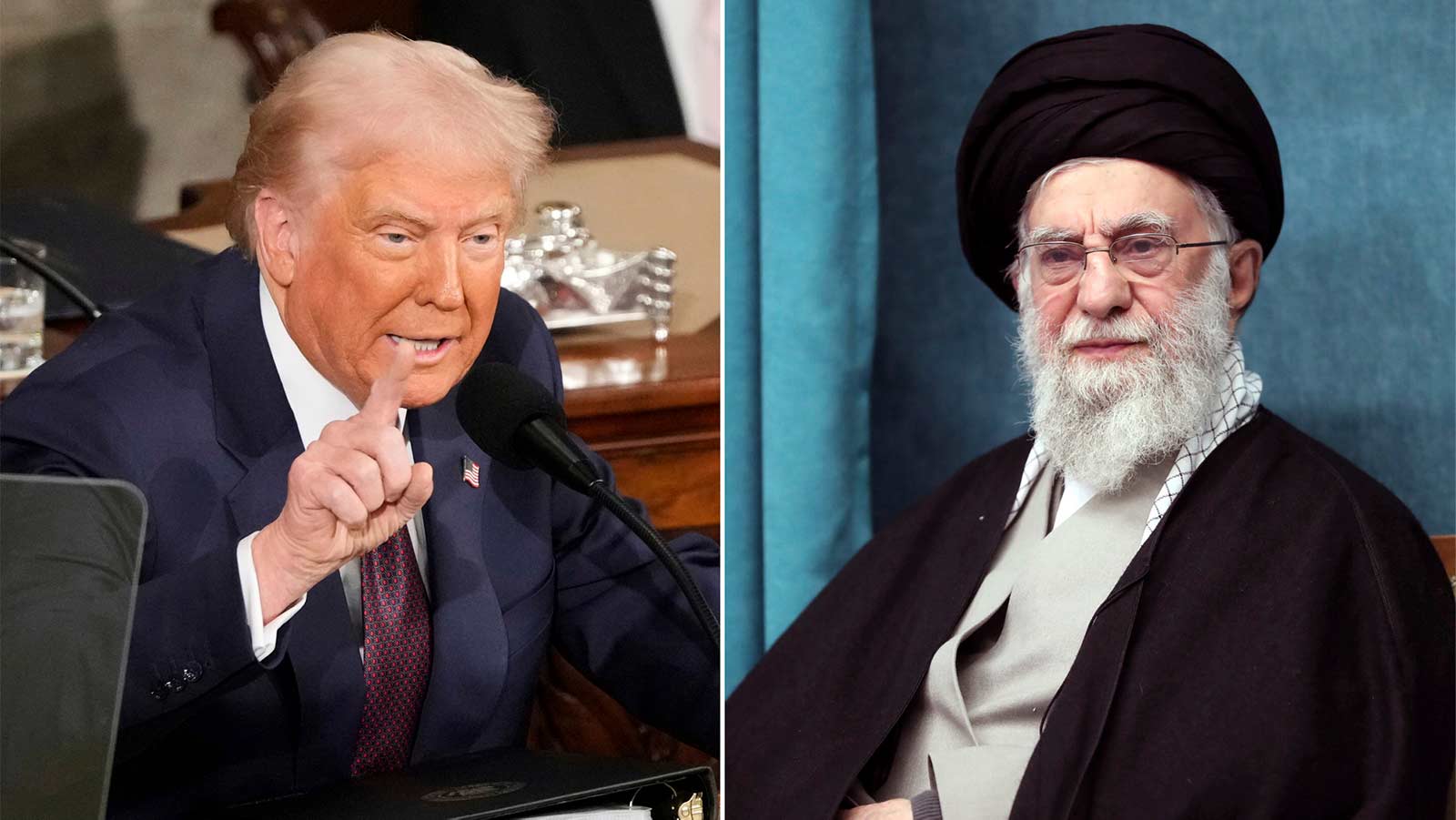
TEHRAN (Azat TV) – The arrival of the USS Abraham Lincoln carrier strike group into the US Central Command area of responsibility, proximate to Iranian waters, has significantly heightened the prospect of a direct confrontation between Washington and Tehran. This military buildup occurs against the backdrop of one of the most extensive and violent crackdowns on domestic protests in Iran’s modern history, fundamentally altering the calculus for any potential Iranian response to a US military strike.
Heightened Tensions and US Military Presence Near Iran
The deployment of the USS Abraham Lincoln comes at a moment when President Donald Trump has issued renewed threats concerning Iran’s forceful suppression of internal unrest. This move underscores a critical shift in the geopolitical landscape, bringing the two nations closer to a direct showdown than at any point in recent years, according to analysis by BBC News. Iranian leadership finds itself navigating intense pressure from an internal protest movement demanding regime change, while facing a US president whose intentions remain deliberately opaque, fueling anxiety across the region.
Historically, Tehran has favored a strategy of delayed and limited retaliation in response to US military actions. For instance, following US strikes on Iranian nuclear facilities in June 2025, Iran responded the next day with a missile attack on the US-operated Al Udeid Air Base in Qatar. President Trump confirmed that Iran had provided advance warning, allowing air defenses to intercept most missiles and resulting in no casualties. A similar pattern was observed in January 2020, when Iran retaliated for the US assassination of Quds Force commander Qassem Soleimani by firing missiles at Ain al-Asad airbase in Iraq, again with advance warning, preventing fatalities but causing traumatic brain injuries. These past incidents were widely interpreted as Iran’s attempt to signal resolve while carefully avoiding a wider war.
Domestic Unrest Reshapes Iran’s Calculus
The current situation is markedly different due to severe internal strain within the Islamic Republic. Protests that erupted in late December and early January were met with an exceptionally violent crackdown. Human rights organizations and medical workers inside Iran have reported thousands killed, with many more injured or detained. The exact figures are difficult to verify due to limited access and an ongoing internet blackout that has lasted for weeks. Iranian authorities have denied responsibility for the deaths, instead blaming ‘terrorist groups’ and accusing Israel of instigating the unrest. This narrative has been echoed by senior officials, who have framed the protests as a continuation of last summer’s 12-day war with Israel, potentially justifying the scale of the crackdown.
Reports from Independent Persian, as cited by AOL.com, detail horrific abuses during the crackdown. These include accounts of individuals being strangled, snatched from hospital beds, and tortured. Detainees reportedly faced ‘mock executions’ to instill terror. In cities like Mashhad and Karaj, witnesses described severe beatings in detention centers, security forces storming hospitals to arrest the wounded, and even security personnel firing ‘final shots’ at injured civilians in the street. Released detainees also reported the presence of individuals with Arabic accents among arresting forces, aligning with earlier claims of at least 5,000 fighters from the Iranian-backed Iraqi paramilitary group, Popular Mobilisation Forces, entering Iran to assist in repression.
While the intensity of street protests has diminished, the underlying grievances remain unresolved, and the divide between a significant portion of society and the ruling system has widened. A brief loss of control by security forces in parts of several towns and major cities on January 8 and 9 appears to have deeply unsettled the authorities, leading to a calm that is imposed rather than negotiated, leaving the situation highly volatile.
The Stakes of a Potential US Strike
Against this combustible backdrop, the nature of any potential US strike becomes critical. A limited attack, while allowing Washington to claim military success, could inadvertently provide Iranian authorities with a pretext for another wave of internal repression, leading to fresh crackdowns, mass arrests, and harsh sentences, including death penalties, for protesters already in detention.
Conversely, a broader US campaign aimed at significantly weakening or crippling the Iranian state risks pushing the country towards chaos. The sudden collapse of central authority in a nation of more than 90 million people could trigger prolonged instability, factional violence, and widespread spillover effects across the region, with consequences that could take years to contain. These significant risks explain the increasingly uncompromising rhetoric from Tehran, with senior commanders and political officials warning that any US attack would be considered an act of war, regardless of its scale. Such declarations have alarmed Iran’s neighbors, particularly Gulf states hosting US forces, raising the prospect of a conflict extending far beyond Iran and the United States.
Washington also faces constraints. President Trump has repeatedly warned Iranian authorities against violence towards protesters, telling Iranians that ‘help is coming,’ remarks widely circulated and raising expectations among the protest movement. Both sides are aware of the broader strategic picture: Iran is militarily weaker after last summer’s 12-day war with Israel, and Trump has shown little appetite for a full-scale, open-ended conflict. This mutual awareness, while offering some reassurance, also creates dangerous potential for miscalculation, with each side possibly overestimating its leverage or misreading the opponent’s intentions.
For President Trump, finding a balance is crucial: achieving an outcome he can present as a victory without pushing Iran into renewed repression or chaos. For Iranian leaders, the danger lies in timing and perception. The previous model of delayed, symbolic retaliation may no longer be deemed sufficient if leaders believe speed is essential to reassert deterrence externally and control internally, especially after the recent widespread unrest. However, a rapid response would sharply increase the risk of miscalculation, potentially drawing regional actors into a conflict few can afford.
The confluence of a US military posture near Iran and the regime’s brutal response to domestic dissent has created a uniquely dangerous moment, suggesting that Iran’s traditional, calibrated responses to external pressure may be replaced by a more immediate and potentially escalatory reaction, driven by the imperative to project strength both internally and externally.