


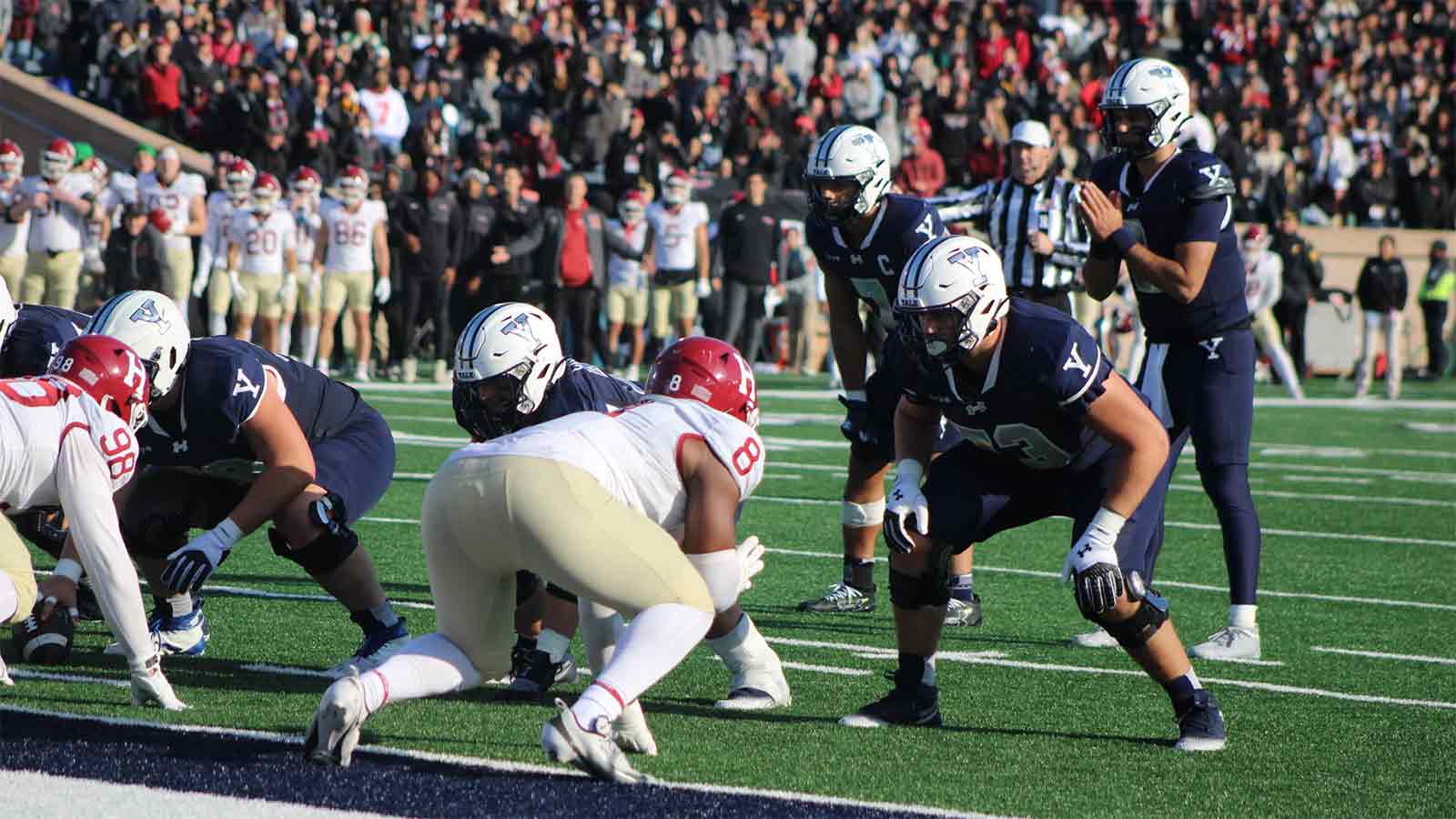
Yale vs. Harvard: The 141st Showdown Defines Ivy League Football in 2025
The crisp November air at the Yale Bowl carried more than just the usual buzz of anticipation. This was no ordinary Saturday: the Bulldogs and the Crimson were set to clash for the 141st time in what would become one of the most consequential games in Ivy League history. For both teams, the stakes had never been higher. A new Ivy League policy, passed just months earlier, meant the winner would not only claim the league title, but also secure a coveted spot in the Football Championship Subdivision playoffs — a postseason opportunity denied to Ivy teams for nearly 80 years.
Yale entered the game ranked 25th nationally, holding a 7–2 record (5–1 in Ivy play), while Harvard stood undefeated, ranked 10th with a 9–0 record (6–0 Ivy). The rivalry, stretching back to 1875, had witnessed legendary moments, but this year’s contest promised to reshape the postseason landscape for the Ivy League.
From Coin Toss to Final Whistle: Yale’s Dominance Unfolds
The morning began with lines snaking around campus, as thousands of fans braved drizzle and surging rideshare prices to reach the stadium. Tailgating traditions and political activism merged on the grounds, where alumni like Senator Richard Blumenthal handed out postcards advocating for academic freedom and solidarity against external threats to university autonomy.
As kickoff approached, security was tight. Nearly 90 New Haven police officers joined Yale’s own force to manage the expected crowd of 40,000 to 50,000 attendees, a testament to the game’s significance and the logistical challenges it posed (Yale Daily News).
Yale won the coin toss and deferred, setting the tone for a defensive showcase. The first quarter saw Harvard fumble on its opening play, giving Yale prime field position and immediate momentum. Quarterback Dante Reno wasted no time, connecting with Jaxton Santiago for a 21-yard touchdown. Yale’s offense, led by captain and running back Josh Pitsenberger, continued to slice through Harvard’s defense, while kicker Noah Piper added a field goal for a 10–0 lead.
Harvard, uncharacteristically rattled, struggled to find rhythm. Their defense bent under the relentless pressure of Pitsenberger’s runs, and by the start of the second quarter, Yale had extended the lead to 17–0. Harvard’s quarterback Jaden Craig eventually found his footing, throwing a 23-yard touchdown to Ryan Tattersall, but Yale answered immediately with a 64-yard bomb to Nico Brown, further distancing the Bulldogs from the Crimson.
The first half closed with Yale ahead 31–14. Harvard’s offense had managed just 166 yards to Yale’s 251. Pitsenberger already boasted two touchdowns and 75 yards, while Reno was nine-for-twelve passing with two scores. Yale had scored on five of six drives, leaving Harvard in unfamiliar territory — trailing by more than two touchdowns at halftime (The Harvard Crimson).
Historic Implications: Ivy League’s New Path and Community Spirit
What made this game more than just a rivalry was the historic context. For the first time since 1945, Ivy League teams were eligible for postseason play, and both Yale and Harvard had a shot at representing the league in the Football Championship Subdivision. With Harvard’s high national ranking, it was possible both teams could advance, signaling a new era for Ivy football.
Outside the gridiron, the event highlighted the deep connections between the schools. Alumni and students from both institutions came together not only to celebrate athletic achievement, but also to advocate for academic freedom and unity in the face of political pressures. The joint tailgate, featuring coalitions like Crimson Courage and Stand Up for Yale, underscored how the rivalry could foster solidarity, even in competition.
Yale’s president Maurie McInnis and Yale College Dean Pericles Lewis both expressed confidence in their team before the game, referencing the Bulldogs’ historic dominance in the rivalry. As Lewis quipped, “Harvard’s team may fight to the end, but Yale will win!” History was on Yale’s side, with more than half of the previous games ending in their favor.
The Final Push: Yale Seals Victory, Harvard Reflects
The second half mirrored the first in intensity. Yale’s offensive line, led by right tackle Michael Bennett, continued to open lanes for Pitsenberger, who would finish the day with three touchdowns. Harvard’s attempts to rally were stymied by Yale’s defense and a series of crucial sacks and turnovers. Head Coach Andrew Aurich made bold decisions, including a fourth-and-long conversion, but ultimately, Yale’s disciplined play and clock management proved decisive.
As the clock wound down, Yale added another touchdown, stretching the lead to 38–14 before Harvard managed a late score. The Bulldogs closed out the game with a 38–20 victory, clinching the Ivy League title and the league’s automatic playoff berth. For Harvard, the loss marked the end of a perfect regular season and forced reflection on missed opportunities and defensive lapses.
Cybersecurity Shadows Ivy Triumphs
Yet, as the cheers faded and the teams looked toward postseason play, another challenge loomed over the Ivy League: cybersecurity. On the eve of the game, Harvard revealed that its alumni, donor, and faculty database had been breached by an unauthorized party following a phone phishing attack — the second such incident at Harvard in 2025 (Bloomberg). The breach exposed personal contact information and donation details, highlighting the growing vulnerability of elite institutions to cyber threats.
This incident underscored a reality that transcends sports: as Ivy League schools step into new arenas of visibility and competition, they also face evolving risks off the field. The need for robust cybersecurity measures is now as urgent as the pursuit of academic and athletic excellence.
The 141st Yale-Harvard game was not only a showcase of athletic prowess but a microcosm of the pressures and responsibilities facing America’s most storied universities. From tailgates and touchdowns to the quiet threat of data breaches, the Ivy League remains at the crossroads of tradition and transformation.
The facts reveal a dual narrative for Ivy League schools in 2025: on the field, historic rivalries and new opportunities for postseason glory energize communities and redefine legacies; off the field, persistent cybersecurity threats demand vigilance and collaboration. The Ivy League’s future will be shaped as much by its resilience to digital risks as by its athletic triumphs.