


A Culture of Unrelenting Standards
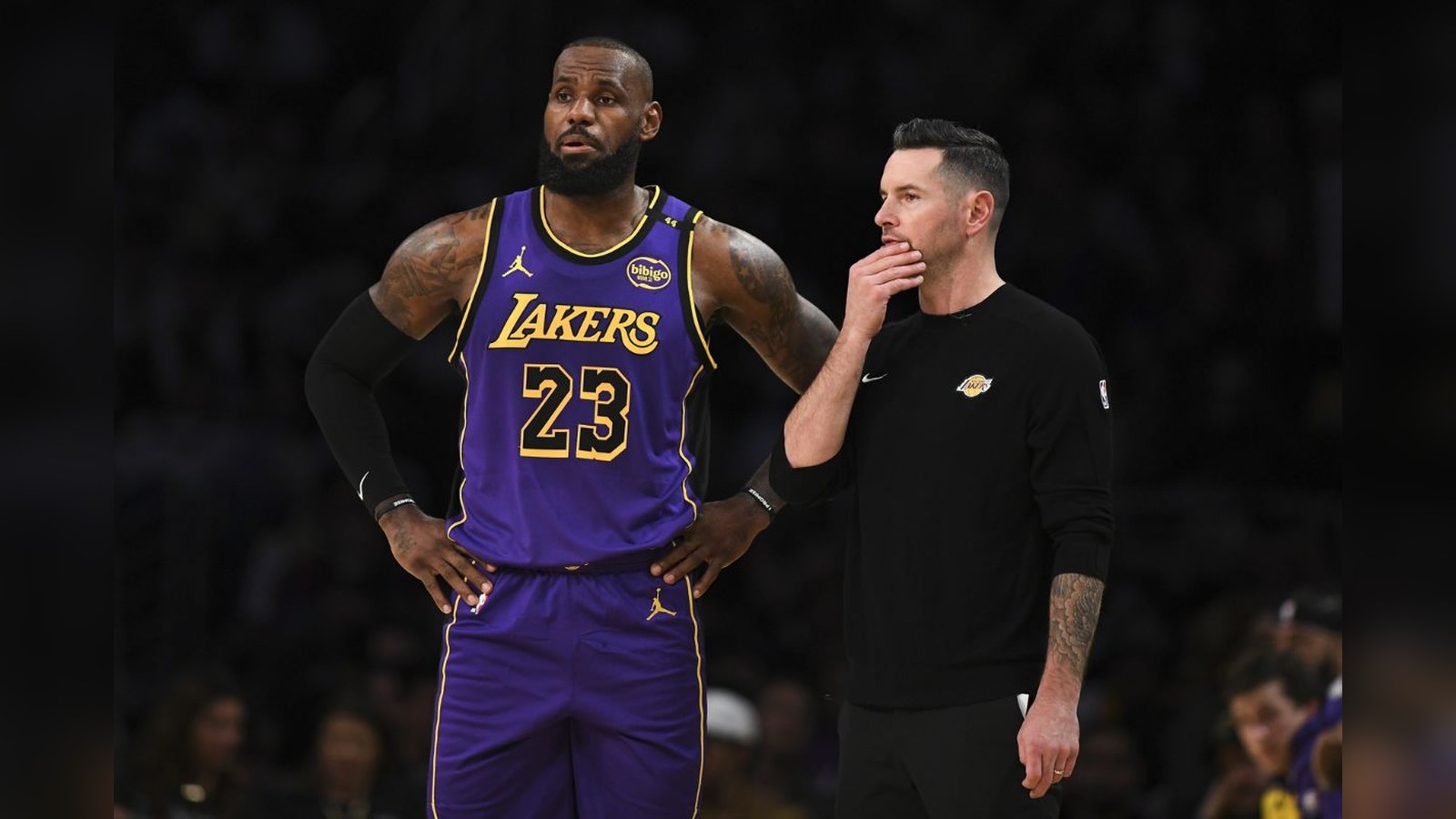
On November 15, 2026, the Los Angeles Lakers secured a 131-123 victory over the Phoenix Suns, yet the post-game atmosphere was defined by head coach JJ Redick’s dissatisfaction. Despite maintaining a league-best 12-2 record, the Lakers nearly surrendered a massive 31-point lead, allowing the Suns to narrow the gap to five points in the fourth quarter. For Redick, who entered the season with the bold assertion that the Lakers could contend for a championship, the near-collapse served as a critical indicator that his team remains far from its potential. As reported by the New York Post, Redick has utilized a 21-page analytics audit to outline specific defensive and offensive deficiencies, reinforcing his stance that the current results should not mask deeper inconsistencies.
Redick’s management style, characterized by a refusal to accept “ugly” wins, serves as a mechanism to prevent complacency within a roster that currently leads the league in scoring, field goal percentage, and points off turnovers. The head coach openly critiques the team’s tendency to falter when star players, particularly Luka Doncic, are off the floor. Redick emphasized that the team’s collective commitment to a process-driven approach is the only way to reach a championship ceiling. “I don’t think we should put a ceiling on this group,” Redick stated, highlighting that the frustration stems from knowing the team’s capabilities exceed their current execution on the defensive end, where they currently rank 18th in the league.
Analyzing the Defensive Disconnect
The Lakers’ reliance on high-octane offense—highlighted by Luka Doncic’s seventh 40-point performance in 12 games—has often masked defensive lapses that could prove fatal in postseason play. While the team has won eight consecutive games, the recurring theme of blowing large leads suggests a lack of depth and stability when the rotation changes. Redick’s insistence on a “championship-level standard” is a direct attempt to force accountability across the entire roster, not just the starting lineup. The New York Post notes that while players like Austin Reaves and Walker Kessler have provided significant contributions, the third unit’s inability to maintain leads remains a glaring issue that the coaching staff is aggressively attempting to quantify and correct via data-driven audits.
This approach places Redick in the role of an exacting mentor, constantly pushing his players to believe that their current success is merely a baseline. The team appears to be responding, with Doncic publicly acknowledging that there is substantial room for improvement, particularly regarding game management and the preservation of leads. For the Lakers, the path forward is not just about maintaining their current pace but about refining their defensive identity to match their offensive dominance. If Redick can successfully instill this level of discipline, the Lakers may evolve from a top-seeded regular-season team into a legitimate title contender. However, the recurring nature of these mid-game collapses suggests that the cultural shift Redick is pursuing is still very much a work in progress, with significant technical and psychological hurdles remaining to be cleared before the team can be considered truly championship-ready.
The Analytical Framework of Accountability
Redick’s methodology goes beyond mere coaching rhetoric; it is deeply rooted in the 21-page analytics audit presented to the team. By quantifying the specific moments where the Lakers lose momentum, he has transformed abstract frustrations into actionable data points. This level of granular oversight is designed to eliminate the “soft” errors that occur when the rotation deepens. When the Lakers are at their best, they dictate the pace of the game, forcing 11 steals per game and capitalizing on 24.5 points off turnovers. Yet, when the rhythm is disrupted, the defensive gap widens, exposing a roster that is still learning how to maintain intensity for all 48 minutes.
The contrast between the team’s offensive efficiency and their 18th-ranked defense is the primary focus of this internal audit. Redick understands that while high-scoring games are impressive, they are not sustainable in a seven-game playoff series against defensive-minded opponents. By holding the players to a standard that transcends their current record, Redick is effectively insulating them against the “success trap”—a common phenomenon where winning teams become satisfied with their current status, leading to a decline in effort. The coach’s refusal to allow his players to rest on their laurels suggests he is building a culture where internal competition for minutes is as intense as the competition against opposing teams.
The Road Ahead: Consistency and Maturity
The path to a championship is paved with the ability to close out games under pressure. The Lakers have proven they can score, but they must now prove they can protect a lead without the constant heroics of their star players. With players like Walker Kessler anchoring the paint and the team displaying league-leading field goal percentages, the foundation is undeniably strong. However, the psychological maturity required to maintain a 31-point lead is different from the skill required to build one. As the season progresses, Redick’s ability to refine the bench rotation will be the ultimate test of his managerial philosophy. If the Lakers can bridge the gap between their offensive highs and their defensive inconsistency, they will move from being a statistical anomaly to a true, consistent championship contender.
Ultimately, the Lakers are at a unique juncture. They have silenced the skeptics who doubted their potential at the start of the season, but they are now facing a different kind of pressure: the pressure of expectations. Redick is managing this by keeping the focus internal, forcing the players to hold themselves accountable to a standard that exists beyond the league standings. Whether this approach results in a championship remains to be seen, but the commitment to a process-driven, analytical culture is clearly yielding results. The team is not just winning; they are being forced to evolve, and that evolution may be the difference between a successful regular season and a historic playoff run.