


Intensity at the Center of England’s Knockout Campaign
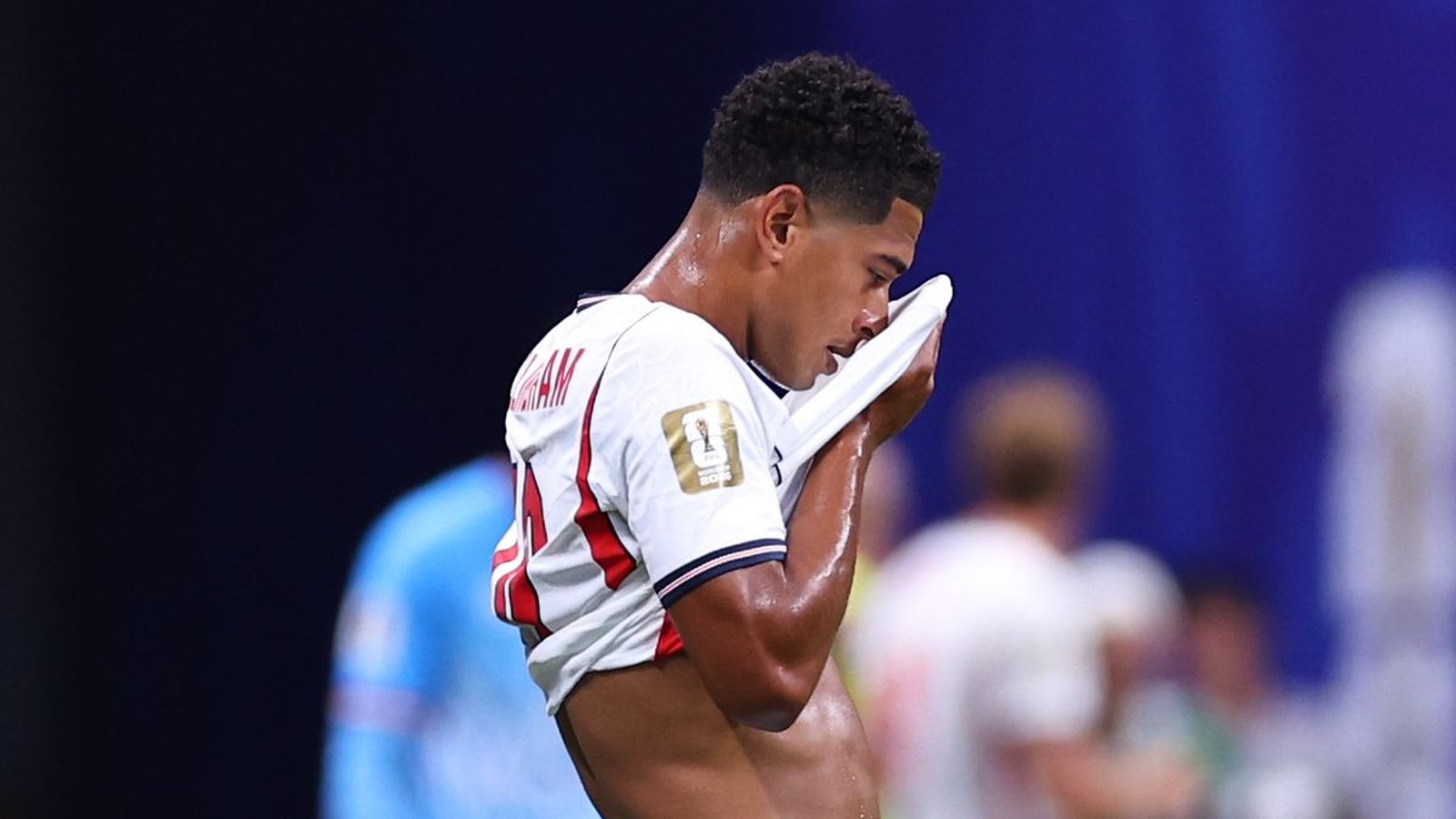
England’s 2026 World Cup campaign reached a flashpoint during the Round of 32 match against the Democratic Republic of Congo on Wednesday, July 1. Just seven minutes into the encounter, England conceded an early goal to DR Congo’s Brian Cipenga, triggering a visceral reaction from midfielder Jude Bellingham. Television cameras captured the 23-year-old screaming toward the England bench in visible frustration as the team faced an immediate deficit.
The incident has intensified ongoing public and media debate regarding Bellingham’s body language. Alan Shearer, providing commentary for the BBC, explicitly criticized the atmosphere on the pitch, stating, “I’m not enjoying the body language of the England players. I saw a shot of Jude Bellingham after that misplaced pass. I’m not liking the body language of the players and the manager at the moment.”
The ‘American’ Competitive Archetype
The tension surrounding Bellingham’s conduct is increasingly being framed as a clash between traditional English expectations of player stoicism and a more modern, globalized “superstar” mentality. Analysts, including Ian Wright, have compared Bellingham’s confidence and vocal demands of teammates to the ethos of American sports icons like Michael Jordan, Kobe Bryant, and LeBron James.
This “American-style” approach—characterized by an uncompromising drive and a willingness to publicly challenge teammates—appears to contrast with the more reserved “English way.” Dr. Clive Chijioke Nwonka of UCL notes that Bellingham’s persona is “external to British society,” suggesting that his willingness to display raw emotion is a departure from the traditional culture of “sameness” often observed in the English setup. While some argue this intensity is exactly the “clutch” factor needed to finally secure a major trophy, others view it as disruptive to team chemistry.
Stakes for the Three Lions
For manager Thomas Tuchel, the challenge lies in balancing Bellingham’s high-octane competitive nature with the need for collective cohesion. As England navigates the high-pressure environment of the knockout stages, the spotlight on Bellingham remains immense. Despite the friction, his performance on the pitch—including vital goal contributions in the group stage—underscores his status as a central pillar of the squad. The debate over his “attitude” reflects broader questions about whether English football is ready to embrace a new, more individualistic style of leadership from its most prominent Black superstar.