


A Nation Mourns a Modernizing Monarch
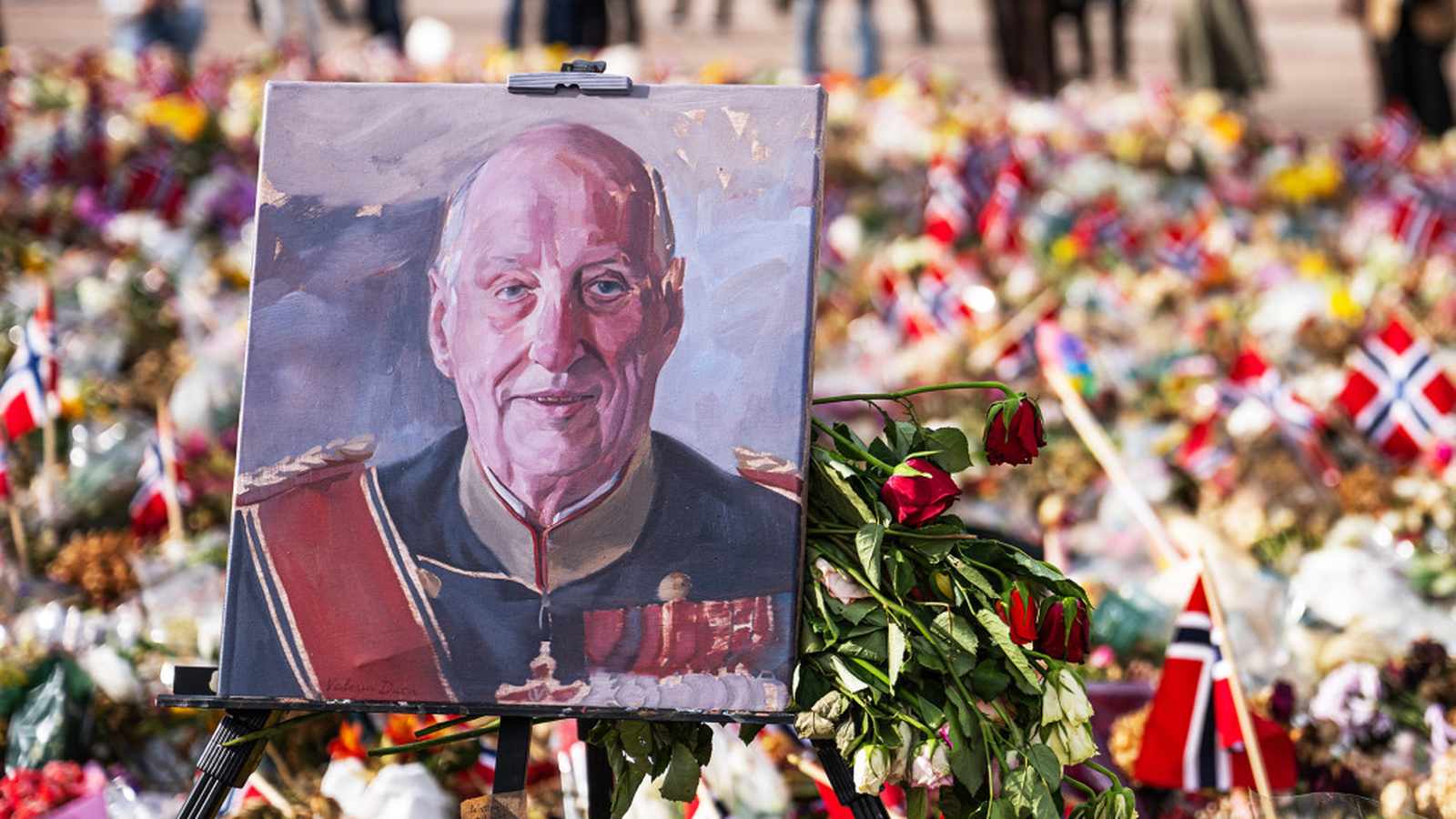
OSLO (Azat TV) – The Norwegian capital came to a standstill on Wednesday, September 9, 2026, as the nation held a state funeral for King Harald V, who passed away on August 28 at the age of 89. The ceremony, attended by royal delegations from across Europe and the Middle East, marked the conclusion of a 35-year reign that fundamentally reshaped the Norwegian monarchy. According to HOLA!, more than 200,000 people gathered across the city to pay their final respects, with 53,000 lining the streets of central Oslo.
King Harald, widely celebrated as the “grandfather of the nation,” was lauded by Prime Minister Jonas Gahr Støre for bringing a unique sense of humanity to the monarchy. The funeral procession, which saw the late King’s coffin transported to the Oslo Cathedral, was accompanied by a 21-gun salute and a flyover by the Norwegian Armed Forces. The coffin was later interred at the royal mausoleum at Akershus Fortress, a site with over 700 years of history tied to the Norwegian crown, as reported by ABC News.
The Transition of Power
While the day was defined by national mourning, it also underscored the continuity of the Norwegian state. Harald V’s son, now King Haakon VIII, has already assumed his duties, having taken his oath of allegiance to the Constitution before the Storting (Parliament) last week. The transition represents a generational shift for the Scandinavian monarchy, as Haakon VIII steps into a role his father maintained without abdication until his final days.
The service at Oslo Cathedral, presided over by Presiding Bishop Olav Fykse Tveit, featured traditional Norwegian elements, including a performance of “Jørgen Hattemaker” and a reading from the Gospel of John in Sámi, reflecting the King’s commitment to Norway’s cultural diversity. The event also served as a major diplomatic gathering, with monarchs from Sweden, Denmark, Spain, the Netherlands, Belgium, Luxembourg, Monaco, and Jordan present to show solidarity with the new King and Queen Mette-Marit.
Stakes and Public Scrutiny
The funeral was not only a logistical undertaking—requiring the closure of major air corridors and the mobilization of nearly 2,000 military personnel—but also a moment of intense public focus on the royal family’s internal dynamics. The attendance of family members embroiled in recent controversies, including Marius Borg Høiby, remained a point of public discussion amidst the broader national mourning. Despite these tensions, the event was largely characterized by a unified display of respect for the late monarch’s legacy of stability.