

Quick Read
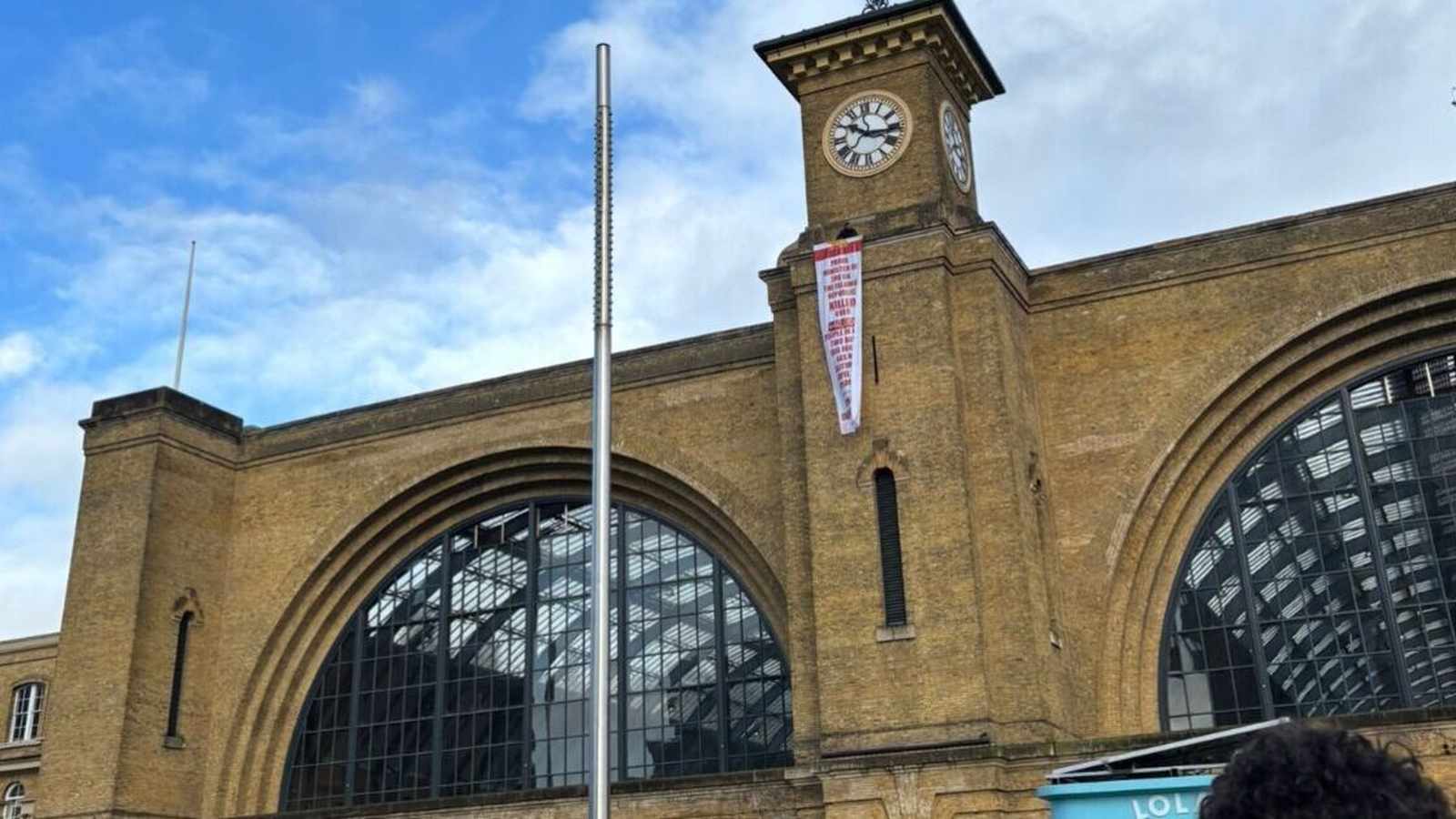
- A protester scaled King’s Cross station in London on January 30, 2026.
- The demonstrator unfurled a banner calling for the UK to expel Iranian diplomats and uphold democracy.
- Emergency services, including police and firefighters, responded to the scene.
- The protest follows the European Union’s recent decision to add Iran’s Islamic Revolutionary Guard Corps (IRGC) to its terrorist list.
- The UK government has condemned Iranian repression but maintains a policy of not commenting on specific proscription considerations for organizations.
LONDON (Azat TV) – A lone protester scaled the iconic King’s Cross train station in central London on Friday morning, January 30, 2026, unfurling a large banner that called upon the UK government to take decisive action against Iran’s Islamic Republic. The dramatic demonstration, which saw emergency services rush to the scene, intensified public and political focus on Britain’s stance regarding the Islamic Revolutionary Guard Corps (IRGC) amid escalating international pressure and reports of violent repression in Iran.
Protest Draws Emergency Response at King’s Cross
The incident began shortly before 10:00 AM GMT when the demonstrator, dressed in black, ascended the 120-foot landmark building, positioning himself just beneath the station’s famous clock tower. Eyewitnesses and social media posts, widely shared, captured the activist clinging to a substantial poster as police and firefighters converged on the bustling transport hub. While the protest caused significant disruption to pedestrian flow and generated widespread attention, it was not immediately clear if train services were directly impacted or if any arrests were made. Emergency service personnel remained on standby as the situation unfolded.
Banner Demands UK Action Against Iran’s Regime
The banner, prominently displayed, was addressed to UK Prime Minister Keir Starmer and contained a stark message: “Prime Minister of the UK, the Islamic Republic killed over 40,000 people in just two days. This regime has no legitimacy. Expel its diplomacy. Uphold democracy.” This direct appeal underscored the protester’s demand for the UK to sever diplomatic ties with Iran and to acknowledge alleged atrocities. The figure of “over 40,000 people” referenced on the banner is an allegation relating to human rights groups’ estimates of casualties during recent unrest in Iran, according to reports from NationalWorld. The protest explicitly linked the calls for action to the broader movement for democracy in Iran.
International Pressure Mounts on IRGC Designation
The King’s Cross demonstration took place just days after the European Union officially added Iran’s Islamic Revolutionary Guard Corps to its terrorist list. This significant move, confirmed by EU top diplomat Kaja Kallas, places the IRGC on par with groups like al-Qaeda and Islamic State, signaling a hardened stance from the bloc. The decision followed weeks of intense internal debate, with nations like France reportedly shifting their initial hesitation to support the Italian-led push for blacklisting. French Foreign Minister Jean-Noel Barrot had previously described the situation in Iran as “the most violent repression in Iran’s modern history,” emphasizing the need for accountability.
Iran’s Foreign Minister, Abbas Araghchi, swiftly condemned the EU’s decision, labeling it a “stunt” and a “major strategic mistake.” However, international consensus against the IRGC’s activities has been growing. Australia, Canada, and the United States have already classified the IRGC as a terrorist organization. Despite this, the UK government has maintained a consistent policy of not commenting on whether specific organizations are being considered for proscription. On Wednesday, UK Deputy Prime Minister David Lammy publicly condemned Iran’s “brutal oppression of peaceful protesters” but reiterated the government’s long-standing position on not discussing proscription considerations, as reported by NationalWorld.
Heightened Scrutiny on UK’s Diplomatic Stance
The protest at King’s Cross station serves as a visible manifestation of heightened public and activist pressure on the UK government to align its policy with that of its international partners regarding the IRGC. The demonstrator’s direct appeal to Prime Minister Starmer reflects a broader sentiment among human rights advocates and the Iranian diaspora who argue that the UK’s current diplomatic approach is insufficient in addressing the alleged human rights abuses within Iran. The incident highlights the delicate balance the UK government navigates between maintaining diplomatic channels and responding to calls for stronger punitive measures against regimes accused of widespread repression.
The event at King’s Cross, while a singular act of protest, underscores the persistent challenge faced by Western governments in formulating effective responses to human rights crises abroad, particularly when significant economic and geopolitical interests are at play. It brings into sharp relief the ongoing debate over whether diplomatic engagement or outright proscription is the more effective path to influence change within authoritarian states.