


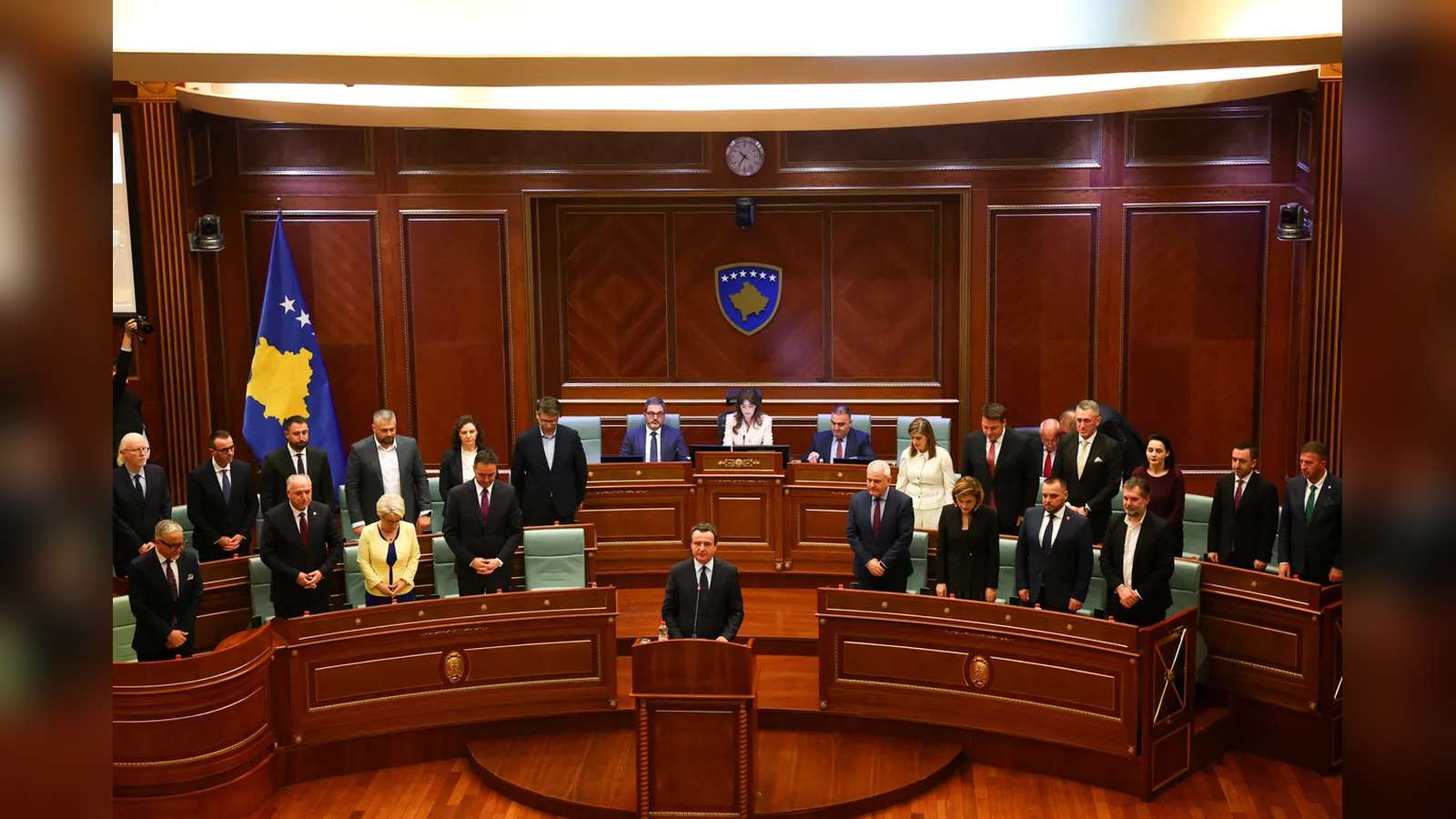
Kosovo’s political leadership faces a critical institutional test as the Assembly prepares to reconvene on Wednesday, September 9, 2026, to conclude its interrupted constitutive session. The session was halted on August 8 when Albin Kurti, the leader of the Vetëvendosje Movement (LVV) and acting Prime Minister, requested additional time to secure a stable political agreement regarding the country’s next president. As reported by CNA.al, while a preliminary agreement was reached on August 31 between the LVV and the Democratic League of Kosovo (LDK) to nominate Bekim Sejdiu, severe arithmetic and constitutional challenges remain unresolved.
The Parliamentary Arithmetic and the 80-Vote Threshold
Under Kosovo’s constitutional framework, the Assembly is considered fully constituted only after the election of its President (Speaker) and five Vice-Presidents. Once this is achieved, the legislative body can proceed with electing the new government and the national president. However, the political agreement to support Bekim Sejdiu as the presidential candidate is highly fragile.
The math within the 120-seat parliament presents a major hurdle. The winning party, LVV, holds 53 seats and expects the support of 10 MPs representing minority communities. While the LDK holds 18 seats, six of its lawmakers have publicly declared their opposition to Sejdiu’s candidacy. Consequently, the agreement currently commands the reliable support of only 74 MPs. This falls short of the 80-vote threshold (two-thirds majority) required to elect a president in the first two rounds of voting. If the process reaches a third round, a simple majority of 61 votes is sufficient, but the physical presence of at least 80 deputies in the chamber is strictly required for the vote to be legally valid.
Opposition Strategies and the Boycott Threat
The two primary opposition parties, the Democratic Party of Kosovo (PDK) and the LDK, have confirmed they will attend the September 9 session, despite criticizing the governing coalition’s handling of the process. PDK leader Bedri Hamza stated that Kosovo must have a functional, constituted Assembly, confirming that PDK lawmaker Vlora Çitaku will be nominated for the position of second deputy speaker. Hamza emphasized that the opposition bears no responsibility for the prolonged delay, pointing out that PDK representatives had been present at the assembly every 48 hours.
In contrast, the Alliance for the Future of Kosovo (AAK) has decided to boycott the session entirely. Alliance Chairman Ardian Gjini explained that the decision was a protest against the government’s disregard for constitutional timelines. Gjini noted that the party was willing to participate if the session had been convened before Saturday, which marked the expiration of the second 30-day legal window. By delaying past this point, Gjini argued, the ruling coalition had shown disrespect toward the state institution.
Constitutional Deadlines and Legal Assessments
The ongoing impasse has triggered a heated legal debate over the interpretation of constitutional deadlines. A prior ruling by the Constitutional Court dictates that the Assembly must be constituted within 30 days of the certification of election results—a deadline that expired on August 7, 2026. During a heated debate on August 12, acting Minister of Justice Donika Gërvalla argued that the 30-day countdown actually began when the constitutive session was first called on August 6, setting the true deadline as September 6.
Despite these conflicting interpretations, civil society organizations have urged the political factions to prioritize institutional functionality. The Kosovo Law Institute (KLI) issued a statement stressing that while the violation of the constitutional deadline must be acknowledged, it should not be used as an excuse to prolong the political blockade. According to the KLI, the expiration of the deadline does not release lawmakers from their constitutional obligation to make the state’s democratic institutions fully operational.