


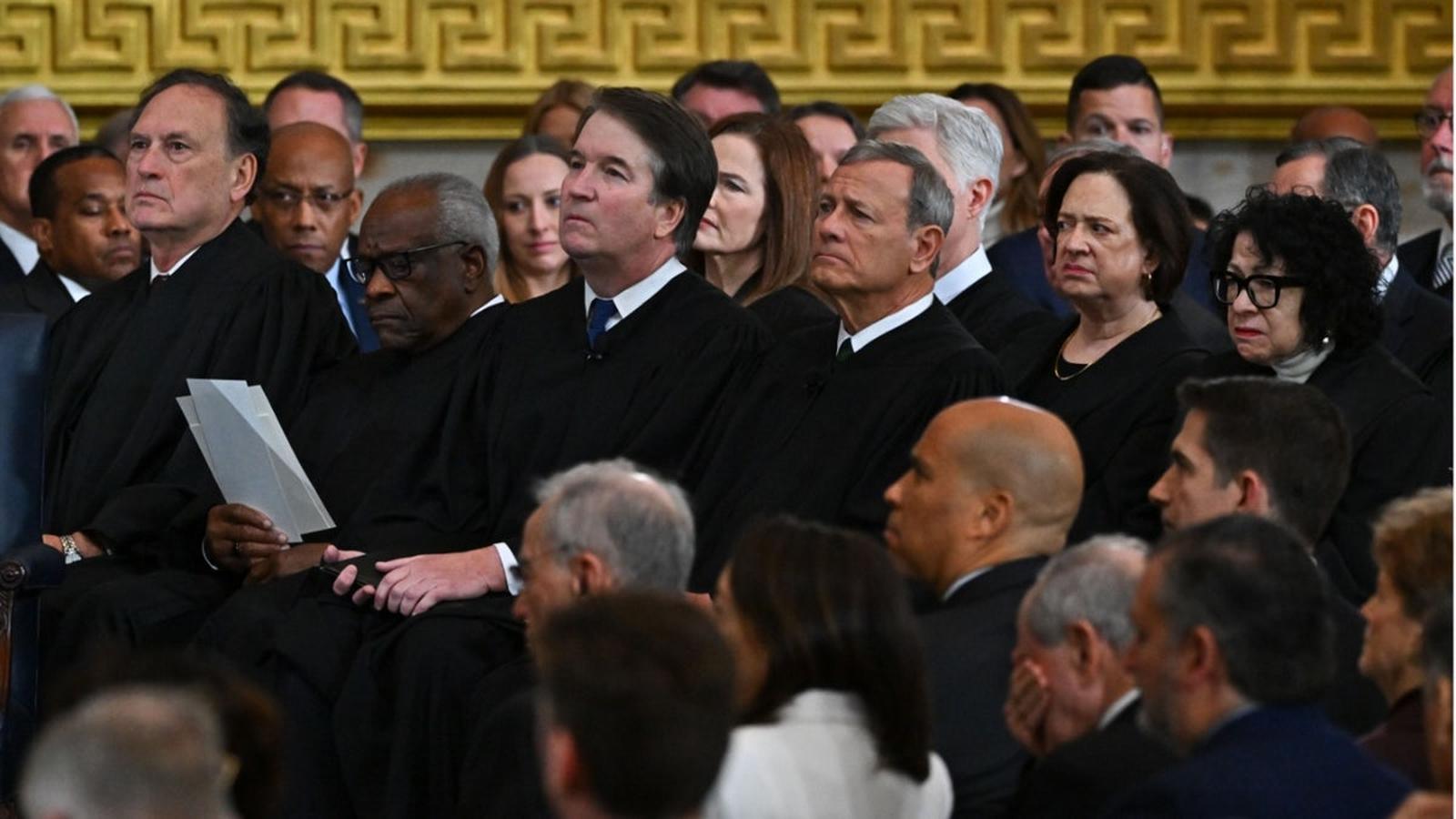
The legal and electoral landscape of Mississippi is undergoing a profound transformation following a series of landmark rulings by the U.S. Supreme Court. In its latest judicial term, which concluded with opinions in 68 cases, the high court handed down decisions that directly reshape how voting districts are drawn, how campaign finance is regulated, and how mail-in ballots are processed. According to an extensive review by the Clarion Ledger, these decisions carry deep institutional consequences for Mississippi, a state situated within the highly active 5th Circuit Court of Appeals.
The Fifth Circuit’s Outsized Influence on the High Court
Mississippi, along with Louisiana and Texas, falls within the jurisdiction of the 5th Circuit Court of Appeals. Despite being only the third-largest federal circuit by population, the 5th Circuit contributed more cases to the Supreme Court’s docket during this term than any other circuit. Justices heard 11 cases originating from this region, highlighting the deep conservative legal challenges emerging from the Gulf South and their role in setting national precedents.
Redistricting and the End of Race-Based Maps: Louisiana v. Callais
The most far-reaching decision affecting Mississippi’s representation is the landmark ruling in Louisiana v. Callais. In a 6-3 decision led by the court’s conservative majority, the Supreme Court ruled that drawing voting districts based solely on race is unconstitutional. Writing for the majority, Justice Samuel Alito argued that the Voting Rights Act of 1965, designed to protect minority representation, has at times forced states to “engage in the very race-based discrimination that the Constitution forbids.”
Historically, Southern states like Mississippi have relied on the Voting Rights Act to establish and protect majority-Black districts, ensuring Black voters could elect candidates of their choice. Federal judges had ordered Mississippi as recently as 2025 to add or protect majority-Black voting districts. However, with the Supreme Court ruling that race cannot be the primary factor in redistricting, those protections are effectively dismantled. Governor Tate Reeves has indicated that state lawmakers will likely convene a special legislative session before the end of the year to begin reconfiguring congressional and state legislative boundaries without the civil rights frameworks that governed the state for six decades.
Mail-In Ballot Deadlines Upheld: Watson v. Republican National Committee
In a surprising 5-4 decision, the Supreme Court upheld Mississippi’s policy of counting mail-in ballots received up to five days after an election, provided they are postmarked by Election Day. The case, Watson v. Republican National Committee, arose when Mississippi Secretary of State Michael Watson was sued by state and national Republican officials who argued that federal law requires all ballots to be received by Election Day.
The Supreme Court rejected the plaintiffs’ arguments, clarifying that an “election” refers to the final result rather than the procedural casting of ballots. Writing for the majority, Justice Amy Coney Barrett emphasized the narrow scope of the ruling, noting that federal law dictates when ballots are cast, but state law governs the deadline for their receipt. This decision ensures that Mississippi, along with roughly 30 other states with similar laws, can continue its post-election receipt window.
Deregulating Campaign Finance: NRSC v. FEC
In one of the final rulings of the term, the Supreme Court struck down long-standing federal limits on coordinated campaign spending between political parties and their candidates. The lawsuit, initiated in 2022 by then-Senate candidate JD Vance and national Republican organizations, challenged provisions of the Federal Election Campaign Act of 1974.
Prior to the ruling, strict limits capped how much a political party could spend in coordination with a candidate. In 2026, those limits were set at $65,300 for House candidates in multi-representative states and up to $4,071,800 for Senate candidates in highly populated states. The 6-3 conservative majority ruled that these spending caps violate First Amendment free speech protections and are unnecessary to prevent corruption, opening the door for unprecedented party spending in federal races across Mississippi and the nation.